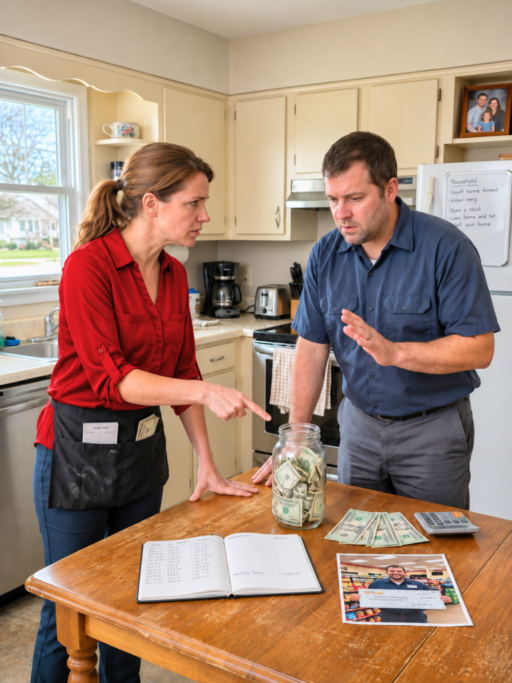
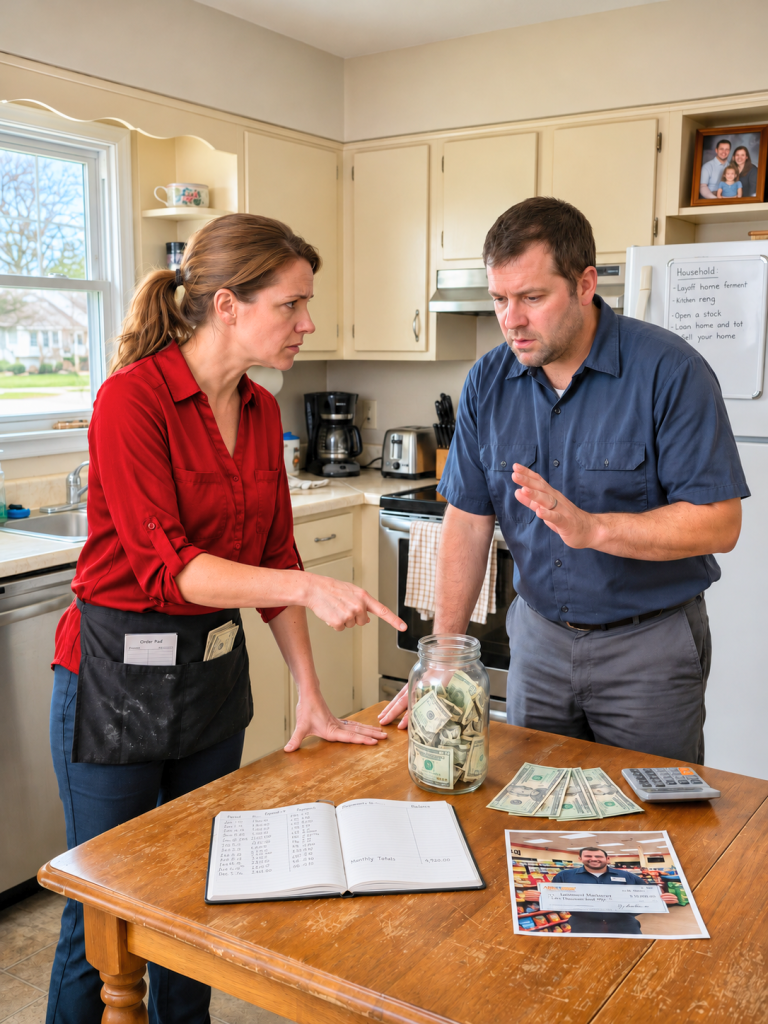

We sat around Dolores’s dining table, where we’d shared countless Sunday dinners.
This time, nobody had brought food.
I placed the billing records in front of Duane.
“Whose number is this?”
He didn’t look at the papers.
“Lita, please don’t do this here.”
“Then answer me.”
Dolores leaned forward.
“Son, you’ve already lied about the money. Don’t make us drag the rest out of you.”
Duane covered his face.
Finally, he admitted there was another woman.
Her name was Rachel, and she worked at the manufacturing plant.
They had been seeing each other for eight months.
Megan looked sick.
“You let Lita think you were having an affair with me?”
“I never said that,” he protested.
“You let her believe it,” Megan replied.
I looked at the man I’d married eleven years earlier.
For months, he’d been stealing small amounts from our household money, buying lottery tickets, hiding his winnings, and seeing another woman.
He’d also made himself look generous by secretly helping my sister with money I had helped earn.
I couldn’t understand why someone needed so many different lies.
The next morning, I called Rachel.
She agreed to meet at a coffee shop on Pine Street.
She was younger than me, perhaps twenty-nine, with nervous hands and an expression that suggested she hadn’t slept much.
“He told me you were separated,” she said before I sat down.
“We weren’t.”
Rachel lowered her eyes.
“He said you were still living together because of your daughter.”
I shook my head.
“He came home to me every night.”
She explained that she’d ended their relationship the previous week after discovering family photographs on my Facebook page.
Then she opened her purse.
“I brought something you should see.”
She placed a small velvet jewelry box on the table.
Inside was a diamond necklace.
“Duane gave me this in June,” she said. “He told me he’d received a bonus.”
June.
The month of the lottery winnings.
Rachel handed me an envelope containing printed messages and screenshots of transfers he’d made to her.
One message had been highlighted.
I have to take forty from the jar tomorrow. She never notices.
I read it twice.
Rachel looked horrified.
“I didn’t know what the jar meant.”
“I do.”
That evening, I returned home and found Duane sitting alone in the kitchen.
I placed my notebook, the screenshots, and the necklace on the table.
He stared at them without speaking.
“Rachel thought you were separated,” I said. “Megan thought you were working overtime. And I thought we were sharing our money.”
He began to cry.
“I’ve ruined everything.”
I looked at the glass jar on the counter.
For eleven years, I’d filled it after exhausting shifts, believing every dollar was helping build our family’s future.
Duane had used that trust to finance secrets I was never supposed to discover.
I picked up the jar and turned it upside down.
A single quarter rolled onto the table.
I set it down beside the records.
Then I walked into our bedroom and took his navy duffel bag from the closet.
By the time Duane realized what I was doing, I’d already begun folding his clothes.
“I wasn’t leaving my home. I was packing my husband’s suitcase.”
Duane stood in our bedroom doorway, watching me fold his work shirts into an old navy duffel bag.
“Lita, please. We can fix this.”
I continued packing.
For eleven years, I’d worked long shifts at the steakhouse, counted every dollar I earned, and trusted him to manage our shared household money.
Now I knew he’d secretly taken $880 from our jar, hidden a $4,000 lottery win, and carried on an eight-month affair.
“You had months to tell me the truth,” I said. “Instead, you kept finding new ways to lie.”
He started crying.
I zipped the bag and placed it beside the front door.
Our sixteen-year-old daughter, Ava, returned from a weekend debate tournament that evening.
She walked inside wearing a silver medal and stopped when she saw her father’s suitcase.
“What’s happening?”
I sat beside her on the couch.
“Your dad and I are separating. There are things he needs to explain, but none of this is your responsibility.”
Duane admitted that he’d lied about money and broken our marriage vows. I stopped him when he began offering details Ava didn’t need to hear.
She listened quietly.
Then she touched the medal around her neck.
“I kept looking for you at the tournament, Dad.”
Duane lowered his head.
“I know. I’m sorry.”
“I wasn’t looking because I needed you to clap,” she said. “I just wanted you there.”
He had missed her final round because he’d been dealing with the consequences of his affair.
That evening, Duane went to stay with his brother.
The next morning, Dolores arrived carrying a small metal cash box.
For years, she’d given Duane money at Christmas and on my birthdays, asking him to buy something special for me.
After learning about his dishonesty, she’d searched the workshop where he kept his personal belongings.
Inside, she found envelopes containing $2,300 she’d given him over several years.
He’d never spent the money on me.
“I thought he was buying you gifts,” she said, pushing the box toward me. “I didn’t know he’d kept it.”
I stared at the envelopes.
Dolores took my hand.
“I’ve spent eleven years saying you only helped with the bills. I was wrong. You were carrying far more than I understood.”
It was the first time she’d acknowledged how much I contributed to our family.
I thanked her, but I also told her that Duane’s decisions were his responsibility.
Over the following weeks, I met with an attorney and opened an individual bank account for my earnings.
I brought my notebooks, household records, and copies of the messages Rachel had provided.
My attorney explained that the records could help establish my contributions and support the financial disclosures required during our divorce.
Duane eventually acknowledged taking the missing $880. Through our settlement, he agreed to reimburse it, and our documented finances were considered when we divided our marital property.
The process took months.
It wasn’t glamorous, and it certainly wasn’t painless.
But I no longer had to ask permission to use money I’d earned.
One evening after closing, Tina and several coworkers gathered around a break-room table.
They’d heard that I was finally getting my finances sorted out.
“Bring those famous notebooks,” Tina said.
I placed the little black books in front of them.
Eleven years of tips, double shifts, holiday rushes, and exhausted evenings filled their pages.
Tina opened one and smiled.
“You knew exactly what you earned all along.”
“I did.”
“Then don’t ever let anyone convince you that your work doesn’t count.”
A year later, I was promoted to floor manager at the steakhouse.
Ava earned an academic scholarship, and Megan and I had begun rebuilding our relationship slowly.
My sister had apologized for keeping Duane’s financial help secret. I hadn’t forgotten the hurt, but we were learning to speak honestly again.
Duane remained involved in Ava’s life, though rebuilding her trust was something he had to do himself.
As for our old household jar, I never threw it away.
I washed it and placed it on the kitchen windowsill.
Every Sunday, Ava and I wrote one good thing that had happened during the week and dropped the folded papers inside.
Sometimes it was a good grade. Sometimes a successful shift at work. Sometimes just a peaceful dinner together.
One evening, Ava opened the jar and found the first note I’d written.
She read it aloud.
Today, I stopped confusing being needed with being valued.
I looked around our kitchen.
The whiteboard where Duane once recorded my earnings was gone. So was the feeling that I had to justify every dollar I spent.
For eleven years, I’d counted my tips because I believed knowing where my money went mattered.
I was right.
But those notebooks ultimately taught me something even more important.
I deserved a marriage built on honesty, not permission. And when that marriage ended, I still had the skills, the strength, and the people who truly valued me.
Duane had thought controlling the jar meant controlling our future.
He never understood that the woman filling it had been capable of building a life of her own all along.