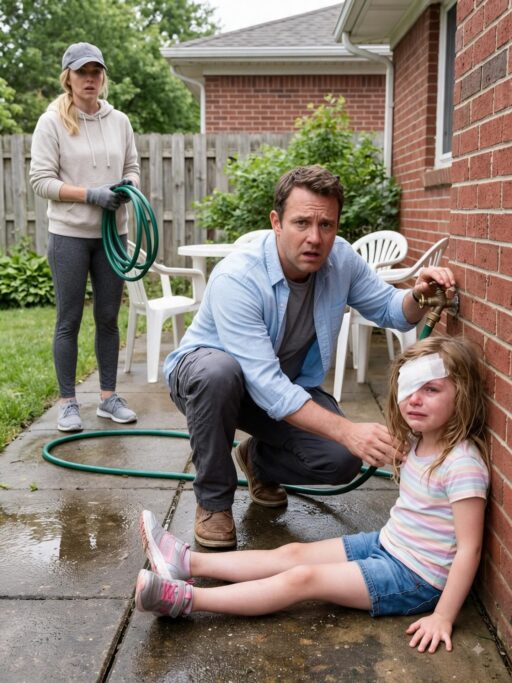
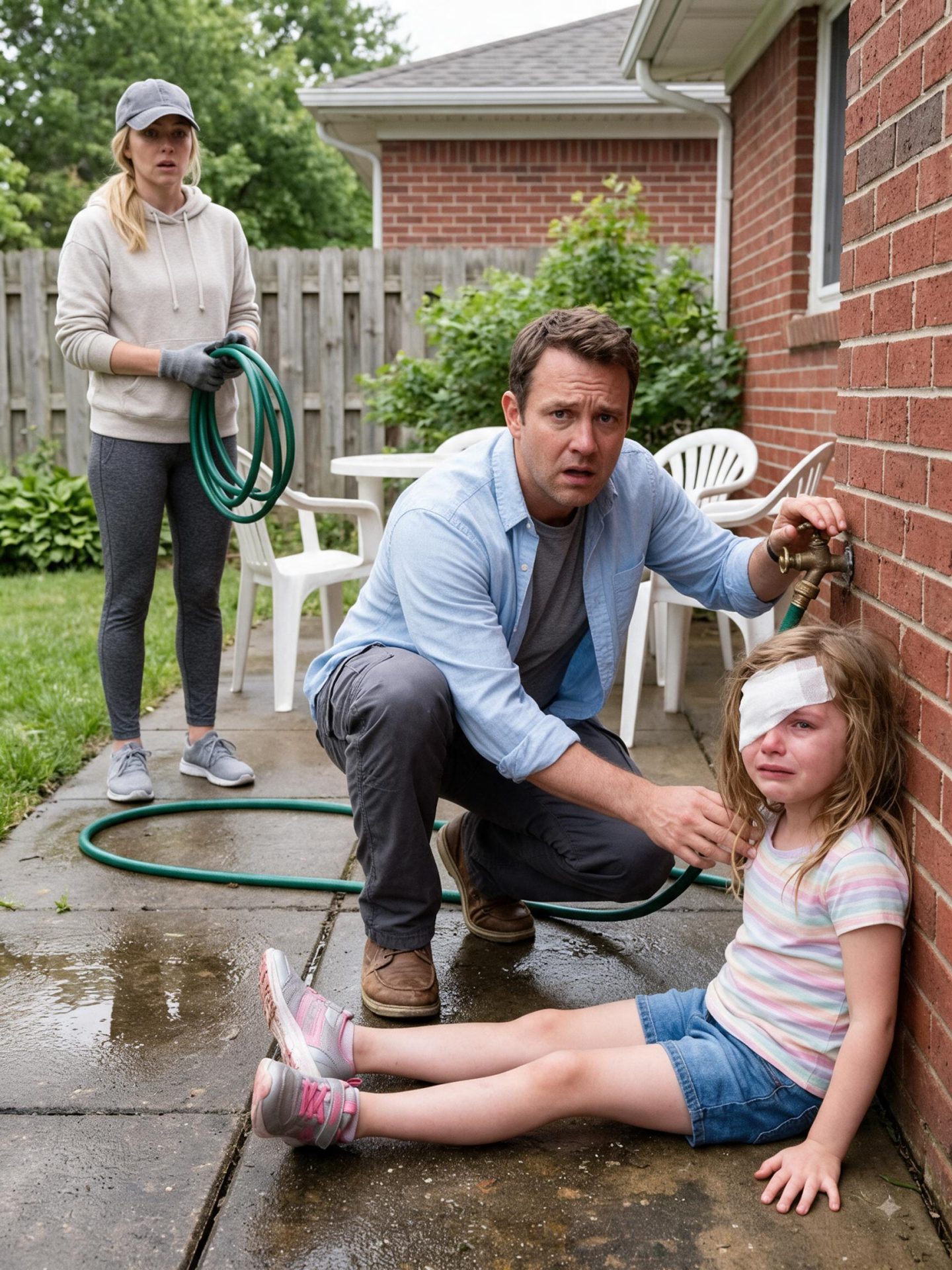

There was no visible physical provocation from Hailey. The footage confirmed that the water was directed toward her before she slipped and that Brenda photographed her after the fall.
Rachel watched the recording with me. She urged me to preserve multiple copies and avoid giving Brenda access to the files.
We also discussed the photographs Brenda had taken with her own phone. Their timestamps and other available information might help investigators establish precisely when the images were captured.
Brenda continued sending messages describing the incident as an ordinary childhood accident. She also questioned whether a five-year-old could accurately remember what had happened.
I decided not to argue with her through text messages. Instead, I preserved every communication and concentrated on Hailey’s medical care.
Dr. Fletcher returned with discharge instructions, explaining how to care for the stitches and what symptoms required further evaluation. He confirmed that Hailey’s statements and the clinical findings had been documented.
Before leaving, I contacted a family law attorney to arrange an urgent consultation. I wanted professional guidance about protecting Hailey and preserving the evidence.
As Rachel drove us away from the clinic, Hailey quietly asked whether I was angry because she had gotten dirty.
“Of course not, sweetheart. You haven’t done anything wrong, and I’m proud of you for telling me what happened.”
She finally relaxed against the seat and fell asleep. For the first time that afternoon, I felt confident that she was somewhere Brenda could not immediately reach her.
That evening, Rachel prepared the guest bedroom while I organized the documents we had collected. Hailey slept nearby, exhausted from her injury and the frightening events of the afternoon.
I reviewed the medical paperwork, Brenda’s messages, and Warren’s recordings. Together, they established a sequence that differed significantly from the explanation Brenda had offered when I discovered Hailey on the patio.
According to Brenda, Hailey had fallen while playing and needed to be cleaned afterward. The camera footage, however, showed that Brenda began spraying her before she lost her balance.
I contacted the attorney’s office again the following morning and confirmed an appointment. The attorney explained that the medical records, original video files, and messages could be relevant to an investigation, but that authorities would need to assess the evidence independently.
My immediate priority was ensuring that Hailey remained somewhere safe. Rachel agreed that we could stay with her while I obtained guidance about the next steps.
When Hailey woke, she was quieter than usual and reluctant to discuss the backyard. I avoided repeatedly questioning her because I didn’t want her to feel pressured to explain the same frightening experience.
Instead, I helped her eat breakfast and followed the doctor’s instructions for caring for her injury. Whenever she asked about Brenda, I reassured her that she was safe and that adults were handling the situation.
Later that morning, I shared the evidence with the appropriate authorities and explained what I had personally witnessed. I also distinguished my observations from the events shown on Warren’s recording and the statements Hailey had made.
The officer taking the report asked whether the original footage was available. I explained that Warren had retained the complete recording and was willing to cooperate.
I also provided copies of Brenda’s messages, including the conflicting explanations and her request that we agree on a shared account. The officer advised me to preserve further communications without altering or deleting anything.
By afternoon, Brenda had left several additional messages demanding to know where Hailey was staying. Her tone alternated between anger and insistence that the entire incident had been misunderstood.
I did not disclose Rachel’s address. Instead, I informed Brenda that Hailey had received medical treatment and that future discussions about the incident would be handled through appropriate channels.
The following day, I met with the family law attorney. We discussed available protective measures, Hailey’s immediate needs, and the importance of following any existing legal obligations while seeking emergency guidance.
The attorney emphasized that the footage was significant but should not be treated as a substitute for a formal investigation. Medical professionals and child protection authorities would need to evaluate the circumstances and determine what further action was appropriate.
I appreciated that careful approach. My responsibility was to protect my daughter, not to make promises about an outcome that had not yet been decided.
Rachel helped me arrange a quiet routine for Hailey during the following days. We read books, watched her favorite cartoons, and allowed her to rest without unnecessary conversations about the incident.
At one point, Hailey asked whether telling the truth had caused trouble for everyone. I sat beside her and explained that adults were responsible for their own actions.
“You didn’t create this problem, sweetheart. You helped me understand what happened, and I’m glad you trusted me.”
She leaned against my shoulder and asked if she could keep staying with Aunt Rachel for a while. I told her we would make sure she had a safe place to sleep.
That evening, Warren called to confirm that he had preserved the original security files. He also agreed to provide them directly to investigators if requested.
His willingness to help reminded me how important it was that someone had noticed Hailey’s distress. Without his recording, Brenda’s changing explanations might have been much harder to evaluate.
As the investigation continued, I learned that protecting Hailey required more than gathering evidence. She needed consistency, medical follow-up, and reassurance that the frightening experience did not define her everyday life.
Rachel helped establish a familiar schedule while we stayed at her house. Hailey ate breakfast at the same time each morning, played quietly in the living room, and gradually began asking about ordinary activities again.
I arranged a follow-up medical appointment to check her healing injury. The clinician examined the stitches and reviewed the care instructions, while I explained that Hailey remained anxious about returning to the house.
We discussed whether additional emotional support might be helpful. I wanted Hailey to have access to someone trained to work with young children who had experienced frightening situations.
The family law attorney continued advising me about temporary arrangements and appropriate communication. I understood that any lasting decisions would require careful consideration of the evidence and applicable legal procedures.
Brenda remained adamant that she had done nothing intentionally harmful. In her messages, she continued describing the event as an unfortunate accident and accused me of overreacting.
I preserved those messages without responding to every accusation. Engaging in repeated arguments would not help Hailey recover or establish what had happened.
One afternoon, Rachel asked whether I regretted confronting the situation so directly. I thought about the moment I had found Hailey sitting on the patio, frightened and shivering beneath the running water.
“No. I regret that I didn’t realize sooner how uncomfortable she might have been.”