
Meanwhile, hospital security reported that the mysterious visitor had disappeared before anyone could verify his identity. He had left an envelope addressed to Emily and me, containing a photograph of Rebecca beside a dark-haired man with gray eyes.
A handwritten message beneath the picture instructed us to ask our mothers what had happened on the night Daniel supposedly died. The man resembled the photograph in our donor profile, although he appeared considerably older than the donor described in the clinic’s records.
That afternoon, Emily and I went directly to Margaret’s house, where Helen was already waiting. Both women looked exhausted, and an old wooden box filled with letters, photographs, and documents sat on the coffee table.
“No more lies,” I told them.
Margaret nodded and opened the box, revealing a small blue ribbon among the photographs. When I touched it, I remembered a woman tying it around my wrist during a childhood birthday celebration.
“Rebecca gave me this, didn’t she?”
“Yes. On your seventh birthday.”
Margaret then showed us another photograph of Rebecca sitting on a porch with a baby in her arms and an older little girl beside her. I recognized myself as the older child, while Emily was the baby Rebecca was holding.
The photograph confirmed that our lives had been connected long before we became neighbors. We had shared a mother, a father, and a childhood that neither of us could fully remember.
Margaret explained that Rebecca was her younger cousin and had married Daniel Whitmore at twenty-two. Their relationship initially appeared happy, but Daniel became increasingly controlling after their daughters were born.
He monitored Rebecca’s spending, questioned her friendships, and discouraged her from working outside the home. Eventually, she began saving money and hiding important documents with Margaret while preparing to leave him.
One evening, Daniel discovered her packed suitcases, and a serious argument followed. Rebecca escaped with both daughters, while Daniel drove away before the authorities arrived.
Later that night, his damaged car was discovered near a flooded river, with evidence suggesting that it had entered the water. Investigators searched extensively but never recovered his body, eventually concluding that he had probably died.
Rebecca remained unconvinced, especially after receiving an anonymous letter several weeks later. Its message suggested that someone was still watching her family.
“You cannot keep my daughters from me.”
She became increasingly frightened, repeatedly checking the windows and refusing to let us play outside alone. Only months afterward, she developed a severe infection and died at twenty-nine.
Margaret and Helen became our legal guardians, each taking responsibility for one daughter. They moved into neighboring houses so we could remain close, but they decided to conceal our shared biological identity.
“We wanted you to have ordinary childhoods,” Helen explained.
“Ordinary childhoods built on lies?” Emily demanded.
Neither woman had a convincing answer. Instead, Margaret handed us a letter Rebecca had written for her daughters, explaining how deeply she loved us and warning us never to mistake fear for love.
As I read my biological mother’s words, I finally began to understand the woman whose existence had been hidden from me. Yet one disturbing question remained unanswered.
If Daniel Whitmore had died twenty-five years earlier, how had his identity become connected to the sperm donor used for both our pregnancies?
After learning that Emily and I were biological sisters, we realized that our mothers’ explanations had only uncovered part of the truth. The greatest mystery remained the fertility clinic, where we had unknowingly selected a donor whose name matched that of our supposedly deceased father.
We contacted Dr. Harrison and formally requested an investigation into the donor records associated with both pregnancies. We also hired an attorney specializing in reproductive medicine and medical documentation because we wanted reliable evidence rather than another collection of frightening assumptions.
The clinic agreed to preserve its archived records and arrange independent genetic testing. Meanwhile, Margaret and Helen provided our original birth certificates, which identified the same biological parents for both of us.
Rebecca Whitmore and Daniel Whitmore were listed on each document. Soon afterward, laboratory testing confirmed that Emily and I were full biological sisters, establishing that our childhood friendship had concealed a relationship neither of us had known existed.
The discovery was emotional, but it did nothing to explain the donor discrepancy. Dr. Harrison eventually informed us that the clinic had traced its reference records to an older fertility storage program associated with Dr. Daniel Whitmore.
The name belonged to our father, yet the donor profile we had selected described a younger man with a different personal history. The archived documents contained conflicting information, making it impossible to determine immediately whether a clerical mistake, an identity mix-up, or something more serious had occurred.
“Does this mean our father was somehow involved in our fertility treatments?” Emily asked.
“We don’t have enough verified information to establish that,” Dr. Harrison replied.
While the investigation continued, another anonymous envelope arrived at my apartment. Inside was a copy of a letter Rebecca had written shortly before her death, describing Daniel’s attempts to control decisions affecting their family.
I gave the document to our attorney rather than drawing conclusions about its meaning. The letter suggested that our father had been deeply involved in Rebecca’s life, but it didn’t establish whether he had survived the river accident or influenced the fertility clinic decades later.
Several days afterward, an unfamiliar woman named Laura Bennett contacted me. She explained that she had known Rebecca personally and had sent the first hospital photograph after seeing our pregnancy announcement online.
Laura recognized Emily and me from pictures Rebecca had kept during our childhood. She asked whether we would meet her because she possessed photographs and letters that might help us understand our mother’s life.
We met at a quiet café, where Laura spread several old photographs across the table. They showed Rebecca laughing at picnics, celebrating birthdays, and playing with us when we were little.
Laura described our mother as someone who loved detective novels, thunderstorms, and yellow dresses. She also told us that Rebecca had dreamed of opening a bookshop, a detail that made her feel more real than any official document ever could.
“She talked about that bookshop constantly,” Laura recalled. “She wanted somewhere people could come to read, talk, and feel welcome.”
For the first time, Emily and I could imagine our biological mother as a complete person rather than someone defined only by tragedy. We listened as Laura shared memories of Rebecca’s humor, kindness, and determination to give her daughters a happy childhood.
Before leaving, Laura handed us another letter. Rebecca had written that Daniel once had access to a medical program involving long-term biological sample storage, and she feared he might use those records to interfere with the family’s future.
The letter didn’t prove that Daniel had survived his disappearance. However, it provided a possible explanation for why his identity appeared in historical fertility records, so we immediately shared it with our attorney.
One week later, Dr. Harrison requested another meeting. This time, the independent laboratory had completed additional comparisons involving the genetic information associated with our pregnancies.
He confirmed that both babies had been conceived using biological material from the same donor. However, the testing had also identified an unexpected relationship between that donor and both Emily and me.
“What kind of relationship?” I asked.
Dr. Harrison reviewed the findings before answering carefully.
“The results are compatible with a parent-child relationship.”
Emily reached for my hand as the meaning became clear. If the findings were accurate, the donor used for both pregnancies might have been our own biological father, Daniel Whitmore.
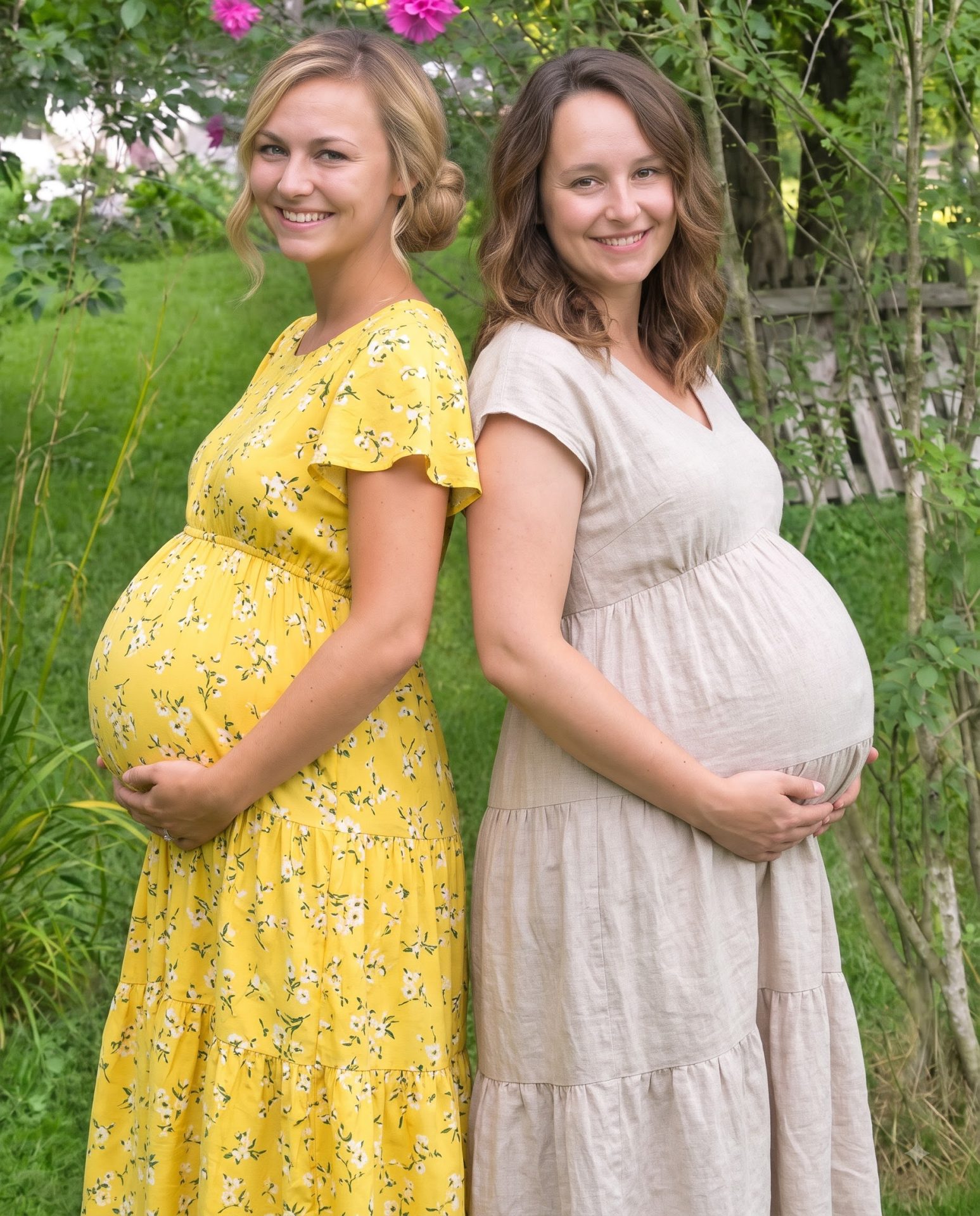
I placed my hands over my stomach, frightened by what this possibility could mean for our children. Emily began crying, but Dr. Harrison reminded us that the results were not yet definitive.
“We still need independently verified reference material before confirming the donor’s identity.”
He also explained that the genetic findings alone couldn’t determine whether either baby would experience medical complications. Both pregnancies would require specialist assessments and careful monitoring, but he urged us not to assume a particular outcome without evidence.
I looked at Emily, remembering how excited we had been when we selected Daniel’s donor profile. We had believed we were giving our children a special connection, never imagining that the same decision could expose a secret buried within our own family.
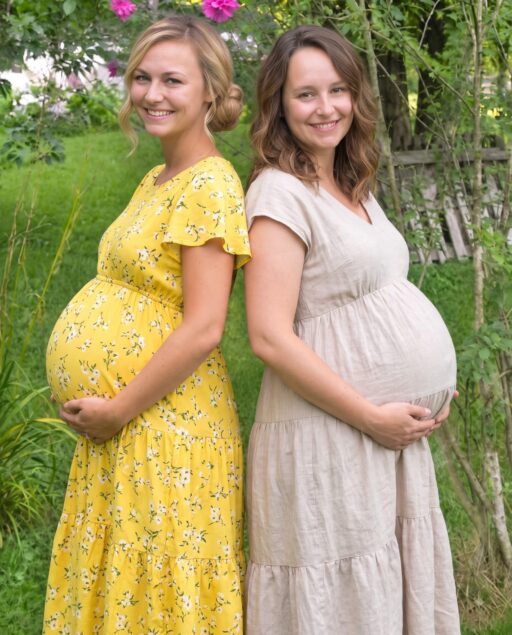
The laboratory had raised the possibility that our unborn babies shared not only a donor, but a biological grandfather who might also be their father. Until the final identity tests were completed, we could do nothing but wait for an answer we were terrified to receive.
The days following our meeting with Dr. Harrison were among the most difficult of my pregnancy. Emily and I had learned that our unborn children might have been conceived using biological material from our own father, but the laboratory still needed independently verified evidence before confirming that possibility.
Meanwhile, investigators continued examining the fertility clinic’s archived records and the mysterious visitor who had appeared at the hospital. His disappearance had initially made us wonder whether Daniel Whitmore had survived the river accident twenty-five years earlier.
Eventually, authorities identified the stranger, and the discovery was almost as surprising as the genetic results. The man wasn’t our father, although he had deliberately used Daniel Whitmore’s name when approaching the hospital.
His real name was Michael Whitmore, Daniel’s younger brother. He had been investigating his brother’s disappearance for years and believed that the old fertility records might contain information about what had happened.
When our attorney explained the discovery, Emily immediately questioned why Michael had pretended to be someone else. His actions had frightened us unnecessarily and made an already confusing investigation even more difficult.
“Why would he tell the hospital he was our biological father?”
“He apparently believed using Daniel’s identity would attract attention and force people to examine the old records.”
Michael had previously worked with administrative documents connected to a medical storage company. Through that work, he knew that biological samples associated with his brother had been preserved long after Daniel’s presumed death.
After learning about our pregnancies, Michael began searching for information that might connect us to those archived materials. Rather than approaching us openly, he used his brother’s identity, hoping that someone would recognize the name and reveal what had been concealed.
Investigators found no evidence that Michael had personally arranged our fertility treatments or manipulated the clinic’s recent procedures. Nevertheless, his deception had added another layer of uncertainty to a situation already complicated by decades of family secrecy.