
The next day, Ellen called about the buyer. He’d made a cash offer with the understanding that the house would be empty by closing. When Ellen contacted him, he forwarded the email chain and said he’d put the purchase on hold.
In one email, Cobb said we’d given up the house and left a few things behind. Attached were the disputed form and photographs taken after he changed the locks. One showed Moe’s crib with the fitted sheet still on it. Another showed Della’s school clothes hanging behind her bedroom door.
There was an earlier email, too. Cobb had promised the buyer an empty house before he ever came to our door and told Ginny to leave. He’d already set a date for closing.
A week later, a woman named Marlene called Ginny after hearing about the case from a neighbor. She and her husband had rented a duplex from Cobb two years earlier. Her husband drove long-haul routes. While he was on the road, Cobb changed their locks and told him over the phone that Marlene had agreed to move.
Marlene came over with a grocery bag full of old paperwork. She told us they’d paid for a storage unit, missed work trying to get their belongings back, and finally moved in with her sister. By then, they were exhausted and needed a place to stay.
“I kept thinking I should’ve done something,” she said.
Ginny moved her coffee cup out of the way and cleared a space on the table.
“You kept the paperwork,” she said. “Let’s look at it.”
Near the bottom of the bag was a letter Cobb had mailed to Marlene’s husband. A copy of a signed handover form was stapled to it. It said Marlene had met Cobb at the duplex and personally returned both keys on a Thursday afternoon.
Marlene pulled out a hospital discharge packet and unfolded the first page. On that Thursday, she’d been in the hospital recovering from surgery. She’d still been there when Cobb mailed the letter.
By the time our case went to court, another former tenant had come forward. Her family had lost most of the belongings they’d left behind. She still had the motel receipts from the week Cobb locked them out. Ginny sat with her and Marlene in the hallway while we waited for our case to be called.
Inside, Cobb admitted changing the locks. He said Ginny had arranged to meet him at the house and turn over the keys. According to him, she’d changed her story after I found her at Walmart.
I’d heard him talk down to my wife on the phone. Hearing him calmly describe a meeting she’d never attended made me grip the edge of the bench. Ginny had her phone beside her on the table. She opened the messages she’d already given Ellen and waited for her turn.
On the morning Cobb claimed Ginny had agreed to surrender the house, she’d texted him from Della’s doctor’s office.
“We’re staying through the lease. I’ve told you that already. Please wait until I’m home if you need to speak with me.”
Cobb had answered less than an hour later.
“Locks are changed. If you bring your husband into this, I’ll have the whole place emptied.”
Ginny read both messages aloud. She had to stop once to take a sip of water. When she finished, Ellen showed the court the form Cobb had sent me and Ginny’s original photograph of the key receipt. You could see the blue ink mark on both.
Then came the rent payments, Cobb’s written renewal, and the emails to his buyer. The driver had confirmed that Cobb moved the cleanout to six after I called from Walmart. In the video, right before the flag hit the truck bed, you could hear me asking him to put it down.
The judge found that Cobb had unlawfully locked us out. He was ordered to honor the lease and pay our family twelve thousand dollars in damages. The city later fined him and opened an investigation into his other properties. Marlene and the other former tenant pursued their own claims and eventually reached settlements.
I’d imagined the drive home from court a dozen times. In every version, I had something to say about what had happened. In the end, Ginny and I picked the kids up from school and talked about whether we had anything in the fridge for dinner.
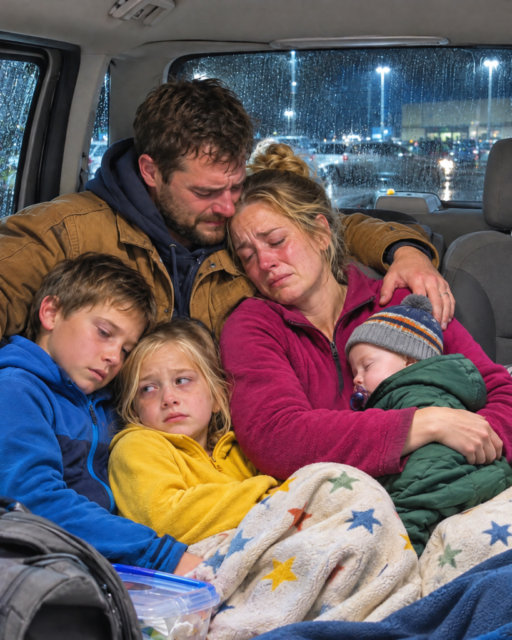
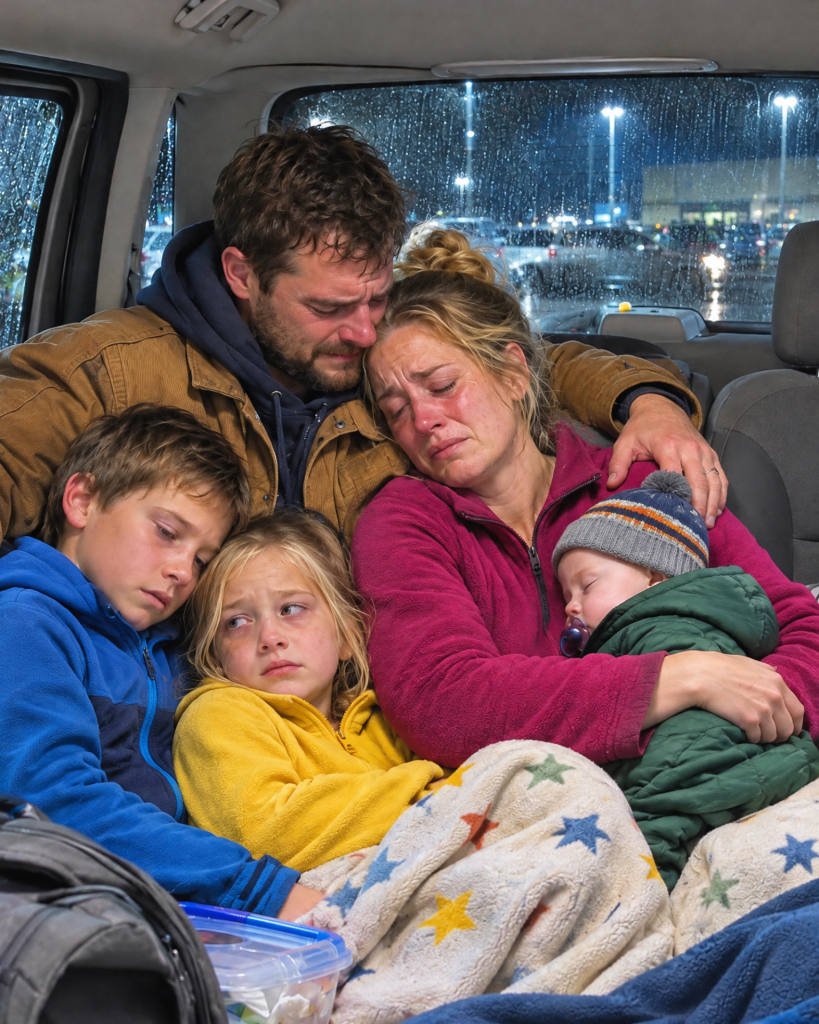
When we got home, Hayden slid open the van door. He reached behind the driver’s seat and pulled out a stack of blankets. I recognized the one from the motel parking lot.
“Can we take these inside now?” he asked. “I kept them here in case we came home and the key didn’t work again.”
I took half the stack and followed him to the front door. He waited beside me until I turned the key. Then, for the first time since we’d moved back in, he carried every blanket inside.
We stayed until our lease ended. By then, Ginny and I had put the court award together with our savings and made a down payment on a small house two blocks from the kids’ school. The kitchen cabinets needed painting, and the back door scraped the floor. Ginny had already picked out where she wanted to put the Christmas tree.
On moving day, I gave Hayden a key. He turned it over in his palm and asked if it was his to keep. I told him it was, then showed him how to lift the handle a little when the lock stuck.
He opened the front door himself. Della squeezed past him carrying a box marked BOOKS, even though it had three stuffed animals and a single library book inside. She’d stopped coughing months before, but whenever I thought about Walmart, my first memory was still the way she’d tried to stifle each cough under her blanket so she wouldn’t wake Moe.
That afternoon, Hayden helped me put my father’s flag in a display case above the fireplace. We’d kept it wrapped up since the morning I pulled it off the truck. While I measured where the case would go, Hayden told me he could barely remember Grandpa’s voice anymore.
I told him his grandfather used to call me every winter to ask if I had a good scraper in the truck. He knew I climbed power poles for a living, and somehow the ice on my windshield was what worried him. Hayden laughed and asked if we could put one in the van for Mom.
A week later, Moe took his first steps in that living room. Ginny saw him stand up beside a moving box and called my name. By the time I turned around, he’d made it three steps toward Hayden, who was sitting on the floor opening a bag of crackers. All three kids cheered when he landed on his bottom.
Last month, another storm hit the Gulf Coast, and my crew got called out. The night before we left, I found Ginny at the kitchen table making a list of what I needed to pack. She asked how long I thought I’d be gone. I gave her my best guess, knowing how fast those estimates change once the work starts.
Then I reached across the table for her hand.
“If anything happens while I’m gone, call me. Even if I’m forty feet up a pole. Leave a message and I’ll call you as soon as I’m down.”
“Even if it’s bad news?”
“Especially if it’s bad news.”
On my first night in Louisiana, my phone rang while I was putting my gear away. Ginny asked if I could stay on the line for a minute. Della had something to tell me about school, and Hayden wanted to show me what he’d done with his key.
When he got on the call, he held it up to the camera. He’d put it on a red shoelace so he could find it at the bottom of his backpack. Then he set the phone on the porch railing and showed me how he could open the front door on the first try.