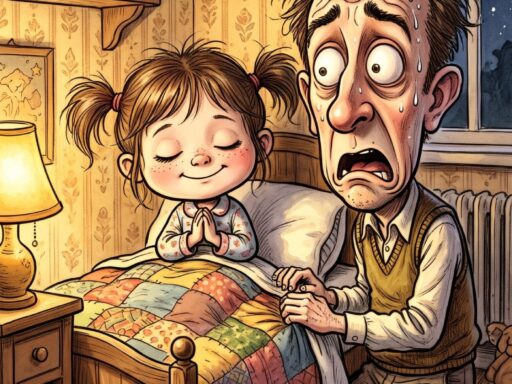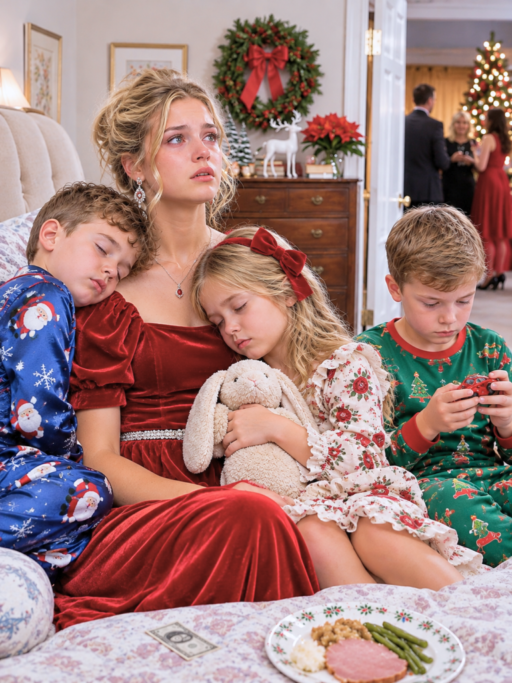
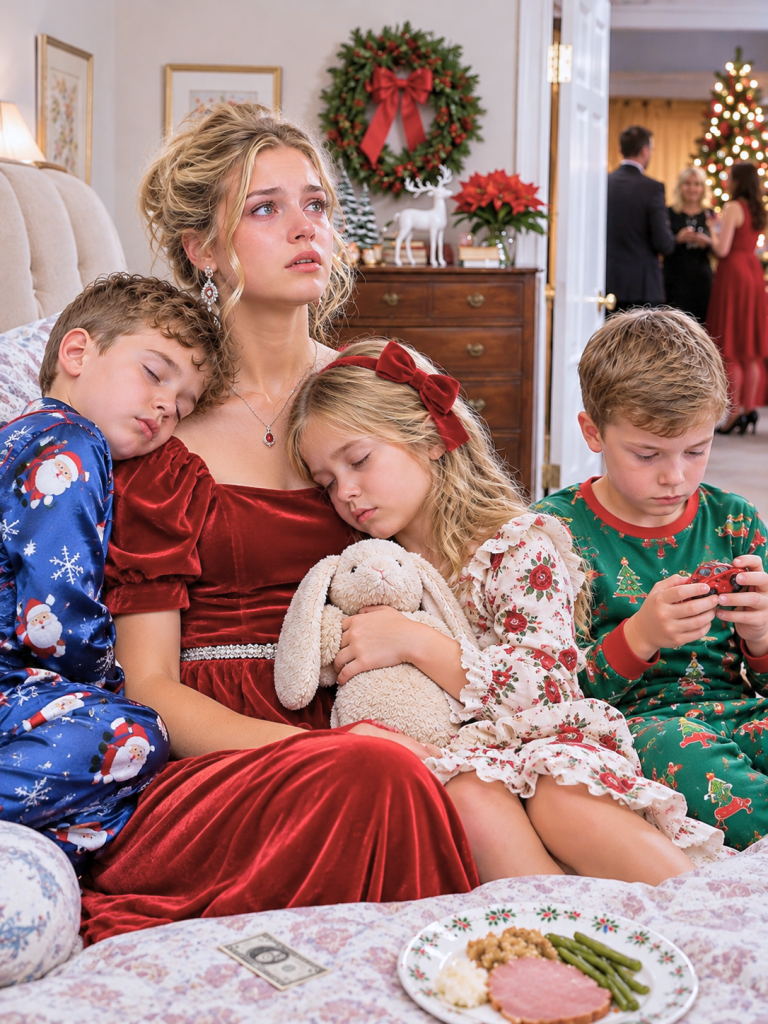

At eight o’clock on Christmas night, I found my fourteen-year-old stepdaughter sitting on the guest room floor, still wearing her Christmas dress. Three younger children were asleep around her, and a plate of untouched, cold turkey sat on the nightstand.
When I told her she could finally join the family downstairs, she looked frightened.
“Did Dad say I was allowed to?”
That question stopped me. I had no idea why a child would need permission to attend her own family’s Christmas dinner.
My name is Megan. I’m thirty-nine, married to Peter, and we have a two-year-old son named Owen. Peter also has a daughter, Lydia, from his previous marriage.
Lydia lives primarily with her mother, Renee, and visits us every other weekend. I’ve been her stepmother for five years, and I always believed we had a good relationship.
She’s thoughtful, artistic, and especially patient with her little brother. I never imagined that her kindness might be something the adults in our family were taking advantage of.
That Christmas, Lydia arrived shortly before noon wearing a dark green velvet dress. She carried a small package wrapped in brown paper, decorated with Christmas trees she’d drawn herself.
“Is Dad home?” she asked.
“He’s bringing chairs in from the garage.”
She smiled and placed the package beneath the tree.
“I made him something. I want to give it to him tonight.”
By late afternoon, our house was crowded with relatives. Peter’s brother Grant had arrived with his wife, Elise, and their children, seven-year-old Noah and five-year-old Sadie.
After the children opened their presents, Lydia happily examined the watercolor set we’d bought her. Owen sat beside her, tearing pieces of wrapping paper and laughing.
I even photographed them together.
Everything seemed perfectly normal until we started preparing dinner.
Peter glanced toward Lydia.
“Hey, Lyd, take the little ones upstairs for a while. Put on a Christmas movie so the adults can get everything ready.”
She looked uncertain.
“All three of them?”
“Yes. They’ll be fine with you.”
“Could I eat with everyone first?”
“We haven’t started dinner yet,” Peter replied. “Just help us out.”
I heard the conversation while carrying a hot casserole dish. I assumed Peter meant twenty or thirty minutes, so I didn’t interfere.
That was my first mistake.
At five-thirty, everyone gathered around the dining table. Lydia wasn’t there.
When I asked Peter to bring her downstairs, he shook his head.
“She’s watching the kids. She doesn’t mind.”
“Shouldn’t she eat with us?”
“I’ll take her a plate.”
Between serving turkey, helping our guests, and cleaning up spilled cranberry sauce, I let the matter drop.
Dinner ended, but the adults stayed downstairs for coffee, pie, and Christmas games.
Around seven, I asked about the children again.
“They’re watching a movie,” Peter answered. “Leave them alone.”
Nearly another hour passed before I finally went upstairs.
Noah and Sadie were sleeping on blankets, while Owen rested in his portable crib. Lydia sat beside them, her shoes tucked beneath a chair.
Her Christmas dinner had gone cold.
A twenty-dollar bill lay on the pillow next to the gift she’d made for her father.
“What’s this money for?” I asked.
“Dad gave it to me for babysitting.”
“Did you ask him to pay you?”
She shook her head.
“I didn’t want money. I just wanted to have Christmas dinner.”
My chest tightened.
I asked why she hadn’t come downstairs when the children settled.
Instead of answering, Lydia unlocked her phone and handed it to me.
At 5:26, she’d asked Peter whether they could come down because Noah was hungry.
His response was short.
“Not yet. We’re eating. There’s a plate for you in the hall.”
At 6:14, she’d asked again whether she could join everyone after Owen fell asleep.
Peter had told her to remain upstairs until the adults finished.
I stared at the messages.
My husband hadn’t forgotten his daughter.
He had known she wanted to come downstairs and deliberately kept her there.
And when I told Lydia she didn’t have to stay any longer, she asked the question that frightened me most.
“Did Dad tell you I could stop? I don’t want him to think I’m being difficult.”
I was still holding Lydia’s phone when she asked whether her father had given her permission to stop babysitting.
She was fourteen years old, yet she seemed genuinely afraid that coming downstairs for Christmas dessert would make him angry.
“You don’t need permission to eat with your family,” I told her.
She glanced toward the hallway.
“I just don’t want Dad to think I’m being difficult.”
I promised to handle it and went downstairs.
Peter was laughing with his brother Grant when I asked Grant and Elise to collect their sleeping children. Elise looked surprised.
“I thought Lydia wanted to watch them tonight.”
“Who told you that?”
“Peter did.”
I turned toward my husband.
“Peter, we need to talk. Now.”
In the kitchen, I asked why Lydia had spent more than three hours upstairs.
He shrugged.
“She was watching a movie with the kids. What’s the problem?”
“She missed Christmas dinner.”
“I brought her food.”
“On a paper plate that went cold because she was taking care of three children.”
Peter sighed.
“Megan, she’s fourteen. She’s old enough to babysit.”
I showed him the messages Lydia had sent asking to rejoin us.
“You knew she wanted to come downstairs, and you told her to stay.”
“She was helping the family.”
“Did you ever ask whether she wanted to babysit all evening?”
He didn’t answer directly.
Instead, he pointed out that he’d left her twenty dollars.
“She didn’t want your money, Peter. She wanted Christmas dinner with her father.”
When I explained that Lydia was afraid to stop without his permission, he rolled his eyes.
“She’s being dramatic.”
“Don’t call her dramatic.”
My voice rose enough to surprise him.
Upstairs, Grant and Elise were gathering their children. Elise apologized to Lydia, explaining that she’d believed Lydia had volunteered.
Lydia immediately said it was fine.
Then Peter appeared in the doorway.
“See? Everybody’s okay.”
Lydia jumped to her feet.
“Sorry, Dad.”
The apology came so quickly that I felt sick.
She hadn’t done anything wrong.
Downstairs, she accepted a slice of pie, but most of the guests were already preparing to leave. When her grandmother asked where she’d been all evening, Lydia glanced at Peter.
“Just helping.”
Later, I asked whether she often babysat during her visits.
“Only when Dad needs me,” she replied.
Then she added something I couldn’t forget.
“Sometimes that’s pretty much the whole weekend.”
Around nine, Grant returned to the kitchen to collect Sadie’s forgotten doll.
“Thanks for letting Lydia handle the kids,” he said.
I stopped loading the dishwasher.
“What do you mean?”
“Peter told me on Tuesday that Lydia wanted to earn some babysitting money.”
Tuesday.
Three days before Christmas.
Peter had arranged for his daughter to watch the children before he’d even asked her.
Grant looked horrified when I explained what had happened.
“I thought she’d agreed. I never would’ve left her up there all evening.”
After he left, I found Peter folding chairs in the garage.
“You told Grant on Tuesday that Lydia would babysit?”
“I mentioned it.”
“But you hadn’t asked her.”
“I knew she’d help.”
“How?”
He looked at me as though the answer were obvious.
“Because she always does.”
I stared at him.
He hadn’t considered whether Lydia wanted to spend Christmas with the family. He’d simply assumed she would give up her evening because she’d never refused him before.
“She came here to see you,” I said.
“And she did.”
“Peter, opening presents for an hour isn’t the same as spending Christmas with your daughter.”
He insisted I was turning a simple favor into an unnecessary argument.
But I was beginning to understand that Christmas hadn’t been an isolated incident.