
“Being brave doesn’t mean you weren’t frightened. Sometimes it means doing something important even when you’re scared.”
Then I admitted something I had been avoiding for months. I had hidden our financial struggles because I didn’t want Cooper worrying about money, but he had discovered the truth and quietly taken responsibility for problems that should never have been his.
“I should have been honest about the bills and the missed support payments. I’m sorry I made you feel you had to handle everything alone.”
Cooper turned his hand over and held mine.
“We were both trying to protect each other.”
“Yes, but protecting someone isn’t the same as telling them the truth.”
For the first time in months, we discussed our situation without pretending everything was fine.
Two days later, Grant’s attorney contacted mine to address the unpaid child support. By the end of that week, the nine missed payments and interest had been transferred into my account, along with additional money toward the medical expenses I had been gradually paying off.
I stared at the bank statement for several minutes, feeling relieved but also frustrated that it had taken such a painful confrontation to make Grant fulfill his obligations.
“The money was never the most important part,” I told Cooper.
“I know, Mom.”
“But I’m not going to pretend it doesn’t help.”
Grant’s relationship with our son began changing slowly, although neither of us believed one apology could erase four years of disappointment.
On the first Sunday after the canceled wedding, Grant called at exactly six o’clock. Cooper let the phone ring several times before answering, uncertain whether he was ready to trust his father again.
“Hi, Dad.”
“Hi, Cooper. I was wondering whether there’s something you’d like us to do together this week. You can choose.”
After considering several possibilities, Cooper suggested breakfast at a familiar diner.
“Pancakes. Saturday morning at the diner on Fifth Street.”
“I’ll be there at eight.”
“Dad, we’re meeting at nine.”
“I know. I’ll be there early.”
When Cooper arrived shortly after eight that Saturday, Grant was already sitting in a booth with two menus and a cup of cold coffee. The waitress quietly mentioned that he had been waiting since 7:15.
That breakfast didn’t repair their relationship, but it marked the beginning of a different pattern. Grant returned the following Saturday and continued showing up, even when their conversations were awkward or neither of them knew what to say.
Once, in November, he experienced a flat tire and couldn’t arrive on time. Instead of disappearing without explanation, he called Cooper from the roadside before my son even realized he was running late.
That phone call mattered because it showed Cooper that his father was beginning to understand the importance of reliability.
Cooper still kept a notebook, but he stopped recording the Sundays when Grant disappointed him. Instead, he began writing down the days when his father kept his promises.
Meanwhile, I stopped assuring my son that everything was fine when it wasn’t. Our conversations became longer and occasionally uncomfortable, but we were finally learning to trust each other with the truth.
The following spring, Cooper’s school announced another speech competition. I knew how painful his previous experience had been, so I was surprised when I discovered his white dress shirt hanging freshly ironed on the back of his bedroom door.
Cooper noticed me looking at it and explained that he had decided to enter the competition again. He wanted to speak about the same subject he had chosen two years earlier, although he had completely rewritten his presentation.
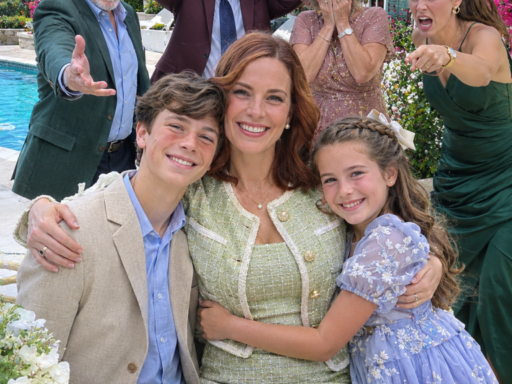
“I’m doing another speech about you, Mom.”
“Cooper, you don’t have to prove anything to me.”
He smiled.
“I know. That’s why I want to do it.”
On the evening of the competition, I sat in the third row of the school auditorium, feeling almost as nervous as I had during his first attempt. Two seats away sat Grant, wearing a simple gray jacket without the expensive accessories he usually favored.
He had asked permission to attend, and I spent three days considering the request before agreeing. Although our relationship remained distant, I understood that Cooper deserved the opportunity to have both parents support him.
When Cooper stepped onto the stage, I noticed how naturally the white shirt fit him now. He approached the microphone with a seriousness that reminded me how much he had matured during the previous year.
For a brief moment, he hesitated, and I feared that the painful memory of his earlier competition might overwhelm him. Then he looked toward the audience, found my face, and saw the reassuring nod I had given him since childhood.
He began speaking.
“My mother taught me that being strong doesn’t always mean being the loudest person in the room.”
His voice remained steady as he described the difficult years following our divorce. He spoke about the nights when I cried privately, the winter when I wore my coat inside to save money on heating, and the times I pretended everything was fine because I didn’t want him to worry.
He also explained how our conversations had changed after we finally began being honest about our difficulties. Instead of hiding behind comforting promises, we had learned to admit when something was wrong and work through it together.
“My mother showed me that love isn’t just about saying the right things. It’s about being there, especially when nobody is watching or applauding.”
I listened with tears in my eyes, remembering how often I had worried that I wasn’t doing enough for him. Yet Cooper’s words revealed that he had noticed the ordinary sacrifices I thought had gone unseen.
He completed the entire speech without forgetting a single word.
For a moment, the auditorium remained silent. Then the audience rose to its feet, applauding as Cooper stepped away from the microphone.
I was crying so hard that I could barely see him. A few seats away, Grant was also wiping his eyes, overwhelmed by what our son had accomplished.
Afterward, Cooper found us waiting in the school lobby, standing a respectful distance apart. His expression was filled with relief and excitement.
“Mom, I didn’t freeze this time.”
I pulled him into my arms.
“No, sweetheart. You didn’t.”
Grant waited until I released Cooper before approaching him. He extended his hand somewhat awkwardly, clearly uncertain how much affection our son would welcome.
“That was the best speech I’ve ever heard, Cooper. I’m not saying that to make up for anything. I genuinely mean it.”
Cooper looked at his father’s outstretched hand for several moments before accepting it.
“Thanks, Dad.”
It wasn’t a dramatic reunion or an instant reconciliation. It was simply a handshake between a father who was learning to keep his promises and a son who was gradually deciding whether he could trust him again.
Their relationship still required patience, and Grant understood that consistent effort mattered more than emotional speeches. He couldn’t recover the four years he had missed, but he could choose to be present in the years ahead.
I also knew that Cooper’s happiness couldn’t depend entirely on whether his father became the parent he needed. My son had already demonstrated remarkable strength by confronting painful truths, expressing his feelings, and refusing to let disappointment determine his future.
As we left the school that evening, I walked beside Cooper while Grant followed a respectful step behind. For the first time in years, I wasn’t watching my son anxiously search for signs that his father might disappear again.
Instead, I noticed how confidently Cooper carried himself, no longer the frightened boy who had once abandoned a speech because he couldn’t find the right words.
He had learned that courage didn’t require perfection, and that honesty could be uncomfortable without being something to fear. More importantly, he was beginning to understand that he deserved love and respect regardless of whether someone else fulfilled their promises.
I thought about the white shirt I had ironed on the morning of Grant’s wedding. It had once reminded Cooper of failure, but now it represented two moments when he had found the courage to speak despite his fear.
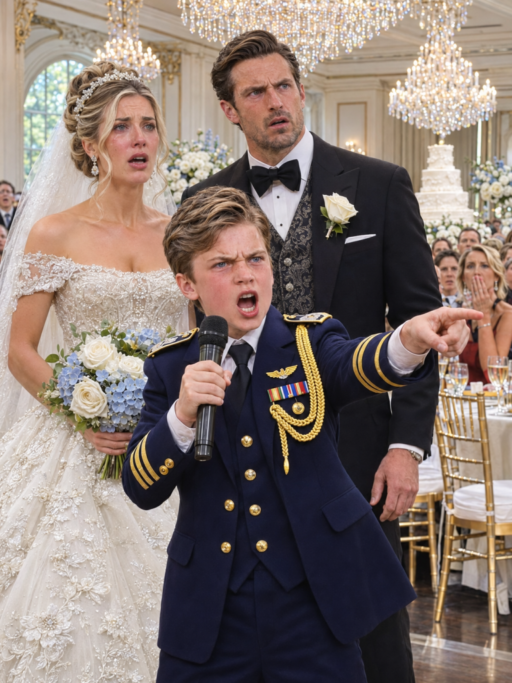
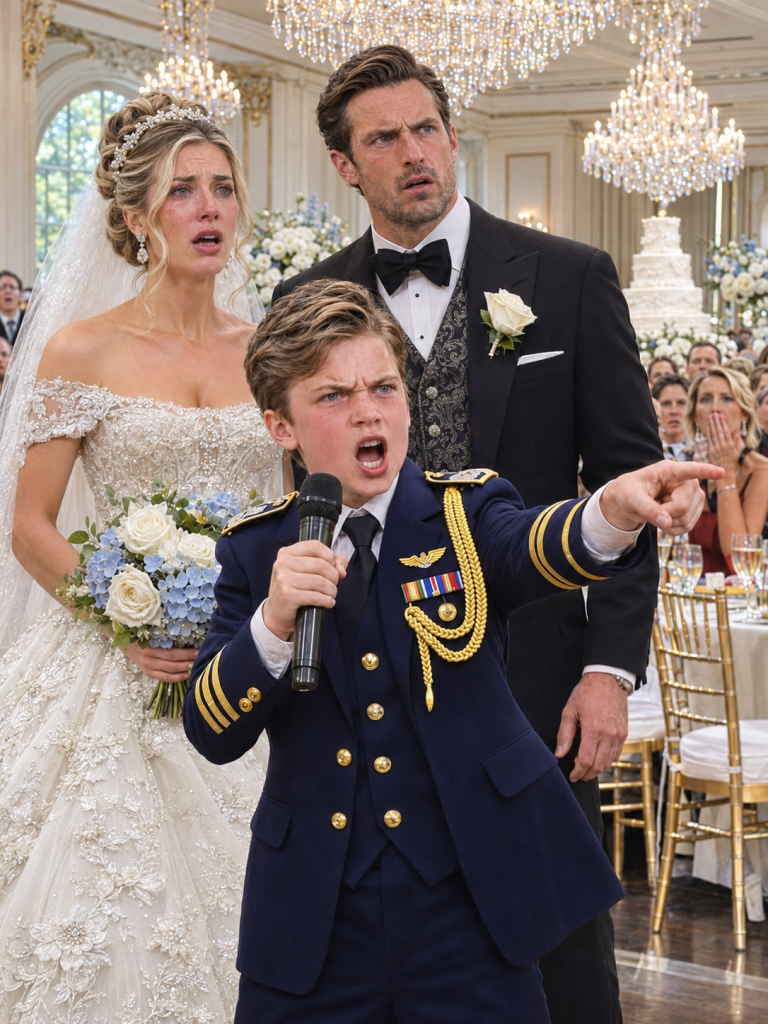
At the wedding, he had finally asked his father the question he had carried for four years. At the school competition, he had spoken about the person who had remained beside him throughout those years.
Both moments mattered, but neither was defined by applause or public recognition. They mattered because Cooper had stopped allowing silence to speak for him.
As we stepped into the cool spring evening, I took his arm and walked beside him. Grant remained nearby without demanding attention, allowing our son to decide how close he wanted their relationship to become.
Nobody asked Cooper to pose for photographs or pretend that our family had suddenly become perfect.
And this time, nobody needed to tell him to smile.