
My sister and I gave birth on the same day, in the same hospital, but our parents spent nine hours celebrating her newborn son without visiting me or my premature daughter. When I finally called my father and begged him to come, he accused me of ruining my sister’s celebration, completely unaware that his cruel rejection would soon expose a devastating family secret.
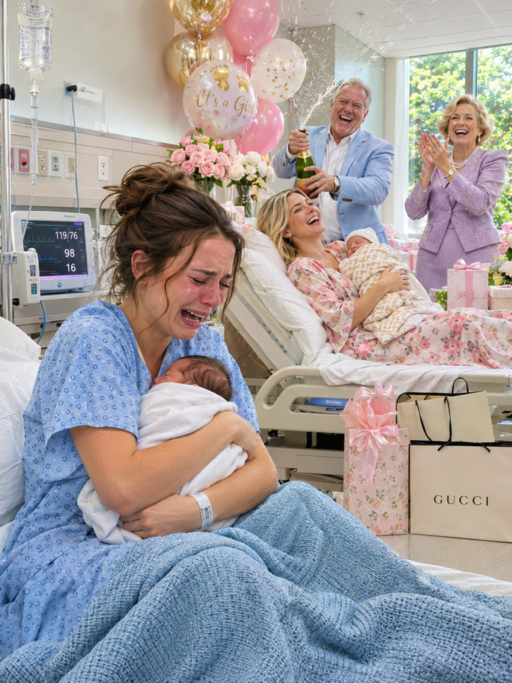
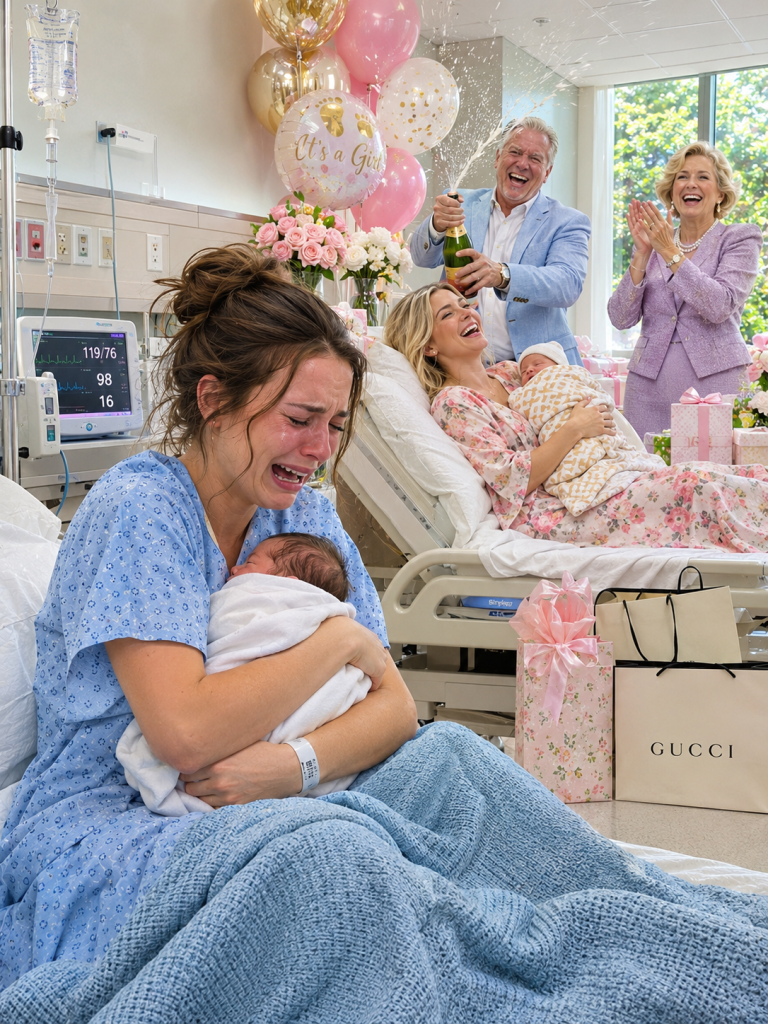
My name is Clara Vance-Bennett, and I was recovering in Room 408 of St. Jude’s Memorial Hospital after an emergency cesarean section. I had suffered a placental abruption at thirty-two weeks, lost nearly three liters of blood, and required multiple transfusions to survive.
My newborn daughter, Maya, was fighting for her life in the neonatal intensive care unit. She weighed only two pounds and fourteen ounces, needed mechanical ventilation, and faced a critical forty-eight-hour period that would determine her chances of survival.
Meanwhile, my younger sister Chloe was celebrating the birth of her nine-pound son, Oliver, in luxurious VIP Suite 412. Our parents, Arthur and Eleanor Vance, had surrounded her with expensive gifts, champagne, and enthusiastic relatives.
“To Oliver! The first grandson and the rightful heir to the Vance family legacy!”
My father’s booming toast reached my room, followed by applause and laughter. Not once during those nine hours did either parent come to check whether I was recovering or whether their granddaughter was still alive.
Their behavior was painful, but it wasn’t entirely surprising. For twelve years, I had been the person responsible for keeping our family’s finances stable while Chloe received nearly all their affection.
I was a successful architect who had built a profitable design business through years of demanding work. When my father’s engineering consultancy accumulated $600,000 in debt, I used my earnings to prevent its collapse and protect his reputation.
I also financed Chloe’s expensive fertility treatments, including procedures costing approximately $45,000 each. My money paid for luxury vehicles, my father’s yacht expenses, and the elaborate nursery Chloe had prepared for her baby.
Despite everything I contributed, my parents continued treating me as the independent daughter who never needed support. Chloe, however, was considered too delicate to handle financial difficulties or emotional disappointment.
As I lay in the hospital bed, my blood pressure dropped again, prompting another urgent assessment from the nursing staff. My husband, David, had been checking on Maya in intensive care, and I desperately wanted someone from my own family beside me.
I reached for my telephone and called my father, hoping that hearing how seriously ill I was might finally make him concerned.
“Clara, what is it? We’re in the middle of an important family toast.”
“Dad, please come see me. I’m still bleeding, and the nurses are giving me another transfusion.”
He responded with an irritated sigh instead of asking about my condition.
“Your sister just endured fourteen hours of labor and gave this family a healthy grandson. Why must you turn her special day into another crisis?”
I struggled to control my tears as I explained that Maya was in intensive care and might not survive. My father dismissed my concerns, insisting that I should hire additional medical assistance instead of expecting my family to interrupt Chloe’s celebration.
“You’re the independent one, Clara. Stop complaining and handle your own problems.”
He ended the call before I could respond, leaving me staring at the telephone in disbelief. After years of sacrificing my time, money, and well-being for my family, I finally understood that their affection had never depended on how much I gave.
A few minutes later, David entered my hospital room with an expression that immediately frightened me. His shirt was disheveled, his hands were trembling, and fresh abrasions covered the knuckles of his right hand.
I knew something serious had happened while he was away, especially when I noticed the mixture of anger and horror in his eyes. Before I could ask what was wrong, he approached my bedside and took both my hands, visibly struggling to find the words to explain what he had discovered.
David approached my hospital bed and knelt beside me, holding my hands while struggling to control his anger. His knuckles were scraped, and his usually composed expression suggested that something terrible had happened outside my room.
“David, please tell me what’s wrong. Is Maya okay?”
He quickly assured me that our daughter was stable and that her oxygen levels had improved slightly. The news brought me some relief, but I could tell he was still deeply disturbed.
“Maya is fighting, Clara. But I discovered something about your family that you need to hear.”
David explained that he had gone downstairs to buy me tea and broth. When he used the emergency stairwell near the hospital’s administrative offices, he overheard my father speaking privately with Chloe’s husband, Julian, and a woman named Elena Vance-Cruz.
Elena was Julian’s executive assistant, someone Chloe had previously described as responsible for coordinating international business accounts. David had remained hidden on the stairwell landing and recorded fourteen minutes of their conversation before confronting them.
“Clara, Chloe never carried that baby. She wasn’t pregnant.”
I stared at him, struggling to understand what he was saying. Throughout her supposed pregnancy, Chloe had shown us ultrasound photographs, medical invoices, and updates about her fertility treatments.
“That’s impossible. I paid for her treatments myself.”
David explained that Chloe had worn a prosthetic pregnancy belly and spent months visiting private retreats to maintain the deception. Oliver was Julian’s biological son, but his biological mother was Elena, who had secretly carried the pregnancy.
“The eighty-five thousand dollars you transferred to the fertility clinic paid for Elena’s arrangement and the confidentiality agreement.”
I remembered how Eleanor had repeatedly insisted that Chloe needed financial assistance because becoming a mother was so important to her. The realization that my family had used my generosity to finance an elaborate deception left me speechless.
David then revealed why the birth of a male child mattered so much to them. My grandfather, Harrison Vance, had established a trust controlling forty-nine percent of Vance Enterprise’s voting shares and a two-hundred-acre estate in Newport.
Under the trust’s succession provisions, a qualifying biological male heir born before the tenth anniversary of Harrison’s death could inherit those assets. If no eligible heir appeared before the deadline the following Friday, control would pass to the professionally licensed direct descendant specified in the contingency clause.
“That descendant is you, Clara. You were about to inherit approximately seventy million dollars in family assets.”