
“Here we go again. You always find a way to make everything about yourself.”
Those were my mother’s words as I lay helpless on my kitchen floor, begging her to call an ambulance. Instead of helping me, my older sister stepped over my body, collected her handbag, and walked out with my parents.
My name is Claire Whitcomb, and at thirty-two, I had served fourteen years in the United States Army, achieving the rank of Staff Sergeant. On Christmas Eve 2025, while spending my approved holiday and convalescent leave at home in Fayetteville, North Carolina, I wanted nothing more than to enjoy a peaceful family dinner.
I had been cooking since sunrise, preparing glazed ham, homemade pecan pies, cornbread dressing, and several side dishes. Unfortunately, my mother, Diane, began criticizing everything the moment she arrived.
“Melissa always makes her dressing from scratch. And you’ve put far too much butter in those sweet potatoes.”
My father, Robert, barely acknowledged me before settling in front of the television. My thirty-seven-year-old sister, Melissa, arrived nearly an hour later, complaining about the smell of bacon and criticizing my cooking.
Despite being unemployed and deeply in debt, Melissa had always been treated as the family’s favorite. Meanwhile, everything I accomplished, including purchasing my three-bedroom home through a VA loan, seemed insufficient to earn my parents’ approval.
Around three that afternoon, I developed a persistent pain in the lower right side of my abdomen. By five, the discomfort had become unbearable, accompanied by nausea and cold perspiration.
“Mom, something’s wrong with my stomach. It really hurts.”
“Please, Claire. We’re expected at the Hendersons’ house by seven-thirty. We don’t have time for another one of your dramatic episodes.”
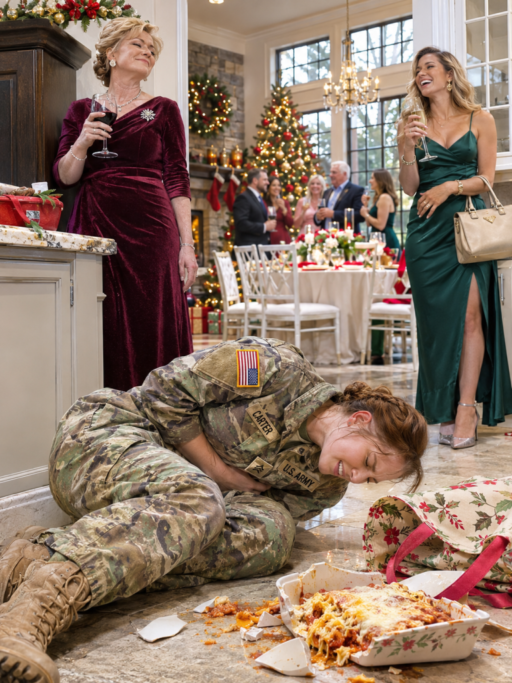
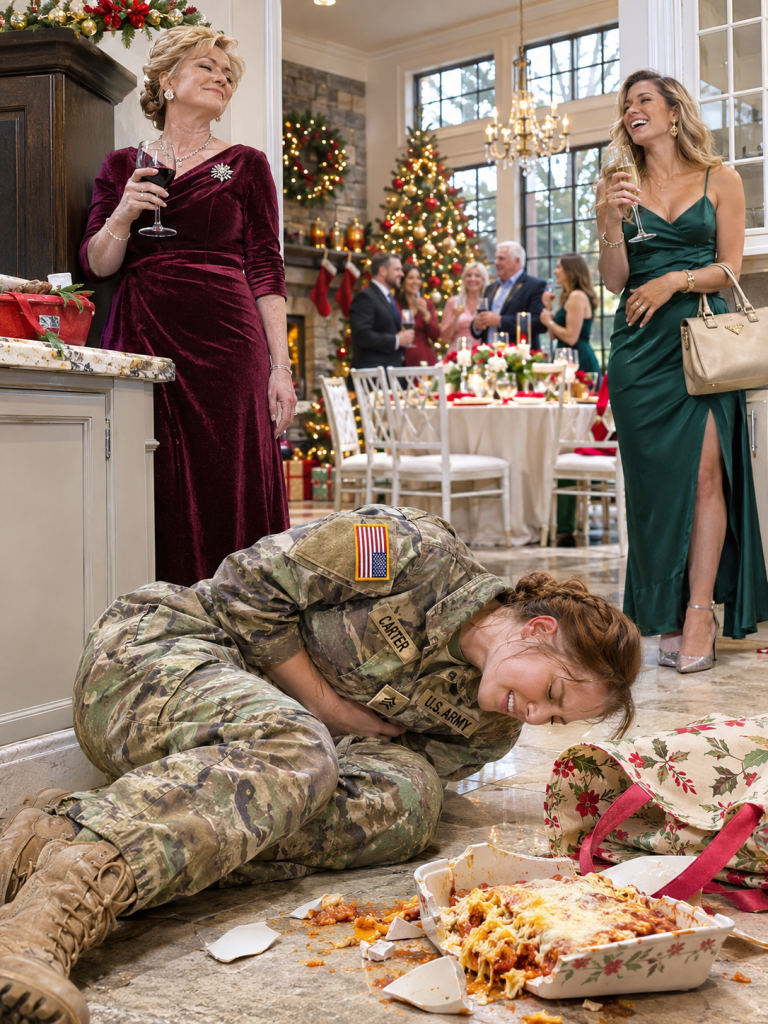
At 6:15 PM, I attempted to carry the green beans to the dining table. A sudden, excruciating pain overwhelmed me, causing me to drop the serving dish and collapse onto the kitchen floor.
“Mom, please call 911. I think something’s ruptured. I can’t get up.”
Diane stood in the doorway, looking irritated rather than concerned. When my father appeared holding the television remote, I desperately begged him to retrieve my phone from the counter.
“Stop embarrassing yourself, Claire. You’ve always needed to be the center of attention.”
Melissa checked her expensive wristwatch before stepping over my outstretched arm to retrieve her handbag.
“Call us when you’re finished performing. Some of us have actual lives.”
My father instructed everyone to collect their coats, convinced that I would recover once I no longer had an audience. Despite my desperate pleas, they abandoned me and drove away to enjoy dinner with Melissa’s in-laws.
My phone was only six feet away, but the overwhelming pain prevented me from reaching it. As my vision gradually darkened, I struggled to remain conscious until someone knocked on the front door.
“Claire, sweetheart? It’s Evelyn Brooks.”
My seventy-one-year-old neighbor, a retired Army nurse, discovered me after entering through the unlocked door. Recognizing the seriousness of my condition, she immediately contacted emergency services and knelt beside me.
“Stay with me, Staff Sergeant. Help is coming.”
As the ambulance’s emergency lights illuminated my kitchen, I finally lost consciousness. I had no idea how close I had come to dying, or what I would discover about my family when I woke up on Christmas morning.
When I regained consciousness, I found myself surrounded by medical equipment inside a hospital room. A nurse named Linda explained that I was in the surgical intensive care unit at Cape Fear Valley Medical Center, and it was already eight o’clock on Christmas morning.
Shortly afterward, Dr. Rebecca Shaw, the chief of general surgery, entered my room carrying a tablet. She sat beside my bed and explained that I had undergone emergency surgery the previous evening.
“Your appendix ruptured after developing gangrenous appendicitis. The resulting infection was extensive, and you were already experiencing severe septic shock when the ambulance arrived.”
My blood pressure had fallen to a dangerously low level of 54/30. Although the surgical team had successfully stabilized my condition, Dr. Shaw wanted me to understand how narrowly I had escaped death.
“If your neighbor had discovered you twenty minutes later, Claire, we probably wouldn’t have been able to save you.”
I closed my eyes, remembering my father’s dismissive expression and Melissa stepping over me without offering assistance. They had heard every desperate plea, yet none of them had considered the possibility that I was genuinely suffering.
“Has anyone from my family contacted the hospital?”
Dr. Shaw exchanged an uncomfortable glance with Linda before explaining that the admissions coordinator had attempted to reach my parents three times between midnight and four that morning. Neither had answered or returned the calls.
Linda handed me my phone, which she had kindly recharged after discovering that its battery was dead. Once they left the room, I immediately checked my notifications.
Four soldiers from my platoon had sent Christmas greetings, but there wasn’t a single missed call or message from my parents or sister. When I opened our family group chat, however, I discovered something that hurt considerably more than their silence.
Melissa had uploaded a photograph at 8:14 the previous evening, around the time I was undergoing emergency surgery. My parents were smiling around an elegant dining table at the Henderson residence, surrounded by expensive crystal glasses, candles, and beautifully prepared food.
Beneath the photograph, Melissa had written a cheerful caption.
“Christmas is so much better without unnecessary drama. Finally, some family peace!”
My mother had responded with a laughing emoji. While surgeons were fighting to save my life, my relatives had been celebrating the fact that they no longer had to tolerate my presence.
I was still crying when someone knocked on the door. Naomi Pierce, my thirty-four-year-old colleague and closest military friend, appeared carrying coffee and a small Christmas gift.
Because I had listed her as my secondary military emergency contact, our unit had notified her about my hospitalization. She immediately approached my bedside and took my hand.
“Claire, what happened to you?”