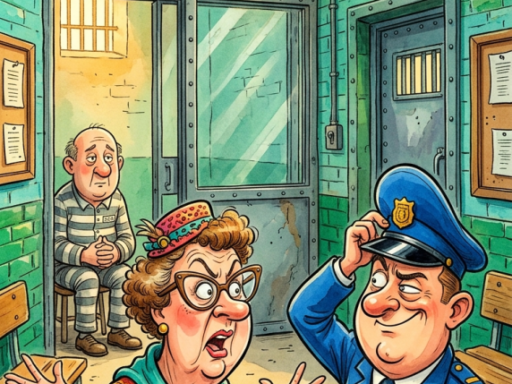


“Who’s going to pay my car loan now?”
That was the first question my twenty-seven-year-old sister, Tessa, asked when I announced that I had been laid off. My father, Martin, didn’t even ask whether I was going to be okay.
Instead, he began packing my belongings into cardboard boxes so Tessa could take over my bedroom.
“You’re no use to us now,” he said coldly.
My mother, Elaine, remained silent while our relatives continued eating birthday cake. It was Tessa’s birthday celebration, and apparently, my sudden unemployment was nothing more than an inconvenience.
My name is Claire Bennett. I was thirty-two years old and had worked in retirement and financial planning at a regional bank in Columbus, Ohio.
For fifteen years, I had financially supported my parents.
It began in October 2011, when my father’s factory closed after twenty-two years of employment. I was seventeen, working part-time at Kroger while finishing high school.
When I discovered that my parents were struggling with their mortgage, I handed Dad my entire monthly paycheck of $300. That same evening, I purchased a green accounting notebook to document my contributions.
After becoming a bank teller, I increased my monthly payments to $600 while attending evening college classes. Following graduation and several promotions, I began transferring $1,650 every month.
I sacrificed vacations, drove an unreliable car, and worked additional hours while my sister enjoyed opportunities I could never afford.
By October 2026, my notebook contained more than 180 entries totaling $215,850.
Yet when Dad examined those records, he wrote a sentence beneath the final amount.
Paid in full. Don’t expect a thank-you.
That evening, I carried seven cardboard boxes outside while Tessa discussed how she intended to redecorate my bedroom. My phone kept vibrating with congratulatory messages, but I didn’t explain them to anyone.
I drove to the home of Margaret Caldwell, my former supervisor, who had offered me her spare bedroom.
The following morning, at 6:02, I sent my family a formal email outlining the financial arrangements I was terminating.
My final $1,650 mortgage contribution would be made on November 1. Tessa’s $612 monthly car payment would end after October 25, and I would stop covering the family’s $210 phone bill after November 30.
However, I agreed to continue paying Dad’s $486 monthly health insurance premium through December 31 because he needed medication for hypertension. I also provided information about obtaining replacement coverage.
Dad responded furiously.
“Consider every dollar you’ve paid rent. Nobody deserves an award for paying rent.”
Tessa mocked me, while Mom insisted that my sister was deeply hurt by my behavior.
I saved every response.
Several days later, Tessa uploaded a video showing my former bedroom being painted bright pink. In the background, I noticed the handmade bookshelf my grandfather had built for me when I was nine.
Someone had attached a yellow note to it.
CURB.
But the most disturbing discovery came when my eighty-two-year-old grandmother, June, unexpectedly called me.
“Your father says you’re not helping with the mortgage anymore. Do you think I should increase my monthly contribution from four hundred dollars to five hundred?”
I stopped walking.
Until that moment, I had no idea Grandma was contributing anything.
And when she explained why she had been sending Dad money since September 2022, I realized my parents had been concealing something far worse than their favoritism toward Tessa.
“Grandma, how long have you been sending Dad four hundred dollars every month?”
“Since September 2022, sweetheart. Since you bought your condominium.”
I stood motionless in the supermarket aisle.
“Grandma, I don’t own a condominium. I was living in my childhood bedroom until ten days ago.”
She explained that Dad had told her I had moved away and stopped contributing to the household. Believing her daughter and son-in-law were struggling financially, she had offered to help.
For fifty months, Grandma had transferred $400 from her limited retirement income.
That amounted to $20,000.
I immediately asked her to suspend the payments before calling Dad from the supermarket parking lot.
“Why did you tell Grandma I stopped supporting you four years ago?”
“Your grandmother enjoys helping her family.”
“She believes I bought a condominium.”
“I’m not responsible for everything an eighty-two-year-old woman misunderstands.”
When I demanded an explanation, Dad became defensive and finally revealed that his actual monthly mortgage payment was $2,184.
Until then, he had repeatedly refused to let me examine his mortgage statements.
That Tuesday evening, I searched the Franklin County property records from Margaret’s kitchen table.
In August 2022, my parents had refinanced their mortgage, replacing their previous loan with a new thirty-year mortgage worth $272,000.
The original balance had been reduced to approximately $150,000. After refinancing expenses, my parents could potentially have received around $115,000 in cash.
Fifteen years of financial sacrifices, and the house was practically back where it had started.
Then I remembered Tessa opening her beauty studio in September 2022.
I searched her Instagram account and found photographs of the opening ceremony, followed by pictures of the white Ford Bronco Sport my parents had purchased for her in April 2024.
I immediately messaged Mom.
Where did the money from the refinancing go?
Her response arrived four minutes later.
It was an investment in your sister’s business. She’ll repay it when things improve. You didn’t need that money.
Tessa’s business had already closed.
On October 26, I accompanied Grandma to an appointment with her ophthalmologist, who explained that she had postponed necessary cataract surgery several times.
Her portion of the medical expenses would be approximately $1,100.
“Why haven’t you scheduled the surgery?” I asked afterward.
“I couldn’t manage that and the money I was sending your father.”
My heart sank.
Dad had allowed an elderly woman to sacrifice her eyesight while financing Tessa’s unsuccessful business.
At Grandma’s condominium, I placed my green notebook, the mortgage records, and Mom’s messages on her dining table.
Using a magnifying glass, she carefully examined every payment before recognizing Dad’s handwritten sentence.
Paid in full. Don’t expect a thank-you.