
By the time I turned twenty-one, surviving had become far more familiar than feeling comfortable. I was a junior at a public university in Illinois, and most of my days revolved around stretching every dollar as far as possible. I knew exactly how long a bag of rice would last, how many rides remained on my transit card, and how many meals I could skip before hunger started interfering with class. College was supposed to help me build a future, but instead it often felt like a lesson in staying afloat without letting anyone realize how close I was to sinking.
My name is Daniel Ruiz, though everyone called me Danny, and by November I had become the kind of person who never turned down honest work. I tutored algebra, unloaded produce behind grocery stores, cleaned tables at a diner, and even helped graduate students haul suspiciously heavy boxes across campus if they paid cash. Every day felt like carrying two burdens at once: one filled with textbooks and another weighed down by bills, exhaustion, and the constant worry that I simply wouldn’t have enough money to make it through another month.
One rainy Tuesday evening, while eating instant ramen beside an overdue utility notice, I came across a poorly written Facebook post advertising a housekeeping job. An elderly woman living near Bell Street needed someone dependable to clean her house once a week, and the position paid in cash. I called the number the following afternoon and spoke with a woman named Marlene Bishop, who explained the job was for her eighty-two-year-old aunt, Evelyn Mercer, a widow determined to remain in her own home despite declining health.
“She only needs someone to help once a week.”
“The pay is two hundred dollars each visit.”
For me, that amount felt life-changing. Two hundred dollars meant groceries, electricity, and a little breathing room, so I accepted the job immediately.
Mrs. Mercer’s house stood at the very end of a narrow alley behind a row of aging brick buildings. The place looked tired but stubbornly standing, with peeling blue paint, a sagging porch railing, and flower boxes that had long since stopped holding flowers. When she answered the door, I found a frail woman leaning heavily on a cane, wrapped in a thick cardigan despite the mild weather.
“You’re the boy from the phone.”
“Come inside before the cold ruins my joints.”
The house smelled of old wood, medicine, and faded perfume. Family photographs covered nearly every surface, and a silver-framed picture above the fireplace showed a much younger Mrs. Mercer standing beside a smiling Navy officer. After giving me a quick tour and assigning my chores, she warned me not to go upstairs.
“Not yet.”
The work itself wasn’t difficult and took less than three hours. I swept the floors, cleaned the bathroom, washed dishes, and dusted every room while Mrs. Mercer sat nearby sipping tea and commenting on my work with a bluntness that sounded almost unfriendly until I realized that criticism was simply how she communicated.
When I finished, she slowly looked around the house and gave a single approving nod.
“You didn’t steal anything.”
The remark caught me so off guard that I laughed automatically, but she remained completely serious before telling me to return the following Thursday. Then she shuffled into the living room.
She never paid me.
At first, I convinced myself she had simply forgotten. I stood by the front door debating whether to remind her about the money, but I needed the job too badly to risk upsetting her. By the time I gathered enough courage to say something, she had already disappeared into another room.
I came back the following week anyway. This time I noticed details I had overlooked before: an almost empty refrigerator, a worn prescription bag folded neatly on the counter, and the way her hands trembled each time she lifted her teacup. I cleaned the house again, she watched quietly, and once more the afternoon ended without a single dollar changing hands.
As I put on my jacket to leave, I finally forced myself to bring up the subject.
“I was wondering about the payment…”
Mrs. Mercer peered over the top of her glasses and asked only one question.
“You need it badly?”
The embarrassment hit me immediately because she had already guessed the answer. I admitted that I had been counting on the money, hoping she would finally hand me what she owed, but instead she studied me silently for several seconds before giving the only response she intended to offer.
“Come back next week.”
On the bus ride home, I felt angry with myself for letting the conversation end that way. Rent was due, my textbook access code was about to expire, and I couldn’t afford to spend my time working for free in a house tucked away at the end of an alley.
Even so…
The following Thursday, I went back.
By December, what began as a simple housekeeping job had quietly become something neither of us ever acknowledged aloud. I still came every Thursday to clean, but before long I found myself doing things that had never been part of the original arrangement. When I saw Mrs. Mercer struggling with groceries one afternoon, I carried them inside, and after noticing how little food she actually had, I started bringing extra supplies from the discount market with my own money.
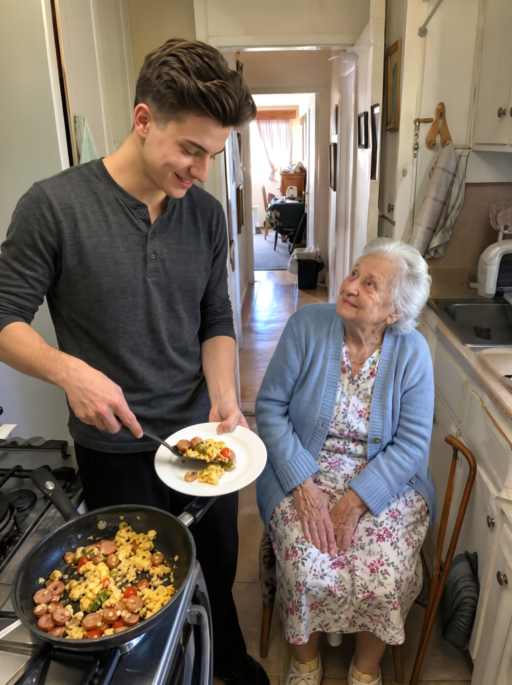
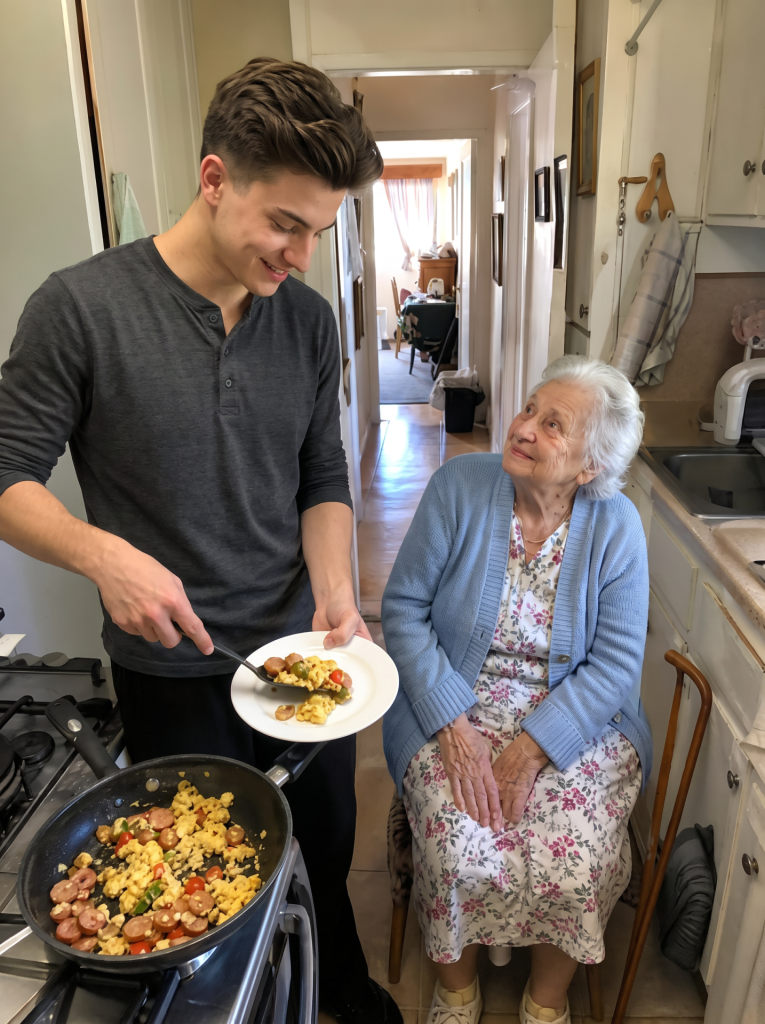
It didn’t take long to realize she often skipped meals because standing in the kitchen had become too exhausting. I began cooking simple dishes the way my mother used to when our family had very little, making garlic rice, chicken broth, scrambled eggs, and hearty soup that could last for days. The first time Mrs. Mercer tasted the broth, she quietly closed her eyes before giving me what was, for her, an extraordinary compliment.
“Tastes like somebody raised you properly.”
It was the closest she had ever come to showing affection.
As the weeks passed, every boundary between employer and employee slowly disappeared. I picked up prescriptions, carried groceries, drove her to doctor appointments, and one evening rushed from campus after she called from an unfamiliar number because she had become too dizzy to walk home. I found her sitting alone on a milk crate near the alley entrance, paid for a rideshare to urgent care, and stayed beside her until the doctors finished examining her.
“You should have stayed in class.”
“I’ll catch up later.”
She only shook her head.
“That’s what people always say.”