
“She nearly died.”
My mother’s voice immediately hardened.
“You’re exaggerating.”
“She always makes herself look weaker than she is.”
I ended the call without another word because I finally understood something that had been bothering me all night. My parents weren’t frightened because Lizzy had disappeared.
They were frightened because someone else had found her first.
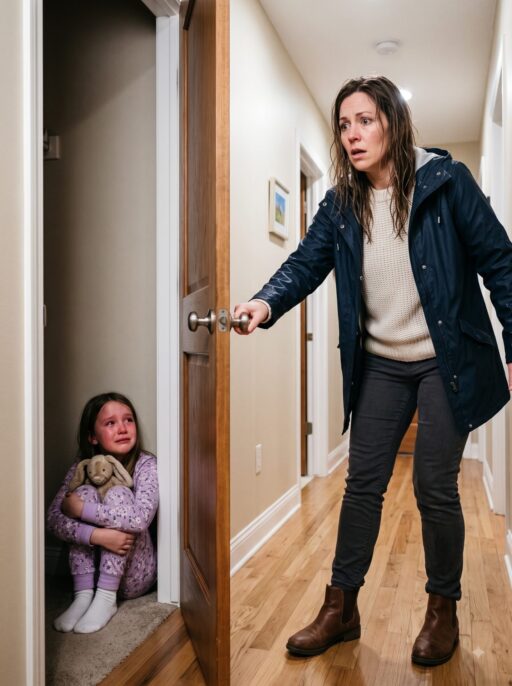
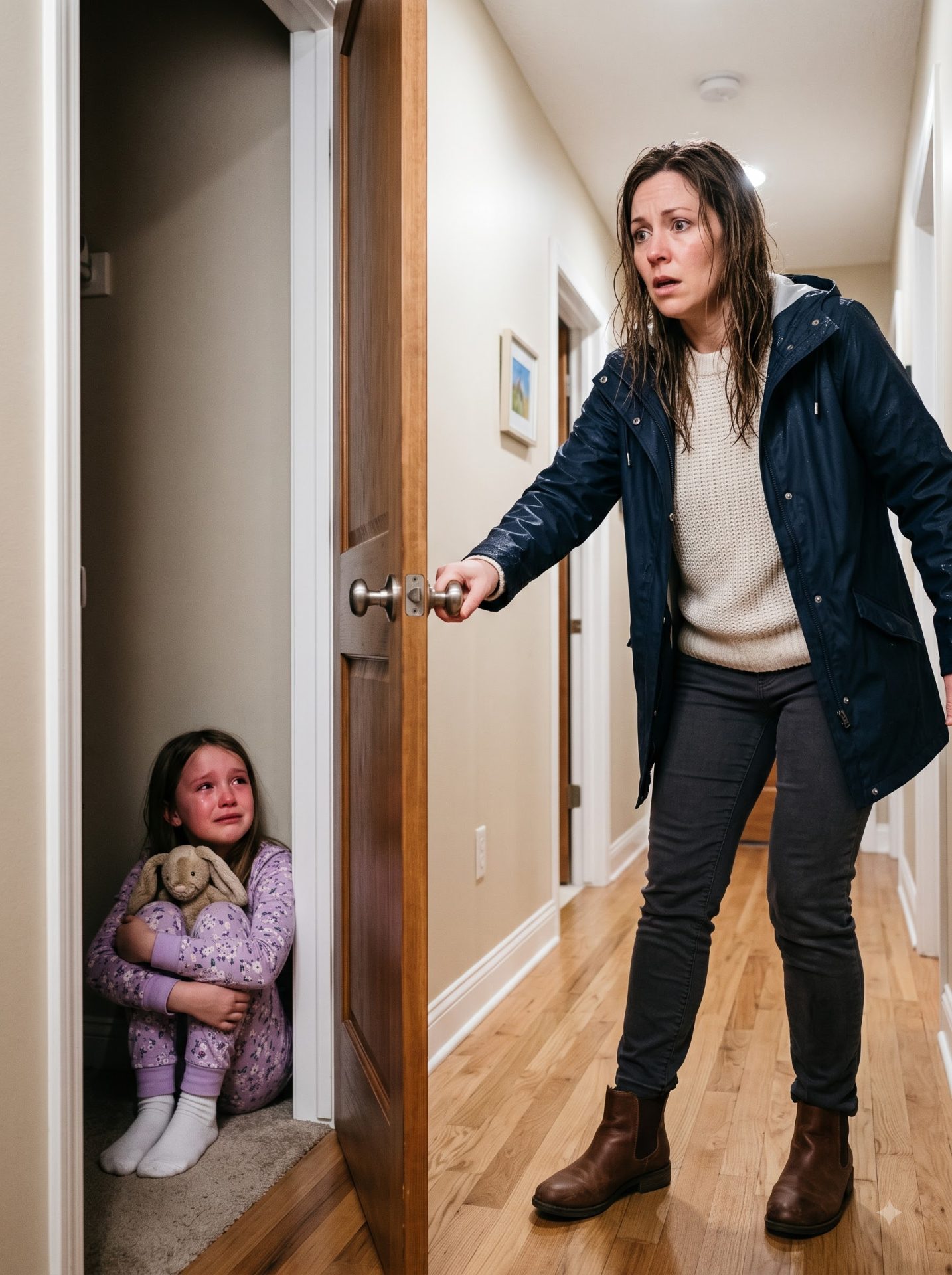
Child Protective Services and detectives interviewed me later that morning while doctors continued treating Lizzy. I described the midnight phone call, the locked closet, the broken side door, and everything I found inside the house, while Adam confirmed every detail he heard through the phone as I searched for Lizzy.
Then investigators asked whether anything else unusual had happened over the past year.
At first, nothing came to mind.
Then I remembered the monthly care payments Ian’s insurance company deposited into my parents’ account while he underwent treatment. The money was intended to provide food, clothing, medical care, and everything Lizzy needed while her father recovered.
“How much were they receiving?”
I quietly gave detectives the approximate amount.
One investigator immediately wrote something in his notebook.
“That may become important.”
By that afternoon, financial investigators had already requested bank records connected to the guardianship payments. At the same time, detectives searched my parents’ house and photographed the locked closet exactly as I found it, collecting the heavy latch, food containers, medication bottles, and several handwritten notebooks Gloria kept inside the kitchen.
When they opened the pantry, shelves were completely stocked.
There was canned food.
Fresh fruit.
Boxes of cereal.
Snacks.
Enough groceries for weeks.
Yet the child living inside that house had been hungry enough to whisper those words into a phone after midnight.
“I’m really hungry.”
Those five words suddenly carried even more weight because the investigation showed there had never been a shortage of food.
Only a shortage of compassion.
Late that evening, Detective Morgan returned to the hospital carrying several photographs recovered during the search. One image immediately caught my attention because it showed a locked filing cabinet inside my father’s office.
“What was inside?”
“Financial records.”
She placed copies across the table.
The monthly guardianship payments had continued arriving exactly as scheduled, but large portions of that money never appeared to have been spent on Lizzy. Instead, investigators traced thousands of dollars toward home renovations, vacations, restaurant bills, and purchases completely unrelated to a six-year-old child’s care.
Then Detective Morgan showed me something else.
A spreadsheet.
Every monthly payment intended for Lizzy had been carefully tracked by Gloria herself.
Beside several entries she had written small handwritten notes.
“Reduce grocery costs.”
“No new clothes this month.”
“Too expensive.”
I felt sick reading those words because they weren’t accounting notes.
They were decisions about my niece’s basic needs.
The following morning, Ian called from his treatment center after finally learning what had happened. He broke down before I even finished explaining that Lizzy was safe, repeatedly apologizing for trusting our parents while believing they loved his daughter as much as he did.
“I failed her.”
“No,” I told him.
“They lied to all of us.”
He remained silent for several seconds before asking the one question I had been avoiding since finding Lizzy.
“Will she ever trust our family again?”
I looked toward the hospital bed where Lizzy had finally begun eating small pieces of toast without being afraid someone would take the plate away.
“She’ll trust the people who protect her.”
“And from now on… that’s exactly what we’re going to do.”
Over the next several weeks, Lizzy slowly regained her strength under the care of doctors, counselors, and a team of child-protection specialists. She began eating regular meals again, slept through the night without waking in panic, and gradually stopped asking whether she would be punished for requesting food.
One afternoon, while a therapist gently asked her about life at my parents’ house, Lizzy quietly explained that the closet wasn’t something that happened only once.
“Sometimes Grandma locked me in there.”
“For how long?”
“I don’t know.”
“Until she said I learned my lesson.”
She also described being told not to mention the closet to anyone because people would think she was a liar. Every interview matched the physical evidence investigators had already collected, and for the first time, nobody dismissed her words simply because she was six years old.
The financial investigation expanded at the same time. Bank statements confirmed that the monthly guardianship payments intended for Lizzy had been deposited exactly as scheduled, yet investigators found very little spending on food, clothing, school supplies, or medical care. Instead, thousands of dollars had gone toward vacations, home improvements, expensive dinners, and purchases that had nothing to do with raising a child.
When detectives compared those records with Gloria’s handwritten budgeting notes, the pattern became impossible to ignore. Every attempt to reduce Lizzy’s daily expenses appeared alongside luxury purchases benefiting the adults responsible for caring for her, creating a timeline that supported what Lizzy had been quietly enduring for months.
Gloria and Walt insisted they had only been enforcing discipline, while Daniel claimed he rarely visited and knew nothing about Lizzy’s daily life. But investigators recovered text messages showing regular conversations about guardianship payments, household expenses, and concerns that Ian might unexpectedly return before his treatment ended.
One message stopped everyone.
“Don’t let Natalie spend too much time alone with Lizzy.”
“She asks too many questions.”
Reading those words answered something I had wondered ever since finding Lizzy in the closet. My parents hadn’t simply been hiding what was happening inside the house.
They had been actively trying to keep the rest of the family from discovering it.
Several months later, Ian’s health had improved enough for him to attend the family court hearings. Walking into the courtroom beside him was one of the hardest moments of my life because he blamed himself for trusting our parents, but the judge reminded him that the responsibility belonged to the adults who accepted guardianship and failed to protect the child placed in their care.
After reviewing the medical reports, financial records, photographs, interviews, and investigative findings, the court permanently terminated my parents’ guardianship. Ian immediately regained full parental authority, while I was appointed as Lizzy’s standby guardian to ensure she would always have a safe home if his health ever declined again.
Gloria cried as the decision was read aloud, insisting she had sacrificed everything for her granddaughter. The judge listened patiently before reminding her that real sacrifice is measured by actions rather than words, and the documented evidence showed repeated failures to provide proper care despite receiving financial resources specifically intended for Lizzy’s wellbeing.
No dramatic speech changed the outcome.
The records had already spoken for themselves.
A few months after the case concluded, Ian and Lizzy moved into a small house only fifteen minutes from mine. Her new bedroom overlooked a garden filled with sunflowers, the pantry door had no lock, and she quickly developed the habit of opening the refrigerator simply because she could.
One Saturday morning, she stood in the kitchen holding an apple in one hand and smiling proudly.
“Aunt Natalie?”
“Yes?”
“I don’t have to ask first anymore.”
I felt tears gathering in my eyes.
“No, sweetheart.”
“You never have to be afraid of being hungry again.”
She wrapped her arms around me before running outside to show her father the flowers she had planted. Watching them together, I realized healing didn’t happen all at once through court orders or investigations.
It happened one ordinary day at a time, in a home where a little girl finally believed the adults around her would keep their promises instead of their secrets.