
The Husband Who Wanted Me Gone
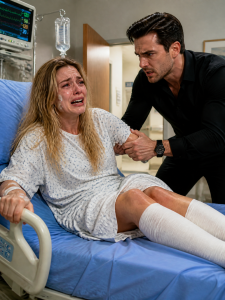
The hospital room smelled of antiseptic, old coffee, and clean bandages. My name was Rachel Moore, and both of my legs were trapped in heavy casts from thigh to foot. My ribs were injured, stitches hid beneath my hair, and the heart monitor beside me kept repeating the rhythm I used to stay calm.
Beep. Breathe. Beep.
Three weeks earlier, an ordinary afternoon had ended in rain, broken glass, and flashing emergency lights. For twenty-one days, I waited for my husband, Grant, to visit with flowers, clothes, or even one kind sentence.
When he finally came, he stood at the foot of my bed and said, “Enough with the drama, Rachel. Get up. We’re going home.”
I stared at him, stunned.
“Grant, I can’t.”
“Don’t start.”
“My legs are broken.”
He dismissed the doctors, the casts, the chart, and every warning written in my file. To him, my pain was not a medical emergency. It was an inconvenience.
We had been married for eleven years. After our daughter, Sophie, was born, I left my career in financial compliance because Grant said one parent should be home full-time. I gave up work, managed the house, raised our child, and convinced myself that keeping peace meant protecting the family.
“I gave up everything for this family,” I whispered. “You’re my husband. You’re supposed to help me.”
He looked at me coldly.
“You’re just making everything harder.”
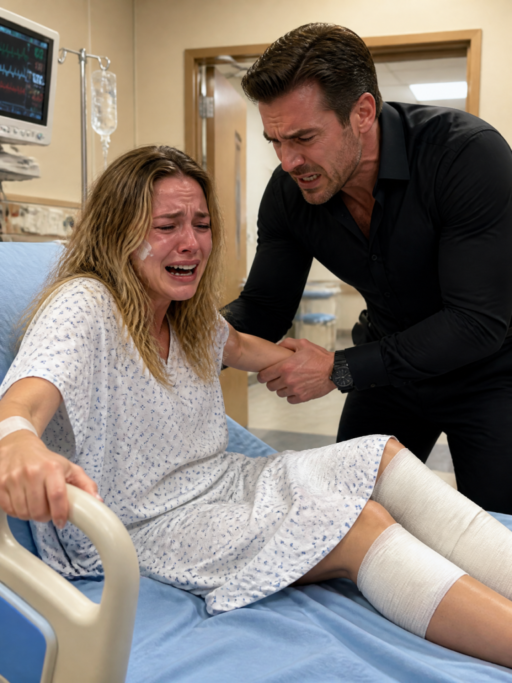
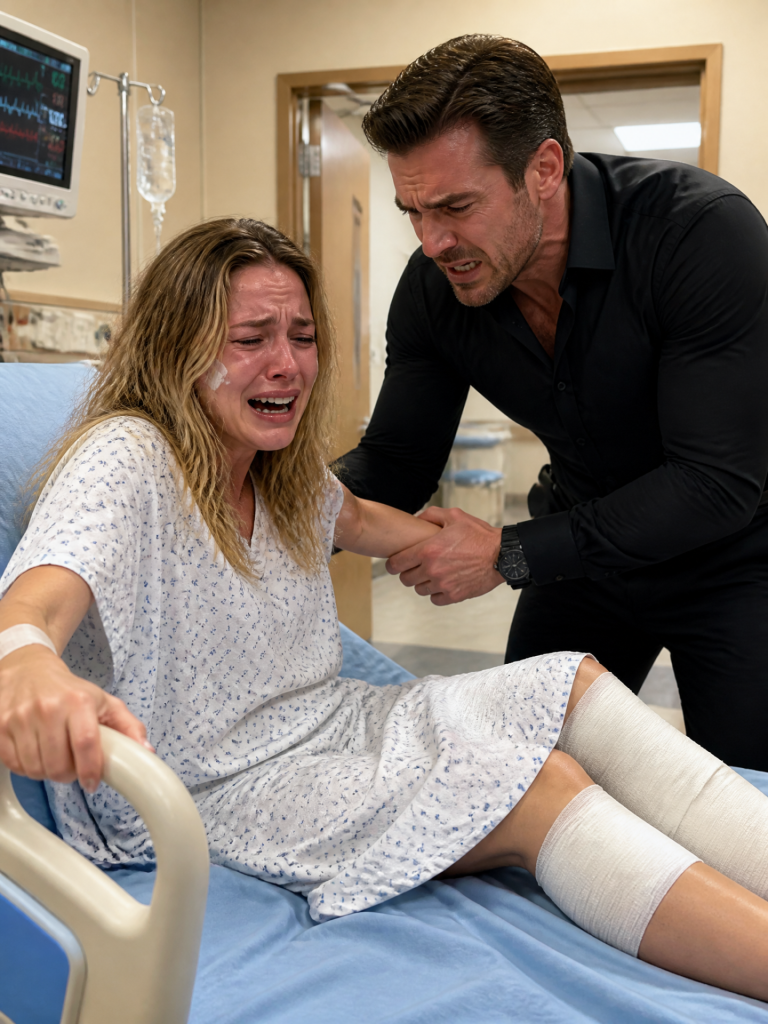
Then he pulled the blanket away, grabbed my arm, and tried to force me upright.
Pain tore through me. The monitor screamed.
“Get up,” he demanded.
For the first time in years, I said, “No.”
The Nurse Who Asked the Right Question
A nurse named Maren entered as the alarm continued. Grant immediately softened his voice.
“I was only helping my wife.”
Maren looked at the monitor, then at me.
“Rachel?”
My automatic answer rose before I could stop it.
“I’m okay.”
I had said it for years.
I’m okay.
Nothing is wrong.
He didn’t mean it.
He’s just stressed.
But Maren did not move.
“I’m not asking whether you can tolerate it,” she said gently. “I’m asking whether you want him touching you or helping you out of this bed.”
The room went still.
Grant’s face tightened just enough for me to understand the warning. For eleven years, I had learned his silent language: a look, a pause, the way a door closed, the way he said my name.
Even lying there broken, part of me still wanted to protect him.
Because if I said the truth aloud, I would have to hear it too.
“No,” I whispered.
Maren nodded and told him to leave.
Grant called it ridiculous. He said I was medicated, confused, and emotional. But this time, I answered for myself.
“I understand exactly what’s happening.”
He left the room after one final performance, pausing beside Sophie’s drawing taped to the wall.
COME HOME SOON, MOMMY.
For one second, I saw the man I married—the man who once made midnight pancakes and cried when our daughter was born.
Then he said, “Don’t make decisions while you’re upset,” and walked out.
Afterward, another nurse, Priya, checked my monitor.
“I’m sorry,” I said.
“For what?”
“For causing a problem.”
Priya’s answer was simple.
“You didn’t.”
That nearly broke me.
Later, Maren returned and asked the question no one had ever asked before.
“Do you feel safe going home with your husband when you’re discharged?”
I thought of our perfect-looking house, our quiet arguments, and all the ways Grant had taken control one small decision at a time.
“I don’t know,” I said.
“That answer is enough for tonight,” she replied.
Then she explained my options: restricted visits, a patient advocate, and a different discharge plan.
I had forgotten what options felt like.
The Notebook in My Bag
That night, I asked Priya for the blue canvas bag containing the belongings recovered after the crash.
Inside were my cracked phone, wallet, house key, one earring, a scarf, and a small black notebook I did not recognize.
Half the pages were blank.
Then I found handwriting that was not mine.
Dates.
Initials.
Transfers.
Account references.
One note froze me:
A.B. signature still pending.
A.B.
Rachel Moore.
Another page listed an amount: $184,000.
At seven the next morning, I called my older sister, Laura.
She arrived in twenty-eight minutes, wearing two different earrings and the expression of someone ready to fight the whole hospital if necessary.
I handed her the notebook.
She read it carefully.
“Did you put this in your purse?”
“No.”
“Did Grant?”
“I don’t know.”
Then I remembered something. Two months earlier, Grant had asked me to sign a document about an insurance policy. I had delayed because Sophie had a fever, and he never brought it up again.
Laura looked pale.
“Why would your signature be required for a $184,000 transfer?”