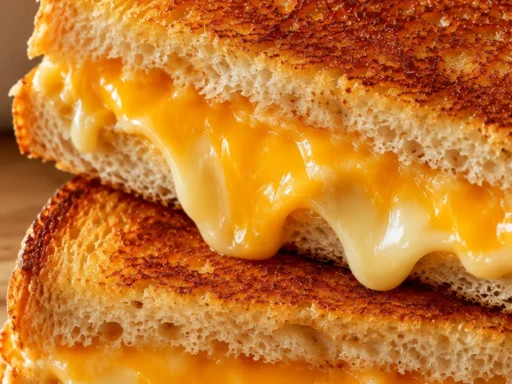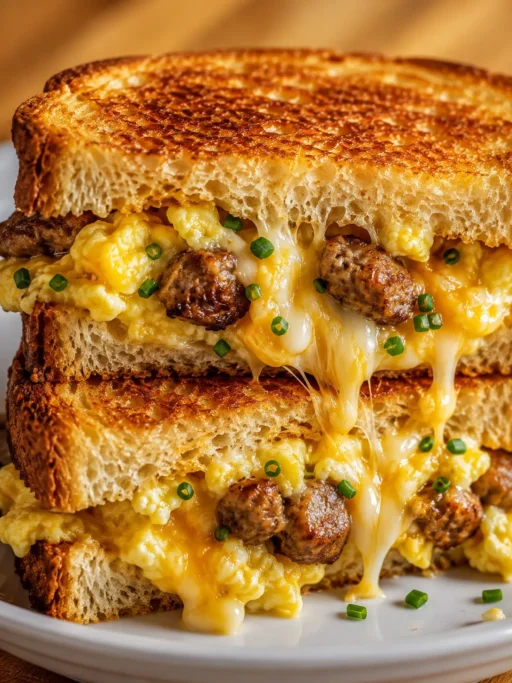
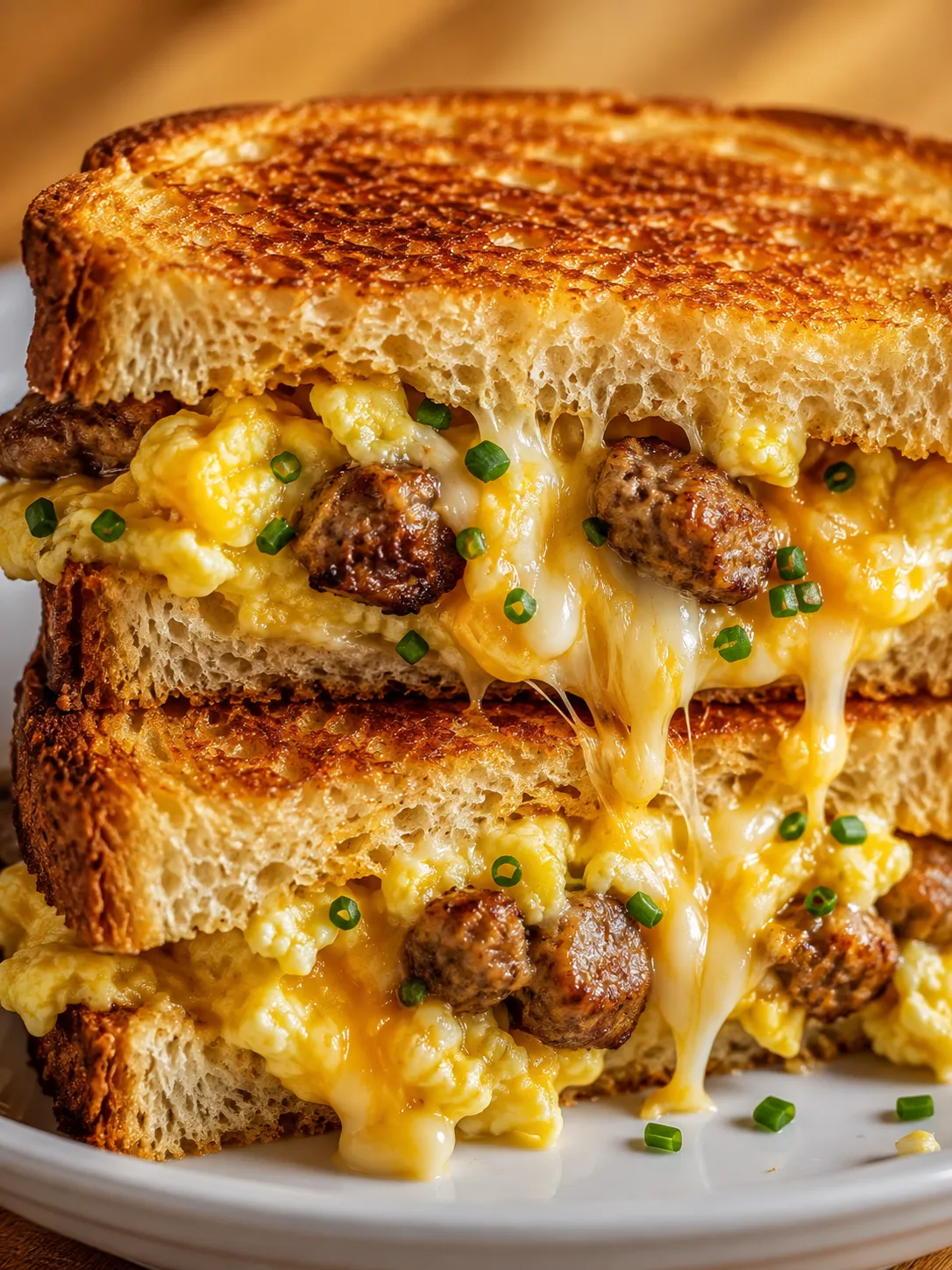

Breakfast Grilled Cheese is what I make when a plain egg sandwich feels a little too quiet. It has the crisp buttered bread of a grilled cheese, with soft eggs and browned breakfast sausage tucked inside.
The best version is not complicated. Cook the filling first, use bread sturdy enough to hold it, and give the sandwich enough time in the pan for the cheese to melt into the eggs.
Breakfast Grilled Cheese Fillings
Choose ingredients that cook quickly and do not leak too much moisture into the bread. Thick sourdough gives the sandwich structure, while sliced cheese melts faster and seals the filling in place.
- Sourdough bread. Holds the eggs and sausage without collapsing, and the edges toast up crisp.
- Breakfast sausage. Adds savory flavor and enough richness to make the sandwich feel like brunch.
- Large eggs. Soft scrambled eggs make the center tender instead of dry.
- Colby-Jack cheese. Melts smoothly and gives the sandwich a mild, creamy bite.
- Unsalted butter. Browns the outside and lets you control the salt.
- Milk. Loosens the eggs just enough for a softer scramble.
- Chives. Add a fresh finish that cuts through the cheese.
Griddle It Slow
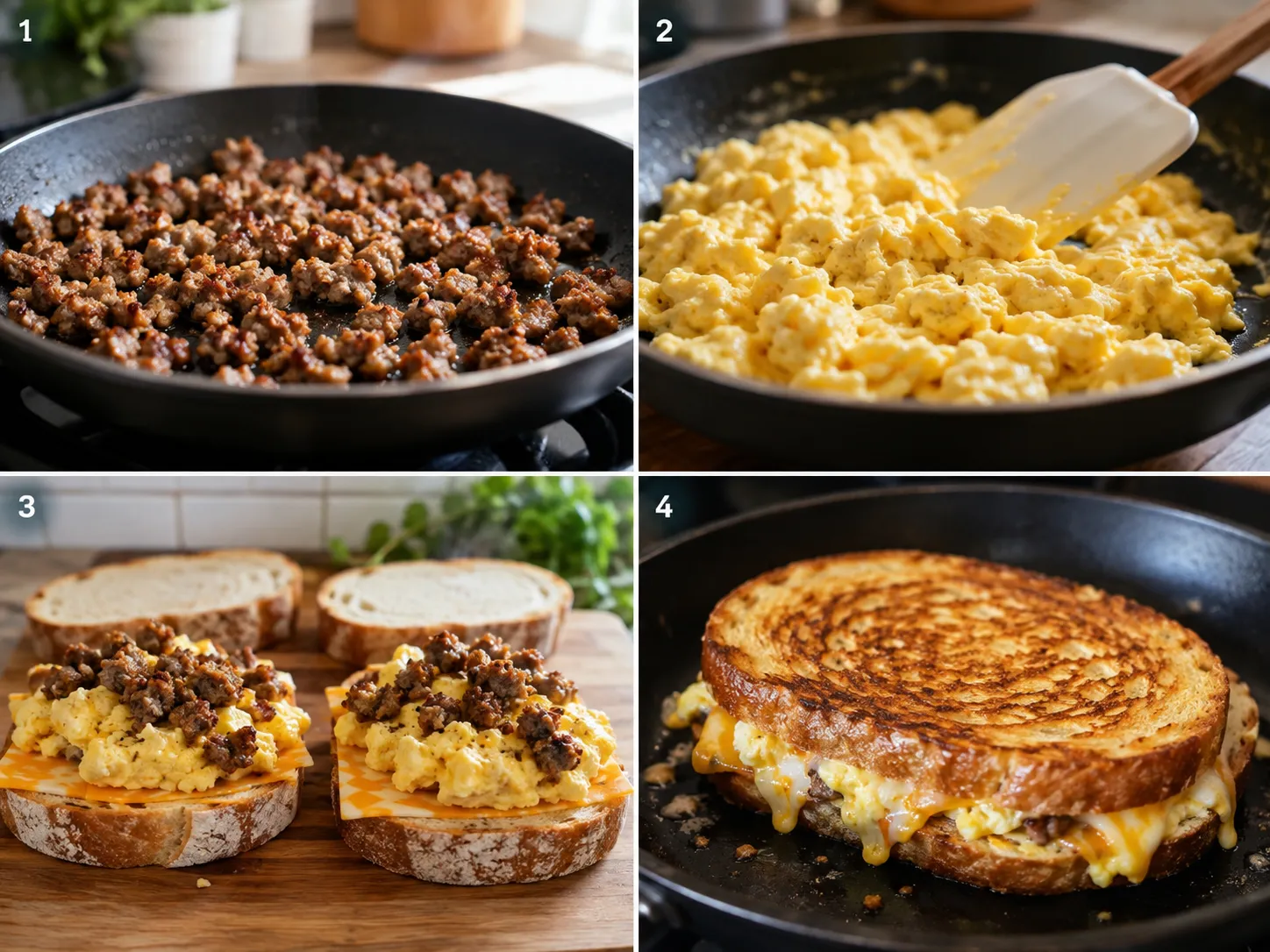
- Brown the sausage. Cook it in a skillet until no pink remains and the crumbles are deeply savory. Drain off extra fat so the filling does not soak the bread.
- Scramble the eggs. Whisk eggs with milk, salt, and pepper. Cook gently until barely set, then pull them from the heat while they still look soft.
- Build the sandwiches. Butter the outside of the bread. Layer cheese, egg and sausage filling, chives, more cheese, and the second slice of bread.
- Toast until melted. Cook over medium-low heat for 3-4 minutes per side. Press lightly and cover near the end if the cheese needs help melting.
- Rest and slice. Let each sandwich sit for one minute before cutting. The cheese firms slightly and keeps the filling from sliding out.
Soft Eggs Matter Most
The eggs keep cooking after they leave the skillet, so stop before they look fully dry. You want soft curds that hold together without turning rubbery. The USDA says egg dishes should be cooked thoroughly, and its shell egg safety guide gives clear handling and cooking advice.
For this sandwich, the sweet spot is softly set eggs that are not runny. If your pan runs hot, move it off the burner for a few seconds while stirring. Gentle heat gives you better texture and buys time once the sandwich hits the skillet.
The Sausage Safety Check
Breakfast sausage needs to be cooked through before it goes into the sandwich. Crumble it small so it browns evenly and does not create bulky pockets. The USDA safe temperature chart lists 160°F for ground meats, which is the number to remember if you check with a thermometer.
Drain the sausage well after cooking. A little fat tastes good, but too much softens the bread from the inside. If your sausage is very salty, season the eggs lightly and taste the filling before assembling.
Cheese On Both Sides
Put one slice of cheese under the filling and one over it. That small detail helps glue the sandwich together. It also keeps the eggs from falling out when you flip.
Medium-low heat is better than a blazing pan here. The bread should turn golden at the same pace the cheese melts. If the bread is already dark and the center is still firm, cover the skillet for 30-60 seconds. The trapped heat finishes the melt without needing more browning.
Swaps For Real Mornings
Bacon, diced ham, turkey sausage, or meatless sausage all work. Pepper jack makes it spicy. Sharp cheddar makes it bolder. A thin slice of tomato is good too, but pat it dry first so it does not waterlog the sandwich.
If you want vegetables, cook them before they go in. Raw peppers or mushrooms release water in the pan and make the center damp. Spinach is fine, but squeeze out extra moisture after wilting it.
Storing The Extras
These sandwiches taste best right away, when the bread is still crisp and the cheese is stretchy. Leftovers can still be useful. Cool them, wrap them tightly, and refrigerate in an airtight container. The USDA notes that most leftovers keep for 3-4 days in the refrigerator in its leftovers safety guide.
Reheat in a dry skillet over medium-low heat, an air fryer at 350°F, or a toaster oven. The microwave warms the filling fast, but it softens the bread.
Brunch Plate Ideas
For a simple plate, add fruit and hot coffee. For a bigger brunch, serve the sandwiches with hash browns, roasted potatoes, or a bowl of tomato soup for a diner-style breakfast-for-dinner meal.
If you are feeding a group, keep finished sandwiches warm on a wire rack set over a sheet pan in a 200°F oven. Do not stack them. Stacking traps steam and softens the crust you worked for.
Summary
Crispy bread, soft eggs, sausage, and melted cheese make this Breakfast Grilled Cheese hearty enough for brunch but simple enough for a weekday.
FAQs
- Can I make Breakfast Grilled Cheese without sausage?
-
Yes. Leave the sausage out and use an extra egg or add sauteed peppers, onions, spinach, or mushrooms. The sandwich will still be rich from the cheese and buttered bread.
- What cheese melts best for this sandwich?
-
Colby-Jack, cheddar, American, provolone, and pepper jack all melt well. I like Colby-Jack because it melts smoothly without overpowering the eggs.
- Can I use bacon instead of breakfast sausage?
-
Yes. Cook the bacon until crisp, drain it well, and crumble or layer it into the sandwich. Keep the pieces fairly small so the sandwich slices cleanly.
- How do I keep the bread from burning?
-
Cook over medium or medium-low heat. If the pan is too hot, the outside browns before the cheese melts. A lid for the last minute helps trap heat without drying out the bread.
- Can I make these ahead for busy mornings?
-
You can cook the sausage and eggs ahead, then assemble and grill the sandwiches when ready to eat. Fully cooked sandwiches can be refrigerated, but they reheat best in a skillet or air fryer.
- What should I serve with Breakfast Grilled Cheese?
-
Fresh fruit, crispy hash browns, roasted potatoes, or a simple green salad all work. For brunch, cut the sandwiches in halves or quarters and serve them hot from a sheet pan.
References
Sources cited in this recipe.