
I had already started recording the conversation, and every word was saved.
After Gregory left, I sat in my car and listened to the recording again.
Not because I wanted revenge.
Because I needed to remind myself that I was not imagining things.
For months, I had questioned my own judgment.
My daughter had not.
That evening, Samantha called me with information that changed everything.
She had spoken with another woman who recognized Gregory’s name.
A woman who said he had entered her life in almost the same way.
He had been supportive.
He had been patient.
He had asked questions about her home and finances.
Then he started suggesting that he could “help” manage important decisions.
I listened silently.
Because suddenly, the situation was bigger than my own relationship.
Gregory had not simply made one bad choice.
He had a pattern of finding women who trusted him.
Women who believed they had finally found someone who would protect them.
Then my phone rang again.
This time, it was Abigail’s school.
My heart immediately tightened.
“Mrs. Alison, there is someone here asking to pick up Abigail.”
I stood up.
“Who?”
The person on the other end hesitated.
“They said they were sent because there was an emergency.”
My hands went cold.
“Do not release her.”
“She is safe with us. We wanted to confirm with you first.”
I closed my eyes.
Because I finally understood what Gregory was doing.
He could no longer control my decisions.
So he was trying to reach the one person he knew I would always protect.
My daughter.
And this time, I was ready.
After the school called and confirmed Abigail was safe, Christopher and I drove there immediately. I tried to stay calm during the entire drive because I did not want my daughter to see how scared I was, but deep down, I finally understood that Abigail had never been imagining anything.
She had noticed the things I ignored.
She had felt the danger I kept explaining away.
When we arrived at the school, Abigail was sitting in the principal’s office with a teacher beside her. The moment she saw me, she stood up and ran toward me, and I held her tightly because I realized she had been carrying a fear that no eight-year-old child should have to carry.
“I’m sorry, Mom.”
I pulled back and looked at her.
“Why are you sorry?”
She looked down at her hands.
“Because everything became a big problem after I told you about Gregory.”
That answer hurt more than anything else because Abigail was still thinking about how her honesty affected the adults around her. She was not worried about what Gregory had done to our family; she was worried that speaking up had caused conflict.
I held her hand and told her the truth.
“You did not create this problem.”
She looked at me quietly.
“You helped me see a problem that was already there.”
For years, I thought protecting Abigail meant making sure she never experienced anything painful. But I finally understood that protecting her also meant teaching her that she was allowed to trust her feelings and tell me when something did not feel right.
The school explained that Gregory had arrived earlier with paperwork claiming he had permission to pick Abigail up. They had refused to release her because they followed the safety rules and contacted me before allowing anyone else to take responsibility for her.
That decision reminded me how important it was to have people who listened instead of people who assumed. For months, Gregory had tried to make himself look like the person in control, but the people around Abigail understood something he did not.
She was not someone to be controlled.
She was someone to be protected.
After that day, I focused on rebuilding the stability that Abigail had lost. I secured our apartment, organized all important documents, changed passwords, and made sure everyone involved in Abigail’s care knew exactly who had permission to make decisions for her.
But the most important changes happened inside our home.
I started having more conversations with Abigail about trust, safety, and honesty. I wanted her to understand that she never had to stay silent just because an adult told her something was not important.
One evening, while we were sitting together at the kitchen table, Abigail looked at me carefully.
“Are you still upset with me?”
I immediately put down what I was doing.
“Why would I ever be upset with you for telling me the truth?”
She looked down.
“Because everyone was upset.”
That was the moment I realized how deeply the situation had affected her. Abigail had started believing that keeping adults happy was her responsibility, and I knew I needed to help her unlearn that.
“You are never responsible for protecting adults from the truth.”
She looked at me.
“Even if they are family?”
I nodded.
“Especially if they are family.”
A few weeks later, Gregory contacted me again and asked to meet. He said he wanted to explain everything and believed we had both allowed the situation to become worse than it needed to be.
For a moment, the old version of me wanted to listen.
The woman who always searched for reasons to forgive.
The woman who always wondered if she was being too harsh.
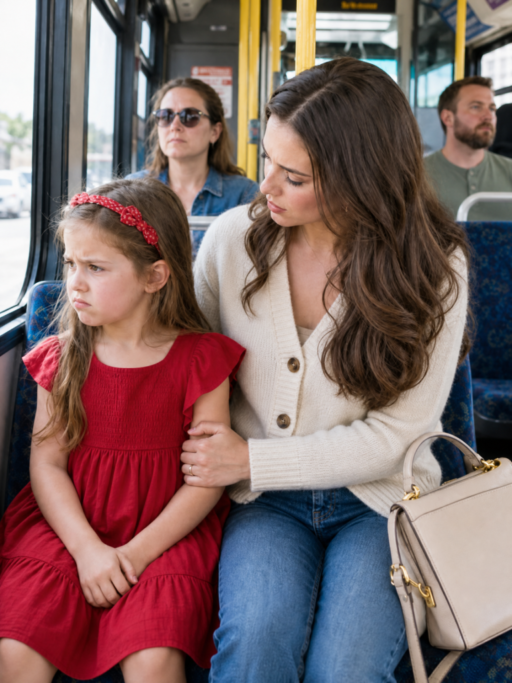
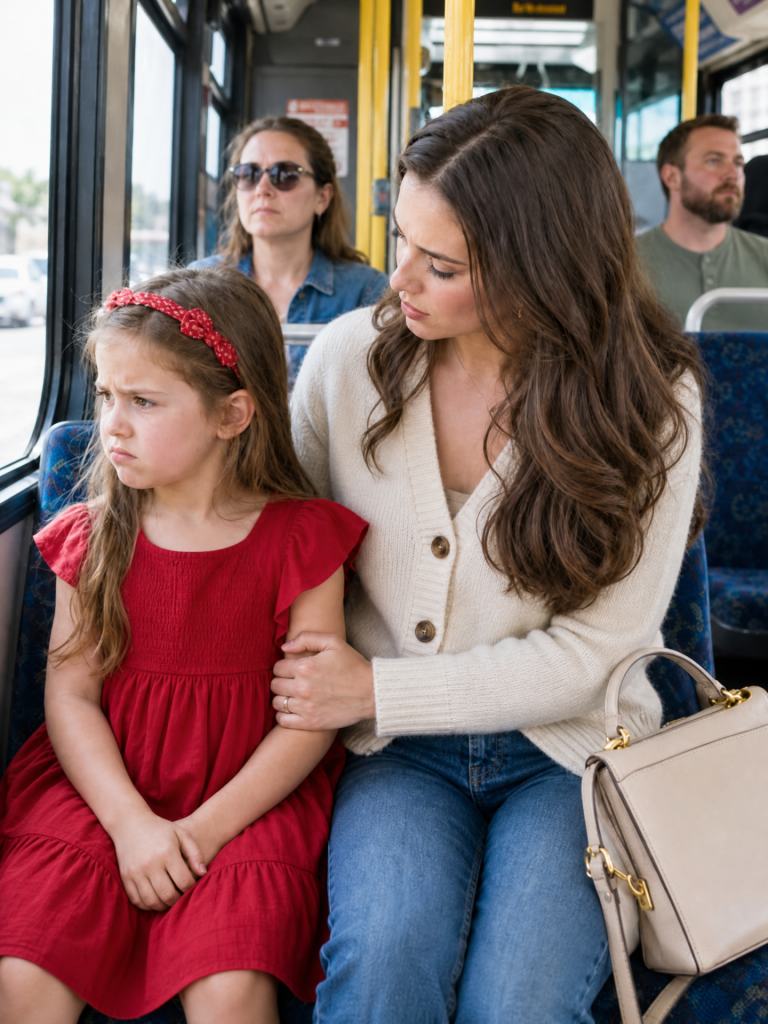
But then I remembered Abigail sitting on that bus, afraid to go home, and I remembered that my first responsibility was no longer protecting someone’s feelings.
It was protecting my daughter.
When I answered Gregory’s call, I kept my voice calm.
“I think you need to understand something.”
He stayed quiet.
“This is no longer about a misunderstanding.”
I continued.
“You made decisions about my home, my documents, and my daughter without my permission.”
Gregory tried to defend himself by saying he was only trying to help and that I was allowing fear to control me. But I had heard those explanations before, and I finally recognized that every conversation with him ended the same way.
He never focused on what he had done.
He focused on why I should not be upset.
“You are choosing Christopher over me?”
Gregory asked.
I looked toward Abigail, who was drawing at the kitchen table.
“No.”
I answered honestly.
“I’m choosing my daughter.”
After that conversation, I stopped trying to convince Gregory to understand why he hurt us. Some people do not change because they finally hear the truth; they only change when they realize they no longer have access to control the situation.
Christopher and I also learned how to work together again, but not in the way people might expect. We did not pretend our divorce never happened, and we did not suddenly become the same couple we were before.
We became something different.
We became two parents who understood that Abigail needed both of us to put her first.
One afternoon, Christopher and I talked after dropping Abigail off at school. He admitted that he should have trusted my judgment more when Gregory first entered our lives because he knew I would never ignore something that affected our daughter.
I appreciated his honesty, but I also knew healing was not about pretending the past disappeared. It was about accepting what happened and choosing to do better moving forward.
Over the following months, Abigail slowly became herself again. She stopped apologizing every time something went wrong, stopped asking whether people were angry with her, and started expressing her thoughts without fear.
One afternoon, she brought home a drawing from school.
It showed three people holding hands.
Me, Abigail, and Christopher.
I smiled and asked:
“Is this our family?”
She nodded.
Then she said:
“Families can change.”
I looked at her.
“Yes, they can.”
She smiled.
“Sometimes they become better.”
Looking back, I still think about the moment on the bus when Abigail grabbed my hand and begged me not to get off. I think about how close I came to dismissing her fear because believing her meant admitting that someone I trusted was not who I thought he was.
But my daughter was brave enough to say something felt wrong.
And I was finally brave enough to listen.
Gregory entered our lives pretending to be someone who would protect us, but the person who truly protected me was the little girl who trusted her own feelings enough to speak.
Abigail was only eight years old, and she did not understand contracts, property, or complicated adult relationships. She only understood that something did not feel safe, and she trusted me enough to tell me the truth.
The biggest mistake I almost made was ignoring her.
The best decision I ever made was believing her.