
None of that made me feel triumphant. Every document my attorney uncovered confirmed another lie, but each revelation also reminded me that Noah had somehow discovered pieces of his father’s deception before I did, and I couldn’t stop wondering how long my ten-year-old son had been carrying information no child should have felt responsible for protecting.
One Tuesday evening, I found him sitting at the kitchen island struggling with a fractions worksheet. He groaned dramatically, dropped his forehead onto the page, and suddenly looked exactly like the ordinary little boy I had been missing beneath the serious expression he had worn since the wedding.
“I hate this. I don’t get it.”
I rubbed his back and pulled a stool beside him.
“It’s okay, buddy. Let’s look at it together. Break it down into smaller pieces.”
We worked through several problems before Noah became unusually quiet. He stared at his worksheet for a moment, then looked up at me with the same cautious expression he had worn when he first discovered Ethan’s wedding invitation on our kitchen counter.
“Mom? Are you still sad about Dad?”
The question caught me off guard, but I didn’t want to give him another comforting half-truth. Ethan had already filled enough of Noah’s life with carefully edited versions of reality, and my son deserved honesty that didn’t require him to guess what adults were feeling.
“Sometimes I’m sad about how everything ended, Noah. And I’m sad you had to go through it. But I’m not sad about him anymore. I’m free. We both are.”
Noah considered my answer before a small smile appeared.
“Good. Because you’re not a mess.”
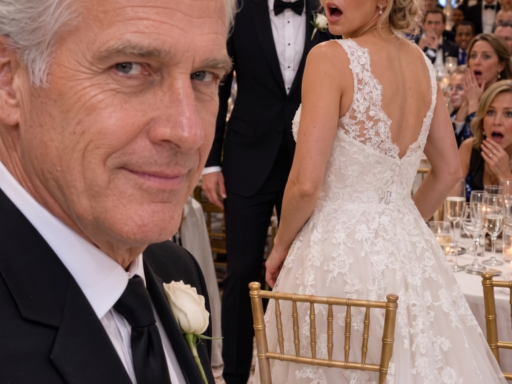
His words brought me straight back to the reception hall and Ethan’s speech. I realized Noah hadn’t simply been angry because his father cheated; he had watched Ethan humiliate me publicly and had heard a room full of adults laugh while his mother was reduced to the “mess” his father claimed he had escaped.
“No. We are definitely not a mess.”
I pulled him into my arms, but there was another question I needed answered. I asked why he had kept the photographs and flash drive secret instead of bringing them to me when he first discovered them.
Noah began twisting one of his socks between his fingers.
“If I told you before, you would’ve cried alone.”
I swallowed.
“And at the wedding?”
He looked directly at me.
“Dad wanted everyone to laugh at you. I didn’t want you to be alone.”
That answer hurt far more than anything Ethan had said. Noah hadn’t waited because he wanted revenge or dreamed of destroying his father’s wedding; in his ten-year-old mind, he had simply chosen the moment when he believed I would need someone standing beside me most.
I told him something I should have made clear much sooner.
“You never have to protect me from your dad.”
“But he hurt you.”
“He did. But that’s an adult problem, Noah. You’re allowed to be his son without being responsible for what happened between us.”
He leaned against me, and we stayed there for several minutes before returning to his fractions. For once, there were no lawyers, photographs, secret accounts, wedding speeches, or flash drives between us.
Just homework.
Later that night, after Noah went to bed, I stood in his doorway and watched him sleeping. Ethan had accused me of turning our son into a weapon, but looking at Noah made me understand how backwards that accusation was.
I didn’t want a weapon. I wanted my little boy back. And helping him become one again would matter far more than anything Ethan lost.
The months after Ethan’s wedding became much quieter than I expected. His legal problems continued, his financial obligations toward Noah were corrected, and our communication eventually became limited to matters involving our son, but the biggest change was that Ethan no longer controlled the story of why our family had fallen apart.
For years, he had portrayed leaving us as some courageous act of reinvention, as though I had been the burden standing between him and the life he deserved. At his wedding, surrounded by guests ready to applaud his new beginning, he had finally said aloud what he apparently believed.
“Walking away from that mess was the best decision of my life.”
Those words stayed with me for a while, especially because Noah had been sitting beside me when Ethan said them. Eventually, however, ordinary life began making that humiliation feel smaller, and our home slowly returned to being a place defined by school mornings, unfinished homework, cereal bowls in the sink, and arguments about how late a ten-year-old should be allowed to stay awake.
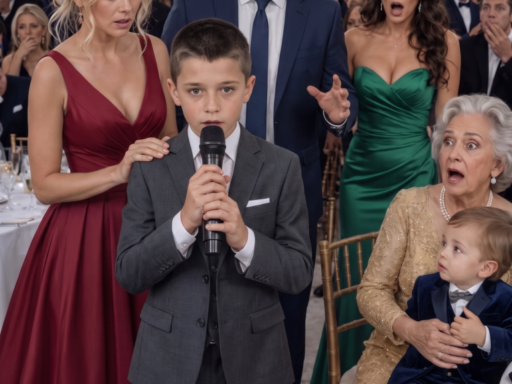
Noah returned to school and gradually stopped talking about the wedding unless something specifically reminded him of it. The signed baseball Lila sent remained on his desk with the autograph carefully facing outward, but the little boy who had stood before a room full of adults holding a microphone was slowly becoming simply my son again.
That mattered more to me than anything Ethan lost. I wanted Noah to remember that telling the truth had been courageous, but I never wanted him believing that investigating his father, protecting me, or carrying evidence of adult betrayals was supposed to be his responsibility.
One evening, I found him sitting on the living-room floor struggling to assemble a model airplane. One wing kept falling off, and after several frustrated attempts, he finally looked toward me.
“Mom, can you help?”
“Absolutely.”
We spent almost an hour fixing something that should have taken ten minutes, and when the airplane finally stayed together, Noah lifted it proudly above his head. Watching him celebrate that tiny victory felt infinitely better than watching him expose Ethan because, at the wedding, my son had seemed much older than ten; now he was finally behaving like a child again.
Ethan occasionally tried to minimize what had happened. In messages concerning Noah, he suggested that the wedding disaster had resulted from private information being exposed publicly rather than from his affair, fabricated stories, and concealed finances, but I eventually stopped arguing because I no longer needed him to admit the truth before I was allowed to believe it.
Months later, Noah unexpectedly asked whether I regretted attending the wedding. I thought about the humiliation, the photographs spilling from the box, Lila discovering the truth, and Ethan’s face when the story he had constructed collapsed in front of everyone.
“No.”
“Even after everything Dad said?”
“Especially after everything he said.”
“Why?”
“Because I finally stopped caring whether he approved of the life we built without him.”
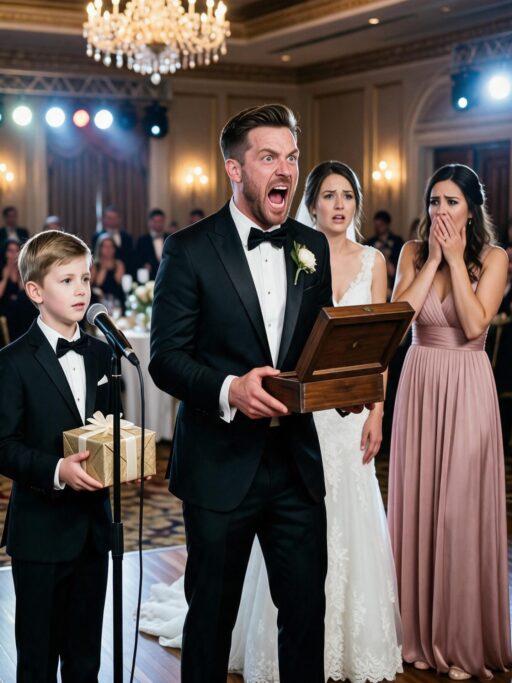
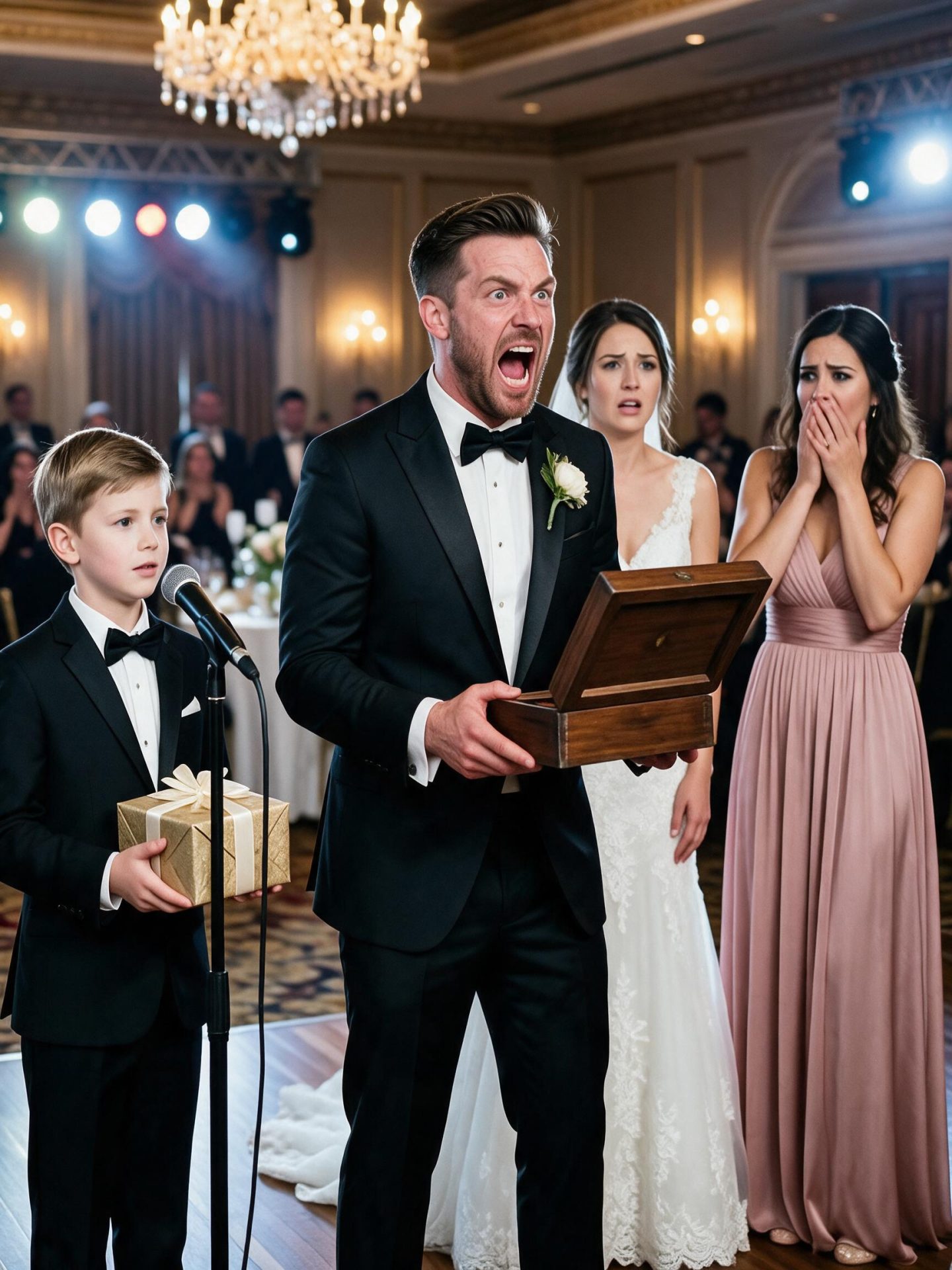
Ethan had wanted a life that looked flawless from the outside: expensive photographs, polished celebrations, successful friends, and a new marriage that proved abandoning his first family had been the correct choice. But the perfection he created depended on nobody examining what was underneath it, and that illusion survived only until Noah quietly walked across the reception hall carrying a small box.
“I brought you something, Dad.”
Noah hadn’t destroyed Ethan’s life, and neither had Lila or I. Ethan had created the photographs, messages, contradictory stories, and financial records himself; my son had simply placed part of that truth in his hands and allowed everyone in the room to see what Ethan had worked so hard to conceal.
The scream that followed wasn’t really about the contents of the box. It was the reaction of a man realizing that the people he had mocked and discarded finally possessed something he could no longer manipulate: their own understanding of what had happened.
Ethan had called us a mess, but when I looked around our home at Noah’s worksheets, baseball cards, cereal bowls, and slightly crooked model airplane, I understood how wrong he had been. Our life wasn’t polished enough for one of Ethan’s photographs, but it was honest, peaceful, and ours.
We weren’t a mess. We were a family.