
After we ended the call, I looked again at the withdrawal record I had photographed.
Two signatures were attached.
Gloria.
And Walt.
I had spent the entire day wondering whether my mother had acted alone.
Now I had another question.
How long had my father known exactly what was happening, and how much had he helped hide?
Before I could find the answer, my phone lit up again.
This time, it was a message from Gloria.
You need to bring Lizzy home.
A second message appeared immediately after.
You don’t understand what you’re doing.
I looked over at my niece sleeping peacefully for the first time in days.
Then I looked back at the screen.
Because I finally understood something.
This was no longer about proving what happened.
It was about making sure Lizzy never had to beg someone to come find her again.
I did not answer my mother’s messages immediately because I knew Gloria’s greatest strength was making people react emotionally before they had time to think clearly. For years, every concern about Lizzy had been redirected into explanations about how difficult things were, how much pressure my parents were under, or how everyone needed to be patient with them.
This time was different because I no longer had only suspicion. I had hospital records showing Lizzy’s condition, school reports showing her absences, financial documents showing where the care money had gone, and most importantly, I had Lizzy’s own words explaining what she had been afraid to say.
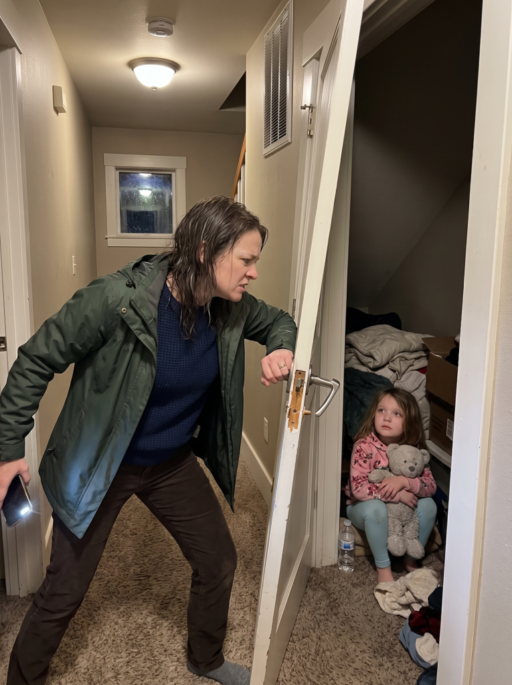
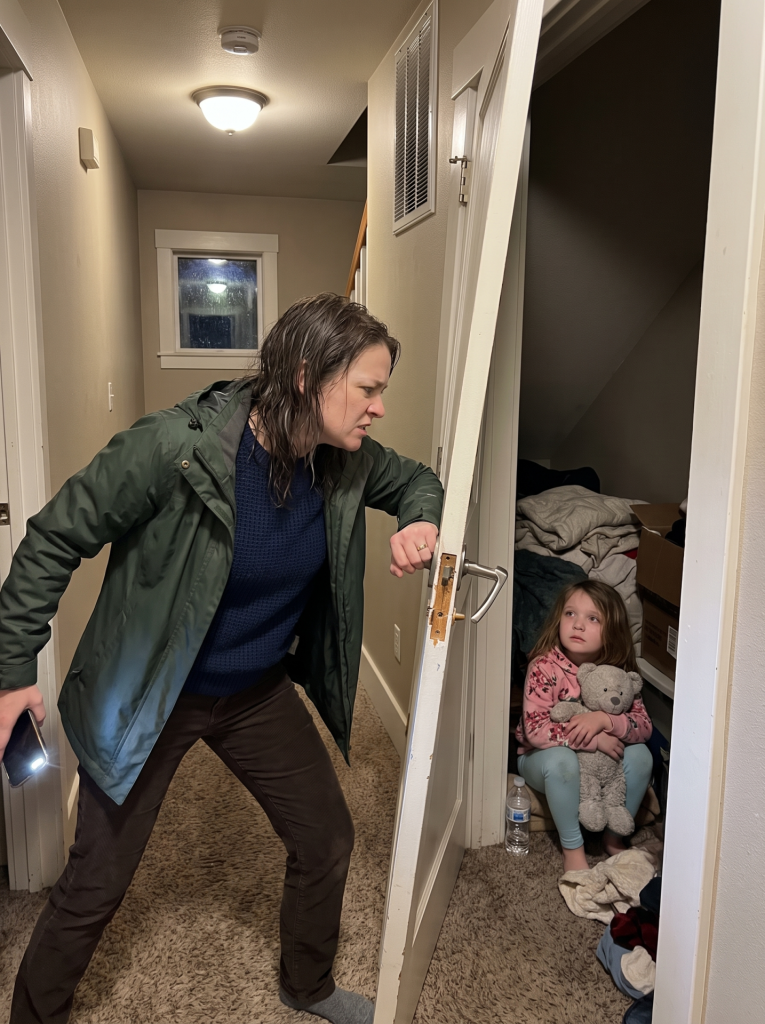
The child protection worker who spoke with me at the hospital asked about everything that happened, from the phone call in the middle of the night to the moment I found Lizzy behind the locked closet door. When she asked whether I had noticed any warning signs before that night, I realized there had been many moments I had ignored because I trusted my parents more than I trusted my own instincts.
After Lizzy moved in with Gloria and Walt, she became quieter. She stopped asking to visit as often, stopped talking excitedly about her days, and sometimes seemed nervous whenever someone mentioned going back to my parents’ house. Every time I asked Gloria if something was wrong, she had the same explanations ready.
“She’s adjusting.”
“She misses Ian.”
“She’s always been sensitive.”
I believed those answers because they came from my mother. Looking back, I realized I had been listening to the person explaining Lizzy’s behavior instead of listening to the child who was trying to show me she was unhappy.
The worker asked if Lizzy had ever tried to tell me something before, and that question stayed with me because I suddenly remembered a phone call from months earlier. Lizzy had asked if she could spend the weekend at my house, and when I asked why, she became quiet and simply said that Grandma told her she needed to be grateful.
At the time, I thought she was just missing her father.
Now I wondered if she had been trying to ask for help.
That evening, my father came to the hospital. He looked exhausted, and instead of immediately explaining himself, he sat beside Lizzy’s bed and watched her sleep for several minutes before quietly admitting that he should have spoken sooner.
“I knew something wasn’t right.”
I looked at him.
“Then why didn’t you tell me?”
He looked down at his hands and admitted that Gloria had convinced him Lizzy was simply difficult and that she was doing her best. He had noticed Lizzy eating less, becoming quieter and spending more time alone, but every time he considered confronting Gloria, he convinced himself that keeping peace was better than creating another family conflict.
I asked him about the withdrawals from Lizzy’s care account.
His silence answered before his words did.
He admitted Gloria told him she was borrowing the money temporarily because she was struggling financially and promised she would replace it before anyone noticed. He said he wanted to believe her, but the truth was that he had allowed his fear of confronting my mother to become more important than protecting Lizzy.
That was the part I struggled with the most.
My father was not someone who knew nothing.
He was someone who saw warning signs and chose to wait.
Later that night, my attorney reviewed the documents and explained that the evidence showed a pattern rather than one isolated incident. The missed school days, the financial records and Lizzy’s condition all pointed to a child whose needs had repeatedly been ignored while the adults around her focused on protecting themselves.
Then my phone received another message from Gloria.
Your father is lying to you.
Before I could respond, another message appeared.
He knew more than I did.
I looked at the hospital bed where Lizzy was sleeping peacefully for the first time in days. Both of my parents were now blaming each other, but neither message was about how to help the little girl they were supposed to protect.
They were not fighting because they wanted Lizzy safe.
They were fighting because they were afraid of who would be held responsible.
Then my father sent me one final message.
It contained a photograph of a document I had never seen before.
I zoomed in on the signatures.
At the bottom was Gloria’s name.
But above hers was another signature.
Ian.
And suddenly, I realized this story involved someone else I had not even considered.
The document my father sent changed the way I looked at everything. At first, I thought Ian’s signature meant he had been involved in the decisions surrounding Lizzy’s care, but after reviewing the paperwork carefully, I realized the truth was more complicated than I expected.
The document was an authorization form Gloria had used to manage certain aspects of Lizzy’s care while Ian was away receiving treatment. Ian had signed it months earlier because he believed his daughter was safe with his parents. He had trusted the same people I had trusted.
He had no idea what was happening inside that house.
I called Ian immediately.
For a moment, neither of us spoke.
Then I heard his voice.
“How bad is it?”
That question told me everything.
He already knew something was wrong.
I explained what I found, the locked closet, the hospital evaluation, the missing school days and the financial records. I expected him to defend Gloria and Walt because they were his parents too.
Instead, there was silence.
Then he whispered:
“I should have known.”
I told him that blaming himself would not help Lizzy, but he admitted that he had noticed changes during his treatment. Gloria had always told him that Lizzy was struggling because she missed him, and every time he asked for more details, she reassured him that everything was under control.
“I thought I was doing the right thing by letting them help.”
His voice cracked.
“I trusted them with my daughter.”
That was the hardest part of this entire situation.
Everyone involved had trusted the wrong person.
Ian trusted his parents.
My father trusted my mother.
I trusted the explanations I was given.
And while the adults were trying to believe everything was fine, Lizzy was learning that asking for help could make things worse.
When I returned to the hospital room, Lizzy was awake and drawing pictures beside her bed. She looked up when I entered and smiled slightly.
“Are we staying here?”
I sat beside her.
“For a little while.”
She looked relieved.
That relief hurt.
A child should not feel safer in a hospital than in her own home.
Over the next few days, the investigation continued. The evidence showed that Lizzy’s situation had been building over time, not caused by one single night. The locked closet was the moment everything became impossible to ignore, but the missed school, the lack of proper care and the misuse of money showed a much larger failure.
Gloria continued insisting that everyone misunderstood her.
She said she was overwhelmed.
She said she had sacrificed everything.
She said nobody appreciated how difficult raising Lizzy had been.
But every time she explained herself, she avoided the same question.
Why had Lizzy been afraid to call for help?
Why had a six-year-old child believed she needed to whisper from behind a locked door?
Eventually, legal decisions were made regarding Lizzy’s care. She would not be returning to Gloria and Walt’s home, and arrangements were made for her to stay somewhere safe while the family situation was reviewed.
The first night Lizzy stayed with me, she woke up crying.
I rushed into the room.
“What happened?”
She looked embarrassed.
“I thought I was back there.”
I sat beside her and held her until she calmed down.
“You’re safe.”
She looked at me.
“Really?”
“Yes.”
“No one is locking you away.”
She hugged her bear.
Then she asked something that broke my heart.
“Did I do something bad?”
I held her face gently.
“No, Lizzy. You needed help. That is all.”
Months later, Lizzy was still healing. Some things improved quickly, like her appetite and her willingness to talk. Other things took longer, like trusting adults to keep their promises.
But every day, she learned something new.
That her feelings mattered.
That asking questions was okay.
That needing help did not make her difficult.
Looking back, the phone call at 12:17 in the morning was the moment everything changed.
I used to think families were protected by keeping problems quiet.
I was wrong.
Families are protected when someone is brave enough to listen when a child says something is wrong.
Lizzy did not need someone to fix everything in one night.
She only needed one person to believe her.
And when she whispered, “Aunt Natalie, please help me,” I am grateful that I answered.