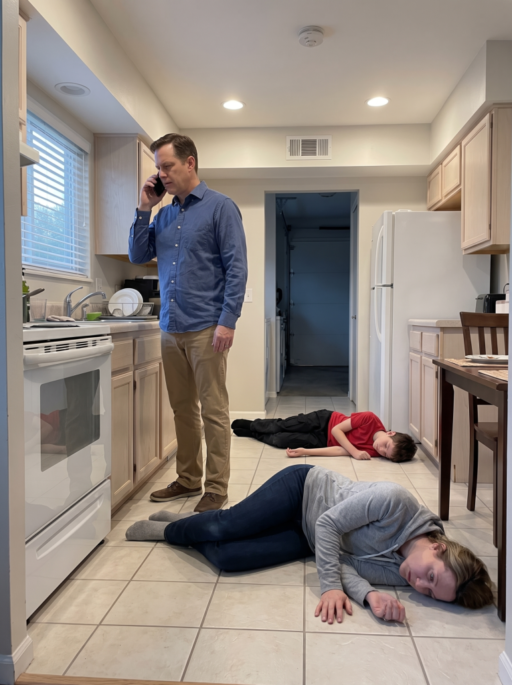
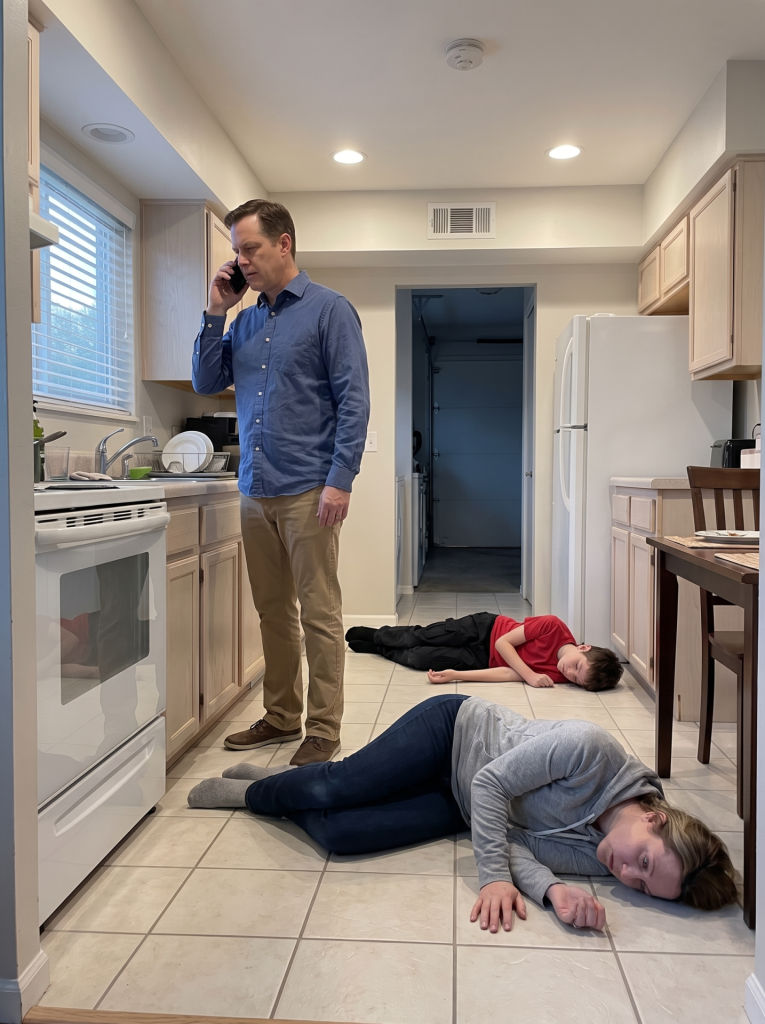

Dinner looked completely ordinary when Daniel placed the plates on the table. Noah was telling me about a science project while Daniel moved between the stove and the counter, complaining about grocery prices and asking whether I had finished reviewing the bank statements I had mentioned earlier that week.
That question bothered me more than it should have.
For almost a month, I had been trying to understand why money kept disappearing from our joint savings account. Daniel always had an explanation—home repairs, business expenses, an investment that had not cleared yet—but several transfers had gone to an account I did not recognize.
I had not confronted him directly.
Instead, I downloaded copies of the statements and scheduled an appointment with a financial adviser for the following morning.
Daniel did not know that.
At least, I did not think he did.
I took another bite of dinner and suddenly felt the room shift beneath me. My hands became heavy, my mouth went dry, and when I looked across the table, Noah was blinking slowly as though he could no longer keep his eyes open.
“Mom?”
His voice sounded far away.
I tried to stand, but my knees gave out.
The next thing I knew, my cheek was pressed against the cold kitchen tile.
I could still hear.
That terrified me more than losing control of my body.
A few feet away, Noah lay beside his chair with one arm beneath him. I watched the faint rise and fall of his chest and forced myself not to move.
Daniel walked around the table.
He did not call our names.
He did not panic.
He simply picked up his phone and walked into the den.
His voice carried through the doorway.
“It’s done.”
I stopped breathing for half a second.
Then I heard him say something even worse.
“She won’t make that meeting tomorrow.”
There was a pause.
“And the boy?”
Daniel lowered his voice, but I heard enough.
“He saw too much already.”
My stomach turned cold.
Noah.
This was not only about me.
Then Daniel said, “After tonight, neither of them will be a problem.”
I closed my eyes before his footsteps returned.
He entered the kitchen and crouched beside me.
His fingers touched my wrist.
I kept my body loose while my heart hammered so hard I was certain he would feel it.
Then he moved to Noah.
“This will be easier for everybody,” Daniel said quietly.
I heard him remove something from the table before walking toward the garage.
The door closed.
I waited.
Five seconds.
Ten.
Then I opened my eyes.
Noah opened his too.
His face was pale.
I lifted one finger to my lips.
“Don’t move yet,” I whispered.
He nodded.
I checked my pocket.
My phone was gone.
So was Noah’s.
Daniel had planned for that too.
Then Noah whispered something I had not expected.
“Mom, I saw him put something in our plates.”
I turned toward him.
“What?”
“He thought I was looking at my homework.”
My chest tightened.
Noah swallowed.
“He took it from the little bottle in his jacket.”
That was when I knew this had not been an impulsive decision.
Daniel had prepared the meal.
He had removed our phones.
He knew about my financial meeting.
And somehow, my eight-year-old son had become part of whatever Daniel was trying to hide.
I looked toward the blue plate still sitting on the table.
There were several bites of food left.
If Daniel came back to clean everything, that plate might be the only thing capable of proving what happened.
And suddenly, escaping was no longer the only thing I had to think about.
I forced myself to sit up slowly while Noah stayed beside the chair, still pale and unsteady. My arms felt weak and my head was heavy, but the sight of the blue plate on the table kept pulling my attention back to the same thought: if Daniel returned, that evidence might disappear.
“Phones,” Noah whispered.
I checked my pocket again even though I already knew mine was gone. Noah’s was missing too, which meant Daniel had not simply hoped we would stay unconscious; he had prepared for us to be unable to call for help.
Then I remembered the old corded phone.
Daniel had complained about it for years and kept saying we should disconnect it, but I had never bothered. It was still mounted inside the narrow cabinet beside the pantry, hidden behind a stack of takeout menus and grocery coupons.
Before I reached for it, I looked back at the table.
“Noah, hold the freezer drawer open.”
He did not ask why.
I grabbed a clean freezer bag, scraped several untouched bites from my plate into it, sealed the bag, and pushed it behind a package of frozen vegetables. My hands shook badly enough that I nearly dropped the plate, but I put everything back exactly where Daniel had left it.
Then I reached for the corded phone.
The dial tone was there.
I called 911 and gave our address first. I told the dispatcher that my son and I had both become suddenly weak after eating dinner, that my husband had removed our cell phones, and that I had overheard him saying we would not be a problem after that night.
The dispatcher asked whether Daniel was still inside.
“I don’t know.”
Noah crawled toward the window and lifted one corner of the blind.
“His car’s gone,” he whispered.
I relayed that information.
The dispatcher told us officers and paramedics were already on the way and instructed us to leave the house if we could do so safely. I was about to agree when Noah suddenly grabbed my sleeve.
“Mom.”
Headlights moved across the kitchen wall.
I looked toward the window.
Daniel’s car was turning back into the driveway.
I hung up only after the dispatcher told me not to confront him and that help was close.
“Back down,” I whispered.
Noah returned to the floor beside his chair while I slid the sealed food bag beneath my shirt and tucked it inside the waistband of my sweatpants. Then I arranged myself exactly as I had been before, cheek against the tile, one hand near my face.
The back door opened.
Daniel walked into the kitchen.
He did not rush toward us.
He did not call our names.
He went straight to the table.
Through half-closed eyes, I watched him pick up my blue plate, scrape the remaining food into a trash bag, and wipe the table where the plate had been sitting.
Then he made another phone call.
“I cleaned everything up,” he said.
There was a pause.
“No, she didn’t send the files yet.”