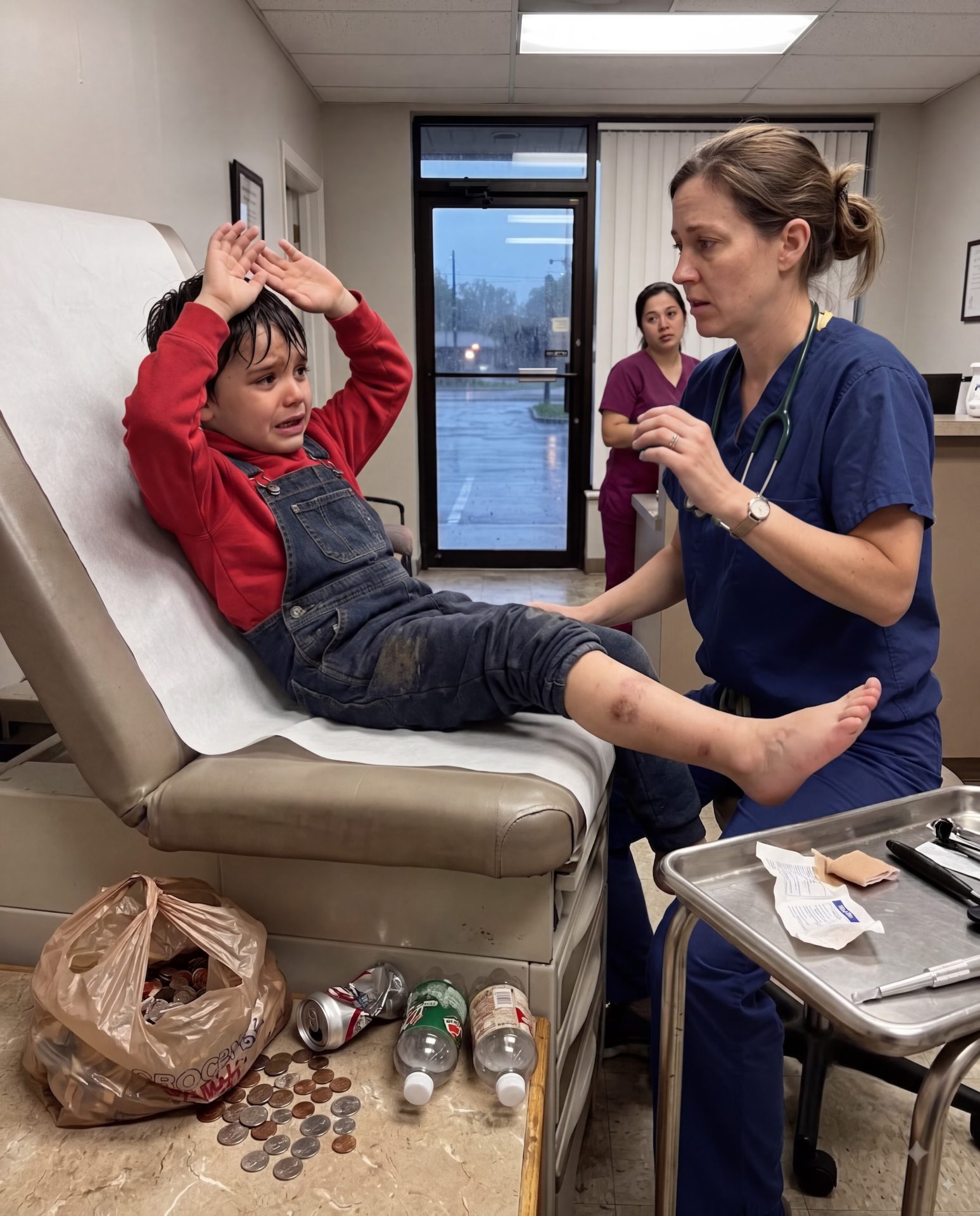

Michael’s contact became supervised temporarily while the investigation continued. Because my parental rights remained intact and my home had passed the agency’s safety inspection, I was approved to care for Noah under a temporary plan.
The decision did not erase five years of separation or instantly make me the parent he remembered. Ms. Carter arranged counseling, regular home visits and a gradual schedule designed around Noah’s recovery.
On discharge day, Michael helped Noah into a wheelchair. He asked whether his son wanted a hug, and Noah allowed one but kept both arms close to his body.
“I’m sorry I wasn’t there,” Michael said.
Noah looked at the cast rather than his father. “You’re always not there.”
Michael had no answer. For once, he did not ask Noah to soften the truth.
My house was smaller than the Hayes property and stood above the clinic in a modest two-bedroom apartment. I had converted my office into a bedroom during the days Noah remained hospitalized.
He examined everything from the doorway before entering. A new blanket covered the bed, but I had also placed several familiar objects on a shelf: copies of his baby photographs, the stuffed dog he once carried everywhere and one birthday card that had been returned unopened.
Noah touched the stuffed animal cautiously. “This was mine?”
“You called him Pepper.”
“I don’t remember.”
“That’s all right. You don’t have to remember anything for me.”
The first evening was quiet. Noah asked permission before opening the refrigerator, using the bathroom and choosing which television program to watch.
At dinner, he ate only half his food and attempted to carry the plate to the sink while balancing awkwardly on crutches. I took the plate and told him his only job was to heal.
He looked suspicious, as though every kind sentence might contain a rule he had not yet discovered. Trust did not arrive because the court approved my address.
That night, I left the hallway light on and told Noah he could call me whenever he needed help. At two in the morning, I heard movement and found him sitting on the floor beside his bed.
He said he had dreamed that Evelyn was coming to take him back. I sat several feet away so he would not feel trapped and reminded him that she was not allowed to contact him.
After a long silence, Noah asked whether his father would be angry because he had told the specialist what happened. I said Michael was responsible for managing his own feelings and that children never deserved punishment for telling the truth.
Noah began twisting the edge of his blanket. Then he told me this was not the first time he had tried to tell his father.
During a video call the previous Christmas, Noah said Evelyn sometimes locked him in the basement. Michael told him not to exaggerate and reminded him that Grandma had sacrificed a great deal to care for him.
“Dad said I should stop trying to make her look bad,” Noah whispered. “So after that, I stopped telling him things.”
Michael had claimed he missed the signs because other people hid them. Sitting beside our son in the middle of the night, I learned the truth was more painful.
Noah had given his father a warning. Michael had simply chosen the explanation that demanded the least from him.
The next morning, I told Ms. Carter what Noah had shared. A child specialist spoke with him again without asking leading questions, and Michael was given an opportunity to respond through the custody process.
He admitted remembering the Christmas conversation. He said he believed Noah was complaining about ordinary discipline and had trusted Evelyn because she raised him the same way.
That explanation clarified his failure but did not excuse it. Noah had asked for help, and Michael had chosen family loyalty over listening to his child.
The court continued supervised visits while Michael attended parenting classes and counseling. He was also required to participate in Noah’s treatment plan and demonstrate that he could respond appropriately when his son expressed fear or discomfort.
Michael did not lose every right as a father, nor did the court pretend his absence could be repaired in one hearing. For the time being, Noah remained with me while professionals evaluated what arrangement served him best.
Evelyn initially denied wrongdoing. After investigators reviewed the medical records, voicemail and Noah’s statements, she accepted a plea involving child endangerment and falsifying information connected to his earlier treatment.
The court prohibited her from contacting Noah. Laura faced a separate neglect case, and her cooperation with investigators was considered when she received probation, counseling requirements and a no-contact order.
Michael was not criminally charged because investigators found no evidence that he caused the physical injuries or forged the medical paperwork. Family court still found that his repeated absence and failure to respond to Noah’s warnings placed his son at risk.
He did not appeal the temporary placement. Instead, he told the judge that fighting to preserve his authority would mean little if Noah remained afraid to speak to him.
Noah’s leg healed gradually. We attended orthopedic appointments, physical therapy and counseling, while a tutor helped him catch up on schoolwork missed during recovery.
The emotional injuries were harder to measure. He continued apologizing whenever he dropped something, ate the last piece of bread or woke me during the night.
Each time, I reminded him that accidents were not moral failures and needing help did not make him difficult. Some days he believed me, while other days fear returned before he could stop it.
I did not ask him to call me Mom. At first, he called me Doctor, then Emma, and sometimes nothing at all when he could simply point or wait for me to understand.
We looked through the letters recovered from Evelyn’s closet only when his therapist believed he was ready. I had written about birthdays, ordinary days and the little memories I was afraid I would forget.
One letter described the way he once refused to sleep unless his stuffed dog, Pepper, was placed beneath the blanket beside him. Noah read it twice before carrying Pepper to bed that evening.
Michael visited twice a week under supervision. During one session, he apologized directly to Noah for dismissing what he had said about the basement.
“I should have listened the first time,” Michael told him. “You should never have needed to get hurt badly before I believed you.”
Noah asked whether his father had been too busy to care. Michael did not blame work, Evelyn or the divorce.
“I cared,” he replied. “But I acted as if caring was enough when I wasn’t paying attention. It wasn’t.”
Months later, the visits moved from a supervised center to public outings with a family therapist’s approval. Noah still lived with me, and Michael stopped treating custody as something he needed to win.
At the final hearing nearly a year after Noah entered my clinic, the judge gave me primary physical custody. Michael received a structured schedule that could expand only if Noah continued feeling safe and his therapist supported the change.
The decision did not return the five years we lost. It gave us a lawful path forward without requiring Noah to choose one parent and erase the other.
On the first day he returned to school full-time, Noah stood in front of the mirror adjusting his backpack. His leg had healed, although he still moved cautiously when descending stairs.
I offered to walk him to the classroom. He said he could manage alone, then paused beside the front door.
“Will you be here when I get back?”
“I will.”
He nodded, but before leaving, he turned around and said, “Bye, Mom.”
The word came naturally, almost quietly. I did not make him repeat it or turn the moment into something he had to manage for me.
I simply told him I loved him and watched him walk toward school.
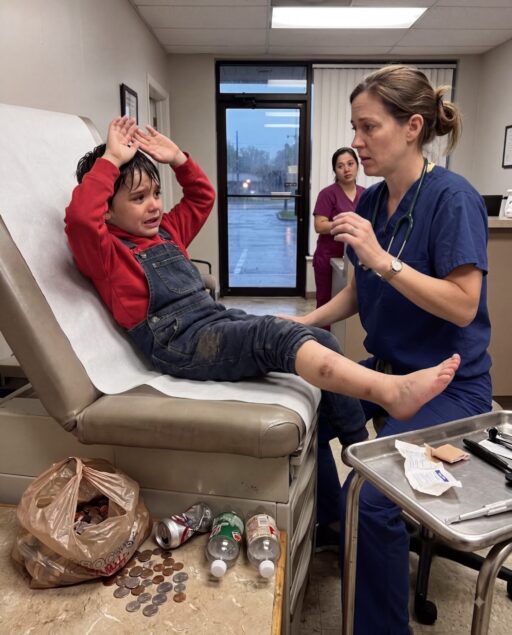
A few weeks later, Noah visited the clinic after an appointment. The plastic bag containing his twelve dollars and empty bottles had remained sealed with his belongings because investigators no longer needed it.
I asked what he wanted to do with the coins. Noah said the clinic should keep them for another child who arrived without money.
I explained that children would receive urgent help whether they brought money or not. He thought for a moment, then placed the coins in a jar supporting bus fares for families who struggled to reach medical appointments.
He kept one coin for himself. It did not represent what his care had cost; it reminded him that he had found help when the adults around him failed.
That rainy evening did not instantly restore my motherhood or heal my son. It began a year of difficult questions, court visits, medical appointments and moments when Noah tested whether my promises would remain true.
The most important promise was also the simplest. He would never again have to earn safety by being quiet, useful or perfectly behaved.
Five years earlier, powerful adults used paperwork and money to separate us. When Noah returned, he carried only twelve dollars and things other people had discarded.
None of that rescued him. What saved him was finally being heard—and learning that the truth would no longer send him back to the place he feared.