
“Why did you move away from our house, Grandma?”
Stephanie watched nervously from several feet away, but I had no intention of using a child as a weapon against his mother.
“Because Grandma needed a little home of her own, sweetheart.”
“Were you mad at me?”
“Never in my whole life.”
I reached into my coat and pulled out the little yellow dinosaur keychain I had removed from Stephanie’s house keys. Mason’s face brightened when I placed it in his palm, and for the next two hours, we ate ice cream while he told me everything happening in his third-grade class.
Before leaving, Stephanie handed me a plain white envelope containing $500. She admitted it was almost nothing compared with what they had taken, but promised she intended to begin repaying me every month.
“I don’t want promises you can’t realistically keep.”
“It isn’t just a promise. I got a job. I start Monday.”
Stephanie explained that she had accepted an administrative position at a dental office and had already sold several designer handbags and luxury items purchased with my money. I didn’t congratulate her as though taking responsibility deserved a celebration, but I accepted the envelope because it represented something more important than $500.
It wasn’t forgiveness.
It was the first evidence that my daughter might finally be learning how to stand on her own.
My relationship with Stephanie never returned to what it had once been, and I eventually accepted that it probably never would. Some wounds can heal without disappearing completely, so for the next several months, I saw her mainly when she brought Mason to visit on weekends.
I never returned to her house, cooked another meal for Clinton, paid another household bill, or ironed another shirt that wasn’t mine. For the first time in years, my days belonged to me, and something unexpected began happening as the pressure disappeared from my life.
My health improved.
I started sleeping peacefully through the night instead of waking up worried about which task I had forgotten or which bill might hit my account. My arthritis didn’t vanish, but the constant aching became easier to manage, my blood pressure stabilized, and I slowly regained some of the healthy weight I had lost.
I began taking morning walks through the park, and Clara eventually convinced me to visit a nearby craft store with her. I bought several inexpensive balls of colorful yarn and started knitting again, something I had loved before Donald died but gradually abandoned while living with Stephanie and Clinton.
One afternoon, Brenda came to Clara’s house for tea and arrived carrying news.
“Stephanie and Clinton just put the house on the market.”
Apparently, their debts had become impossible to ignore once my money was no longer supporting the household. Clinton had accumulated even more liabilities trying to preserve the image of success, while arguments about money became so frequent that Stephanie finally demanded separate bank accounts.
“The neighbors say they can hear those two fighting halfway down the street.”
I expected their problems to make me feel satisfied, especially after everything they had done to me. Instead, I discovered that I didn’t need to watch them suffer in order to feel that justice had been served.
Their consequences belonged to them now, just as my future belonged to me.
About a month later, I found a small studio apartment behind the home of an elderly widow named Mrs. Higgins. It had one bright bedroom, a tiny kitchenette with two burners, a clean bathroom, and a large window overlooking a garden filled with potted flowers.
When Mrs. Higgins told me the monthly rent, I nearly laughed with relief. My pension could comfortably cover it while still leaving enough money for groceries, medication, bus fares, and even the occasional bundle of yarn.
“I’ll take it.”
She smiled and handed me a single shiny brass key.
Standing on the porch with that key resting in my palm, I thought about how different my life had become. Four years earlier, I had surrendered almost everything Donald and I had saved because I was terrified that growing old alone would be worse than losing my independence.
Now almost everything I owned could fit inside a small studio apartment, yet I felt less lonely than I had inside Stephanie’s enormous house.
I bought only what I truly needed: a firm mattress, two ceramic plates, a small frying pan, a teapot, and a bright yellow mug. Everything fit into the back of a single taxi, and instead of feeling embarrassed by how little I owned, I felt strangely proud of it.
Every object in that apartment belonged to me. Every bill was mine because I had chosen it. Every hour of the day was mine to spend.
By late January, I had finished knitting myself a soft red sweater using yarn purchased entirely with my own pension money. One rainy afternoon, I made chamomile tea, put on that sweater, and sat beside the window listening to drops tap gently against the glass.
My old red leather wallet rested on the windowsill beside me.
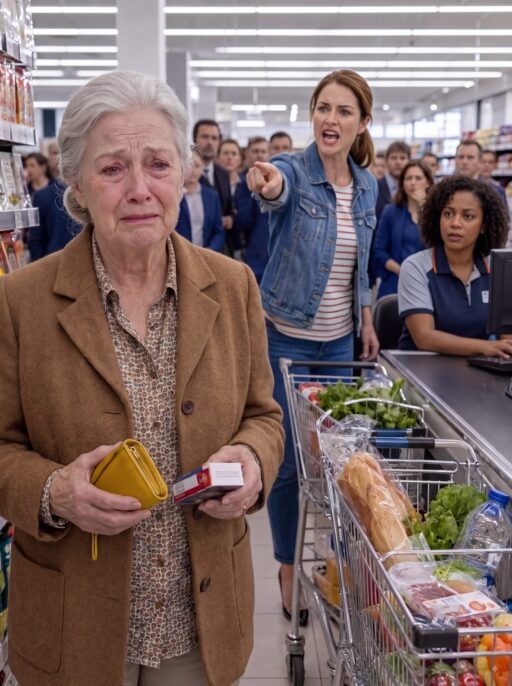
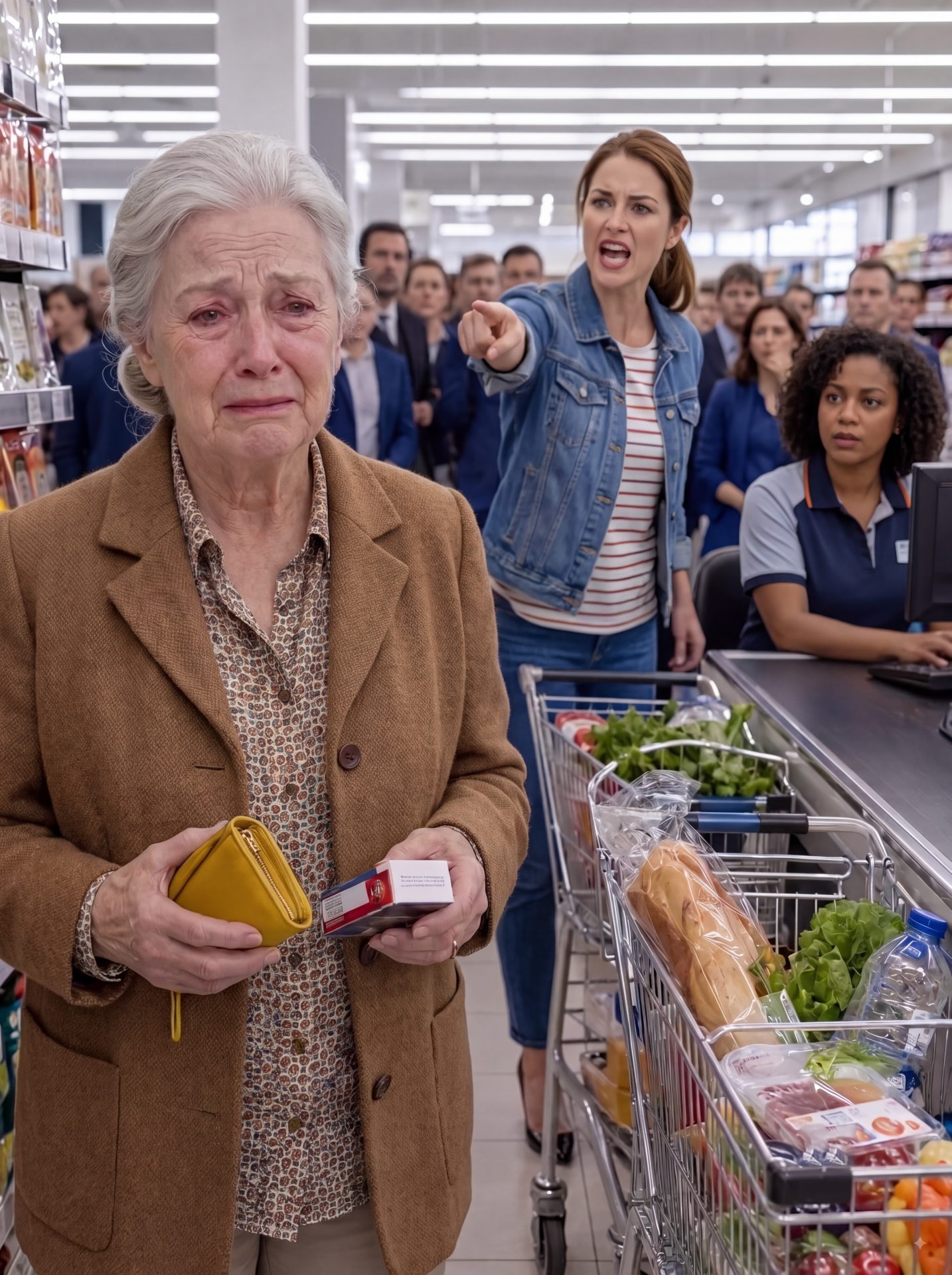
It was the same wallet I had snapped shut in front of Stephanie at the supermarket, but I no longer needed to clutch it protectively or calculate whether someone else’s expenses would leave me without enough money for medicine.
For the first time in years, opening my wallet no longer frightened me.
And sitting inside that tiny apartment, I began to understand that losing nearly everything had somehow given me back the one thing I had surrendered long before the money disappeared.
My independence.
By late January, I had settled comfortably into my little studio behind Mrs. Higgins’s house. One rainy afternoon, I put on the soft red sweater I had knitted for myself, made a cup of chamomile tea, and sat beside the large window overlooking the garden while raindrops tapped steadily against the glass.
My old red leather wallet rested on the windowsill beside me, the same wallet I had snapped shut at the supermarket when Stephanie demanded that I pay $980 for groceries. Back then, I had constantly worried about whether enough money would remain at the end of each month for prescriptions, transportation, and my own basic needs, but that fear had finally disappeared.
I no longer needed anyone’s permission to buy medication, take a bus across town, or spend a few dollars on yarn. Every expense in my life now belonged to me, and even though my pension was modest, it was enough when nobody else was quietly draining it.
As I drank my tea, I found myself thinking about Donald. I remembered a conversation we had shared decades earlier when Stephanie was still a teenager, long before either of us could have imagined how important his words would eventually become.
“We need to give our children strong wings so they can fly on their own, Margaret. But never give them your entire nest, because one day you might wake up and discover you have nowhere left to shelter yourself.”
For years, I had believed my mistake was loving Stephanie too much or helping her too often. Only after leaving her house did I understand that helping my daughter had never been the real problem, because love and generosity were not weaknesses by themselves.
My mistake was allowing those things to become tools that could be used against me. I had confused being a mother with endless obligation, and every time Stephanie or Clinton made me feel guilty, I surrendered another piece of my independence because I was terrified that setting boundaries would make me selfish.
I finally understood that being a mother did not require financing the reckless lifestyle of an adult child. Being a grandmother did not mean becoming an unpaid housekeeper, cook, chauffeur, and nanny, and being seventy-two did not make my time, money, or dignity less valuable than anyone else’s.
Setting a boundary wasn’t an act of cruelty. Sometimes it was the only way to protect what remained of your own life.
I took another sip from my yellow mug and thought about what I would have been doing at that exact hour only a few months earlier. I probably would have been standing over an ironing board pressing Clinton’s shirts while dinner cooked in the kitchen, wondering whether Stephanie needed me to pick something up from the store and calculating whether I had enough money left for my blood pressure medication.
Now the apartment was completely quiet. Nobody shouted instructions from another room, no list of chores waited on the refrigerator, and no unexpected household payment was preparing to disappear from my bank account overnight.
There was only my chamomile tea, my red sweater, my small apartment, and the freedom to decide what happened next.
Stephanie continued bringing Mason to see me, and although our relationship remained complicated, I no longer tried to force it back into what it had once been. She had started working, continued making small repayments whenever she could, and was learning to manage responsibilities that I had carried for her far too long.
I didn’t know whether she and Clinton would remain together, nor did I consider that my problem to solve. Their house had gone onto the market because their debts were overwhelming them, and whatever decisions they made afterward belonged entirely to them.
For once, I could love my daughter without managing her life.
That distinction changed everything.
I looked around my little studio and smiled at how little I actually owned. Four years earlier, I had possessed a house filled with forty years of memories and nearly a quarter of a million dollars in savings, while now almost everything I had could fit into a handful of boxes.
Yet I felt richer sitting in that tiny room than I ever had in Stephanie’s enormous house.
The reason was simple. What little I had left was truly mine.
Eventually, my eyes settled on the shiny brass key lying beside my wallet. It opened the front door to a modest studio with two cooking burners, a small bathroom, a firm mattress, and a garden outside the window, but to me it represented something much larger.
Four years earlier, I had handed over nearly everything because I was afraid of growing old alone. I had believed that staying close to family was worth almost any price, even when that price became my savings, my health, my time, and eventually my dignity.
I wasn’t afraid of being alone anymore.
I was more afraid of disappearing inside someone else’s life.
I picked up the old red wallet and ran my thumb across its metal clasp. For a moment, I remembered standing at that supermarket register while Stephanie waited impatiently for me to surrender the last of my monthly pension.
Then I snapped the wallet shut.
The small click sounded strangely satisfying in the quiet apartment.
It had taken me seventy-two years to understand something Donald seemed to have known all along. A mother could love her family completely without surrendering herself to them, and saying no did not erase decades of love or make her selfish.
Sometimes the most important thing we can give our children is the responsibility for their own lives.
And sometimes the most important door we ever open is the one we finally learn to close behind us.