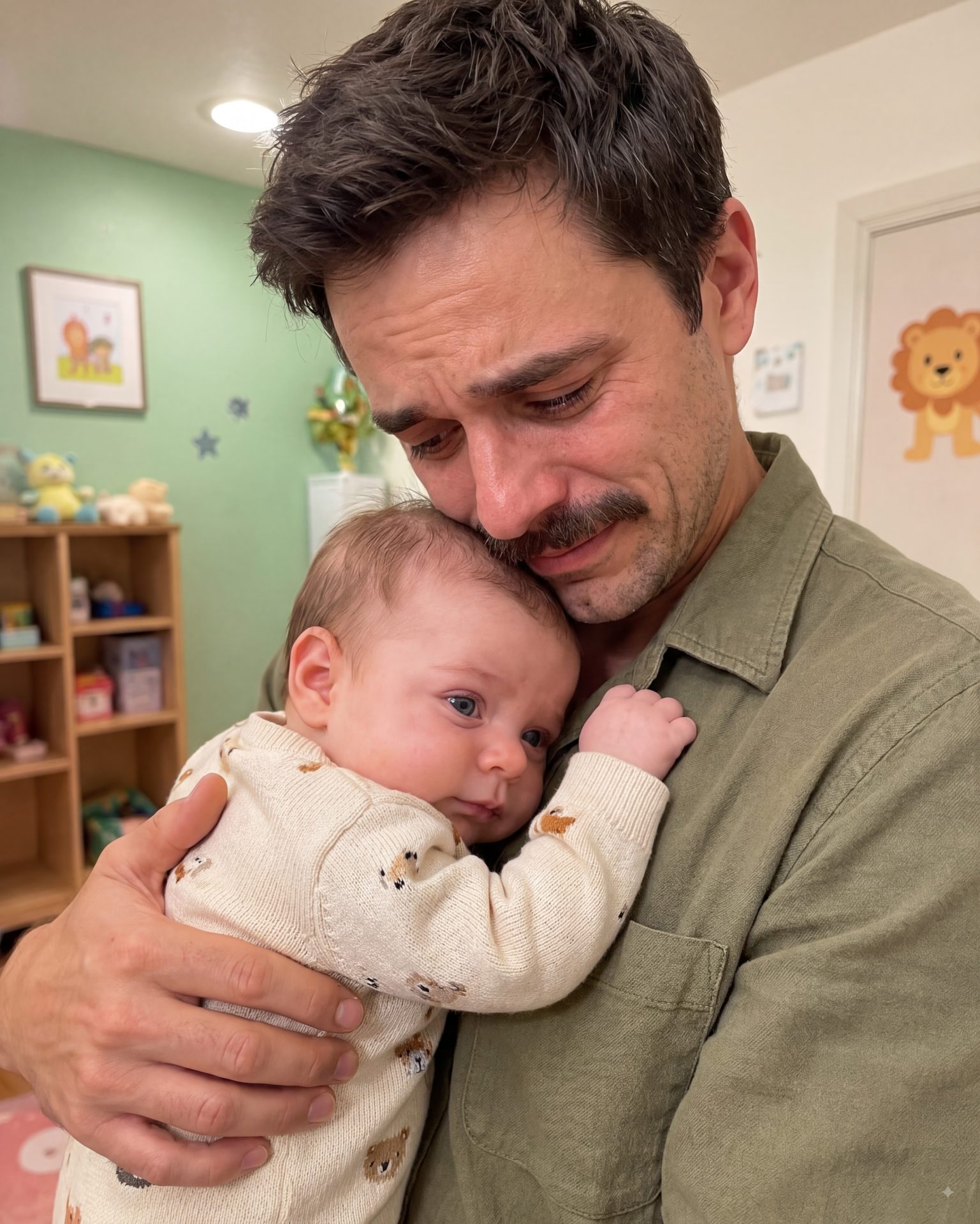

James continued before I could respond.
“And if everything eventually allows it… adoption.”
That was the moment my composure disappeared.
I walked several steps down the hallway because suddenly I couldn’t breathe properly. Only hours earlier, I had been cleaning our kitchen and living inside the future I had spent years teaching myself to accept.
We had three sons. We would never have a daughter. That chapter was closed.
Now my husband was standing in a hospital asking whether we should bring home a newborn girl whose mother had trusted him enough to say his name during the final hours of her life.
“This is Anna’s daughter, James.”
“I know.”
“She just lost her mother.”
“I know.”
“And you’re asking me if we should raise her?”
His eyes filled again.
“I’m asking if we can at least find out whether we’re allowed to.”
There was no celebration in his voice. He wasn’t pretending this was some miraculous answer to the dream we had lost, because another woman had died for this child to be standing at the edge of our lives.
I wiped my face and looked toward the room.
“I want to see her.”
A nurse brought me inside.
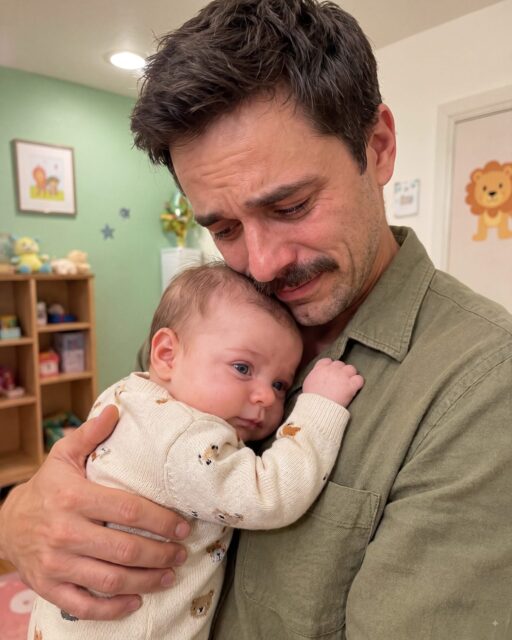
The baby looked impossibly small beneath the pink blanket. She was only twelve hours old, completely unaware of the conversations taking place around her or how uncertain her future had suddenly become.
Then the nurse carefully placed her in my arms.
I looked down at her tiny face, and something inside me broke open.
For years, I had trained myself not to imagine what holding a daughter might feel like. I had packed that dream away with the newborn clothes still sitting in our garage.
Now a little girl was sleeping against my chest. But I understood one thing immediately.
She wasn’t ours.
Love could not erase Anna, bypass her biological father, or give James and me rights we did not have. There would be social workers, legal procedures, background checks, relatives to locate, and decisions made by people whose responsibility was protecting this child.
I looked at James.
“If we do this, we do it properly.”
He nodded.
“Whatever it takes.”
I looked back down at the baby. Neither of us knew whether we would be allowed to keep her for a week, a month, or at all. And I was already terrified of having to let her go.
The days that followed taught me how different hope feels when someone else controls the outcome. James and I wanted to protect that little girl immediately, but wanting her did not make us her parents, and Anna’s final request did not automatically give James custody of her daughter.
Social workers explained every step carefully. There would be background checks, interviews, a home study, court proceedings, and attempts to locate biological relatives who might have a legal claim or be considered for placement.
The biological father was contacted first.
For a while, his existence hung over every conversation. Whatever I felt while holding the baby, he was still her father, and his rights could not simply be ignored because he had not been present at the hospital.
Eventually, he formally relinquished his claim.
A distant relative was also located, but after speaking with social services, that person declined placement. Each development moved us closer to the possibility of becoming a permanent family, but nobody promised us anything.
That uncertainty frightened me more than I admitted.
James and I began the foster process while trying not to speak as though the ending had already been decided. We had three sons waiting at home, and before involving them too deeply, we needed to understand what bringing another child into our lives would actually require.
This wasn’t only about whether we had enough love.
We reviewed our finances, health insurance, mortgage, savings, investments, and estate documents. Raising three children already required careful planning, and if we were eventually trusted with a fourth, we wanted every one of them to remain equally secure.
One evening, after another meeting, James found me sitting quietly with paperwork spread across the table.
“You’re scared.”
“Of course I’m scared.”
“Of bringing her home?”
I shook my head.
“Of loving her like she’s mine and then being told she isn’t.”
James sat beside me.
“I’m scared of that too.”
That was the truth neither of us could avoid. Every day we became more attached to a child whose future was still being decided by a process much larger than our wishes.
Months passed through interviews, appointments, paperwork, and court dates. Our lives became divided between caring for the family we already had and waiting to learn whether this little girl would permanently become part of it.
Then, nine months after the phone call that had brought me to the hospital, we received the decision.
The adoption was approved.
I read the confirmation more than once because I was afraid I had misunderstood it. After months of reminding myself not to assume she would stay, I finally allowed myself to believe it.
We were going to be her parents. I cried. James cried.
But there was still one detail I didn’t know.
During the legal process, Anna’s records confirmed that she had already chosen a name for her daughter before she died. Until then, I had been so focused on whether we would be allowed to raise the baby that I hadn’t understood how deeply that name would affect me.
James looked at the paperwork, then at me.
“What?”
He handed it over without answering.
I read the name. Then I read it again. Clara. The exact name I had chosen when I was nineteen. The name James and I had once imagined giving to the daughter we believed we could never have.
I covered my mouth and started crying.
After all those years of forcing myself to stop saying her name aloud, a little girl named Clara had somehow found her way into our family.
For a long time, I could only stare at the name on the paperwork.
Clara.
I had carried that name quietly since I was nineteen, long before James and I were married and years before our first son was born. After my doctor told me another pregnancy could threaten my life, I had eventually forced myself to believe that Clara would remain nothing more than the name of a daughter I would never meet.
Yet Anna had chosen it too.
James sat beside me while I tried to process the coincidence.
“Did you ever tell her?”
He immediately shook his head.
“No. I hadn’t spoken to Anna in eleven years. She couldn’t have known.”
That somehow made it harder to comprehend. Two women who had never met had chosen the same name for the same little girl, one before knowing she existed and the other before knowing where her daughter’s life would eventually lead.