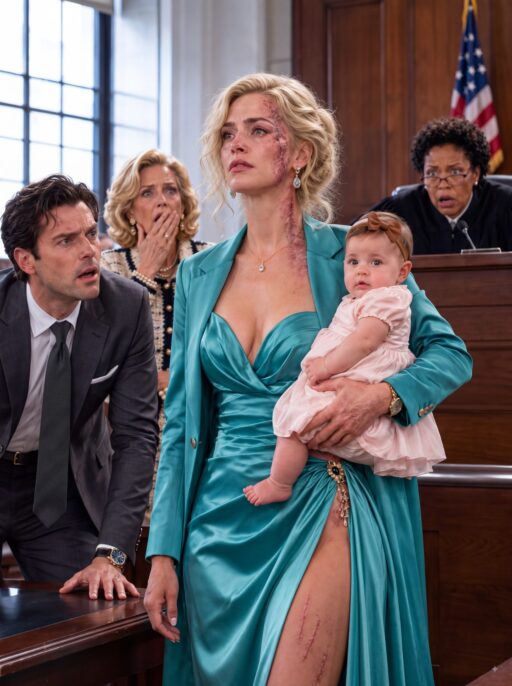
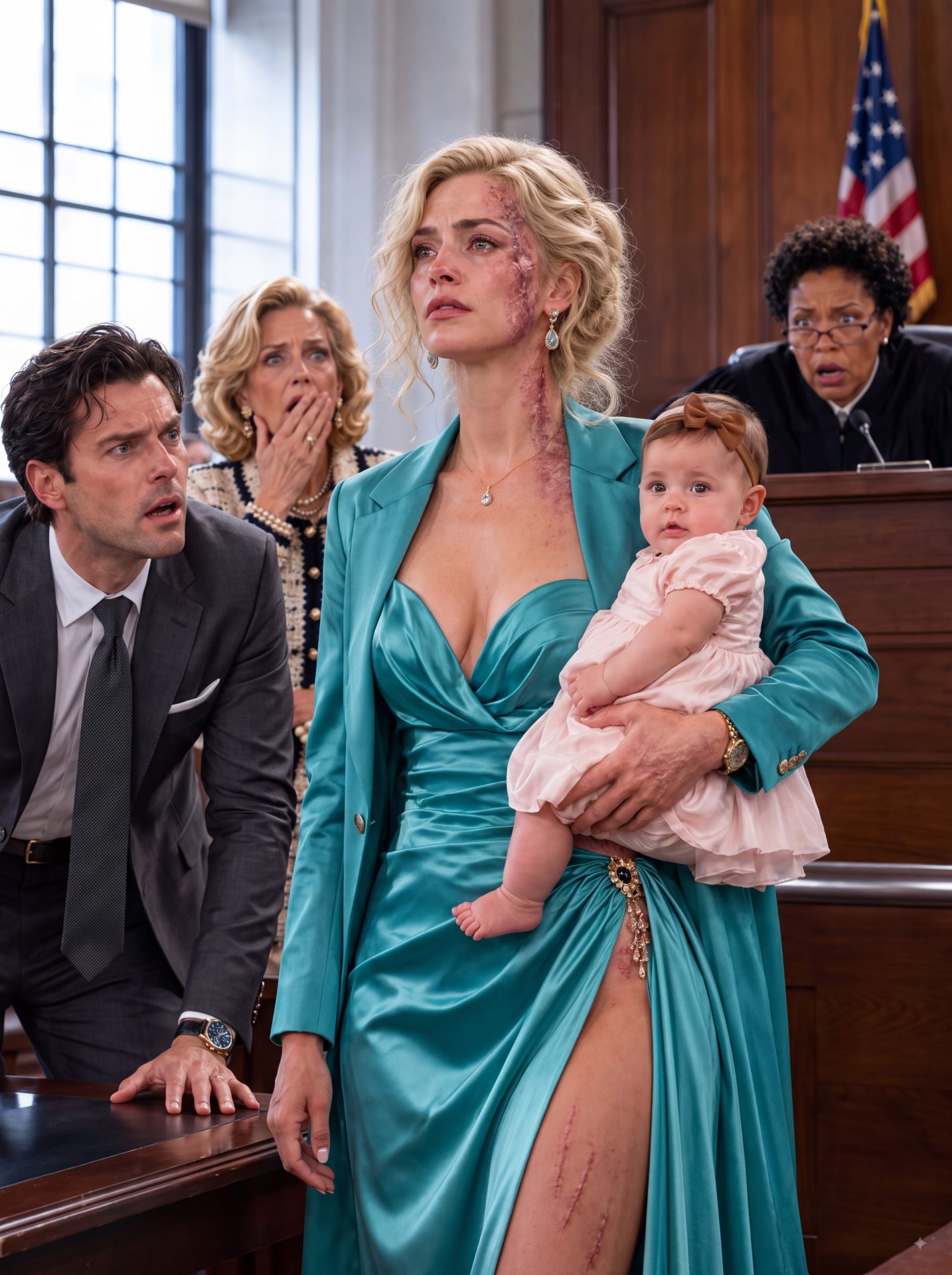

By the time I entered family court, Luca had already lost the version of himself he had spent months protecting. The criminal conviction was permanent, the recording had exposed his lies, and the debt agreement had revealed exactly why he had been so desperate to control my inheritance. But there were still three things connecting me to him: our marriage, our daughter, and my father’s house.
Luca’s attorneys tried to salvage what they could. They argued that despite his conviction, he was still Chloe’s biological father and should eventually have a role in her life. They also attempted to raise questions about the property, suggesting that because we had been married, Luca had contributed indirectly to our household while I owned the house.
Rachel was ready for both arguments.
The deed was clear. My father had left the property exclusively to me, and I had never transferred ownership or added Luca’s name. More importantly, the documents Luca repeatedly pressured me to sign demonstrated that he already knew he had no legal claim to it.
Then came the custody evidence.
The judge reviewed Wendy’s messages threatening to portray me as mentally unstable if I refused to cooperate. He examined Luca’s demands for the deed, the hospital records, the criminal conviction, and the footage showing what had happened while I was eight months pregnant.
When the judge finally looked up, his decision was devastatingly simple.
I was granted an immediate divorce. I received sole legal and physical custody of Chloe.
Luca received no ownership interest in my inheritance.
A civil judgment was also entered against his assets to help cover my medical expenses and legal fees.
My father’s house remained mine.
I expected some enormous feeling of victory when I heard those words, but instead, I felt something quieter. For months, every decision I made had revolved around surviving Luca, documenting Wendy, protecting Chloe, or preserving evidence. Suddenly, there was nothing left to prove.
That night, Chloe slept beside me while I stared at the ceiling and waited for the familiar panic to return.
It never did.
For the first time since the kitchen incident, I slept through the entire night without waking to memories of my own screams.
Over the following months, I began rebuilding a life that no longer required me to anticipate Luca’s next move. The house became more than an inheritance again. I repaired small things my father had once promised to fix, cleared years of boxes from his workshop, and started spending afternoons outside with Chloe.
Still, one object remained untouched.
In the workshop was a black USB drive my father had given me years earlier. His handwriting was still visible across the label:
“KEEP COPIES.”
For most of my life, I thought he had meant deeds, receipts, tax records, and insurance documents. After everything that happened, those two words carried an entirely different meaning.
My father had protected his records because he believed information gave people choices.
Now I had Chloe to protect.
And slowly, an idea began forming about what I could do with the house Luca had tried so desperately to take.
Eighteen months after the trial, I finally opened my father’s old workshop with a completely different purpose.
This time, the door wasn’t opening for me.
It was opening for women who needed the same kind of evidence, options, and way out that had once saved me.
Eighteen months after the trial ended, I sat on the porch swing of my father’s brick house while the autumn sun stretched across the front yard. Chloe was two now, racing through the grass after a butterfly, her dark curls bouncing around her face as her laughter carried back toward me. For the first time in years, that house felt peaceful.
With Rachel’s help and part of the civil settlement, I had transformed my father’s old woodworking shop into a small community legal-aid clinic. We offered free consultations to women dealing with financial abuse and domestic coercion, along with practical resources for protecting documents, accounts, and digital evidence.
The workshop still carried pieces of my father everywhere. His shelves remained along one wall, and I had kept several of his old tools exactly where he had left them. But the workbench where he once repaired furniture now held laptops, legal folders, and information packets.
Above my desk hung the little black USB drive he had given me years earlier. In his unmistakable handwriting were two words:
“KEEP COPIES.”
I used to think that message was simply another example of Dad being overly careful. He had taught me to save tax documents, duplicate property records, photograph receipts, and never trust a single device with anything important. After Luca, I understood that lesson differently.
Keeping copies was not really about paperwork. It was about keeping choices. It meant preserving the truth when someone else tried to rewrite it and protecting the evidence that could open a door when another person was determined to lock every exit.
Sometimes women came into the clinic convinced they had nothing useful. Then we would discover screenshots, bank records, emails, photographs, or documents they had quietly saved without realizing how important those fragments might become. Whenever that happened, I thought about the camera Luca crushed beneath his shoe.
He had looked at those shattered pieces and believed he had destroyed the truth. Instead, every second was already somewhere he could never reach.
One afternoon, after the clinic closed, Chloe wandered into the workshop holding a yellow leaf.
“Mommy, look.”
I lifted her onto my lap.
“Beautiful.”
She placed it beside my keyboard and pointed toward the USB drive above us.
“What’s that?”
I smiled.
“Something Grandpa gave Mommy.”
She considered that answer with the seriousness only a two-year-old could manage.
“Present?”
For a moment, I looked through the open workshop doors toward the brick house my father had left me.
“Yes.”
I kissed the top of her head.
“A very important one.”
Luca had believed that house represented money. He saw an asset he could transfer, refinance, and sell to erase the consequences of his own mistakes. For a while, I had seen it differently but just as narrowly; to me, it was the last physical piece of my father I could protect.
Now I understood what he had actually left behind. It was not just property but a way of thinking: the instinct to preserve what mattered before someone else decided it belonged to them.
That evening, Chloe ran ahead of me toward the porch while I locked the workshop. The front-door key rested warm inside my hand as I watched her climb the steps. Luca had once believed ownership meant power, but he was wrong.
Power was walking out of that courtroom with my daughter safe, my name still mine, and the freedom to decide what happened next. My father had left me a house, but what ultimately saved us was everything he had taught me to keep.