
So she didn’t see them.
For the first time in my life, I realized I didn’t need another confrontation to make a boundary legitimate. I didn’t need my mother to understand it, agree with it, or admit that I was right.
The boundary could simply remain closed.
My mother refused every condition we offered for seeing the girls again. She insisted that family members shouldn’t need supervision, that she wasn’t dangerous, and that allowing children to determine when they felt comfortable seeing an adult gave them far too much control.
So there was no visit.
For once, I didn’t drive to her house demanding an explanation or spend hours trying to convince her that my boundary was justified. I had wasted too many years believing that every limit I set required a closing argument, when the truth was much simpler: my daughters’ safety did not require my mother’s approval.
My father approached things differently. Months after Christmas, when my older daughter decided she wanted to see him, he accepted every condition my husband and I established. He arrived without gifts or excuses, admitted that he had seen the girls leaving that night, and took responsibility for choosing his fear of confronting my mother over protecting his granddaughters.
Most importantly, when my daughter moved closer to me after hearing the truth, he didn’t reach for her. He allowed her to decide the distance between them, and that small act showed me that he was beginning to understand something my mother still refused to accept.
An apology did not automatically restore access.
Life gradually became ordinary again, although Christmas had left marks that weren’t always visible. My husband recovered at home, our three-year-old returned to her cheerful habit of carrying random objects around the house, and my older daughter slowly stopped checking every doorway she passed.
But some questions remained.
“Do we have to go to Grandma’s again?”
“No.”
“Even if she says sorry?”
“You don’t have to go anywhere just because somebody says sorry.”
I wanted her to understand that forgiveness and trust were different things. Someone could regret hurting you, but that didn’t mean you had to immediately place yourself back in the same situation and hope they behaved differently.
My father seemed to understand that lesson eventually. My mother did not.
She continued sending messages that shifted between anger, sadness, and apologies that somehow always ended by explaining why I had caused her behavior. I stopped engaging because every conversation eventually returned to the same argument: she believed being my mother gave her authority over my decisions, while I had finally understood that adulthood had ended that arrangement years ago.
The following Christmas, we stayed home.
There was no elaborate celebration and no attempt to create some perfect holiday to compensate for the previous year. My husband was healthy, the girls were safe, and our only plan was to spend the day together in our own house.
My older daughter helped her little sister decorate cookies, although more sprinkles landed on the floor than on the frosting. My husband burned the first batch after getting distracted while repairing something beneath the kitchen sink, and I made a cup of coffee that I immediately misplaced somewhere in the house.
Nothing about the day was impressive.
That was exactly what I wanted.
There were no arguments about loyalty and no relatives testing whether I would rearrange my life to satisfy them. For the first time in years, Christmas felt ordinary, and ordinary felt like something precious.
That afternoon, someone knocked on the front door.
My eight-year-old froze.
It lasted only half a second, but I noticed. Her eyes immediately moved toward me, and in that tiny reaction, I saw the memory of another Christmas and another door.
“I’ll check.”
I looked first and saw that it was only a delivery driver. I opened the door, accepted the package, thanked him, and turned back toward the kitchen.
My three-year-old had found a grocery bag nearly as large as she was and was attempting to drag it across the floor because she had apparently decided this was an important contribution to the household. Her older sister laughed, grabbed the other handle, and together they carried it the remaining few feet.
Then my eight-year-old returned to the front hall.
She placed one hand on the open door and looked outside into the winter air. For a moment, I saw another porch in my mind, with my daughters standing outside my parents’ house waiting for adults they trusted to change their minds.
But this time everything was different.
My daughter was inside our home. Her little sister was safe behind her, and nobody else was deciding whether she deserved to come through the doorway.
“Can I close it? The house is getting cold.”
I nodded.
She pulled the door shut, locked it, and ran back toward her sister.
Watching her disappear into the kitchen, I finally understood why that ordinary moment affected me so deeply. The previous Christmas, a closed door had represented rejection, helplessness, and adults using children to settle a conflict that never belonged to them.
Now my daughter was the one controlling the door.
She knew exactly who was inside, where her sister was, and that nobody could force her back into the cold. The house behind that lock belonged to people who would protect her rather than test her.
My mother still believed I was punishing her by keeping that boundary in place. She was wrong.
I wasn’t trying to teach her a lesson.
I was making sure my daughters never had to learn that lesson twice.
In the months after that Christmas, I stopped measuring progress by whether my mother apologized or whether my father found the perfect words to repair what he had done. The only progress that mattered was happening inside our home, where my daughters were slowly learning that the people around them would keep them safe.
My father remained cautious about contacting us. He never appeared unexpectedly, demanded another visit, or tried to use gifts to erase the memory of watching his granddaughters walk away. When my older daughter chose to see him again, every visit happened on her terms, with my husband and me present, and my father accepted that rebuilding trust would take much longer than saying he was sorry.
My mother made a different choice. She refused to accept supervised contact because she believed the condition itself was insulting. In her mind, being their grandmother should have guaranteed her access to them, regardless of what had happened.
She continued insisting that one terrible decision shouldn’t define her relationship with the girls. What she never seemed to understand was that I wasn’t defining her forever by one mistake, but responding to what that decision had revealed.
When two frightened children had stood outside her door, she had known their father was hospitalized and that I believed they were safe with her. Yet in that moment, teaching me a lesson had mattered more to her than protecting them, and that was something an apology alone couldn’t repair.
As the months passed, our household slowly regained its rhythm. My husband recovered, our youngest daughter returned to being carefree, and her older sister gradually stopped asking where everyone was every few minutes.
The changes in her were subtle, but doors became ordinary again, bedtime became easier, and she stopped watching adults with the careful expression she had developed in the hospital. I knew she hadn’t forgotten, and neither had I, but remembering something wasn’t the same as continuing to live inside it.
By the following Christmas, we had decided there would be no traveling and no complicated family arrangements. We would stay home together, make cookies, exchange presents, eat whatever we felt like eating, and allow the day to be wonderfully uneventful.
My husband burned the first batch of cookies after becoming distracted by a repair under the sink. The girls covered the kitchen floor with sprinkles, and somewhere between breakfast and lunch, I lost a cup of coffee I had made for myself.
It was imperfect, noisy, and completely ordinary, and I loved every minute of it.
Then someone knocked at the front door.
My older daughter stopped moving. The reaction lasted barely a second, but I saw it immediately as her eyes found mine before she looked toward the entrance.
“I’ll check.”
It was only a delivery driver. I opened the door, accepted the package, and thanked him before turning back toward the kitchen, where my three-year-old had decided to help by dragging a grocery bag almost as large as she was across the floor.
Her sister laughed and hurried over to grab the other handle. Together, they carried it into the kitchen, and a moment later, my older daughter returned to the entrance.
She placed one hand against the open door and looked outside at the cold winter air. I watched her from several feet away, and suddenly another doorway returned to my mind.
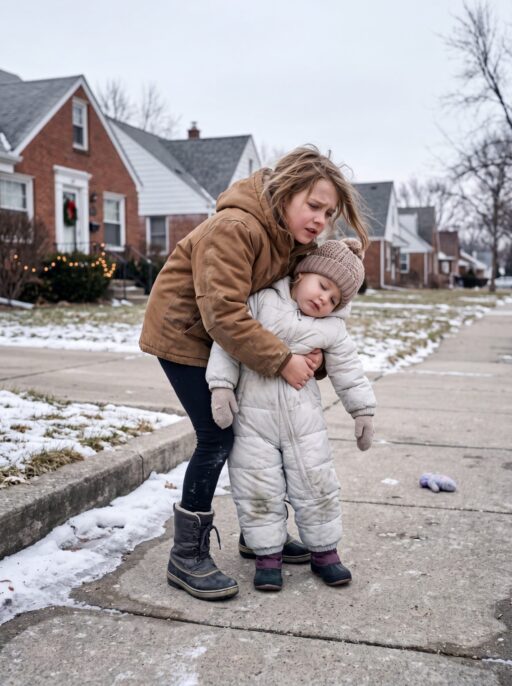
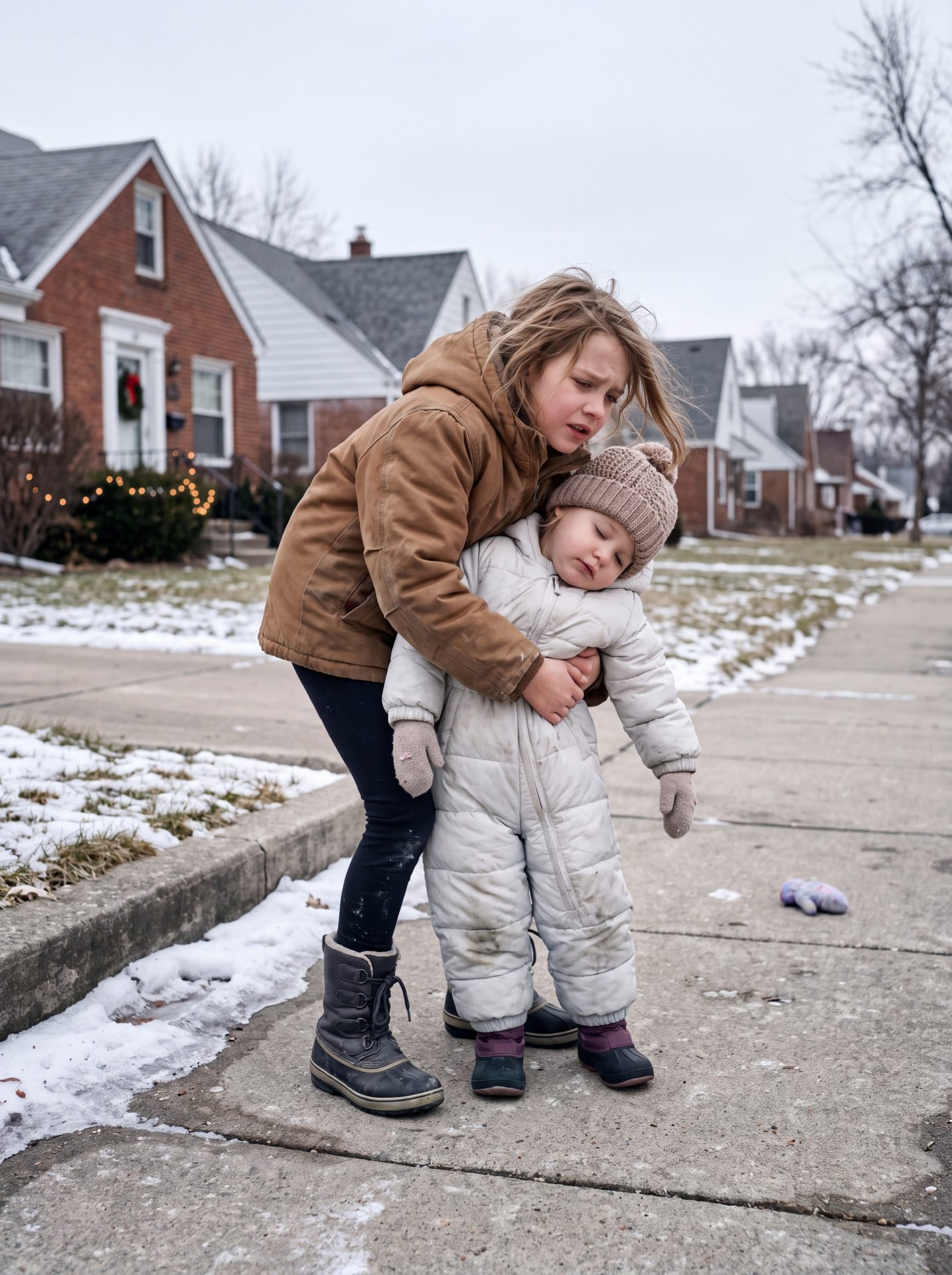
I remembered her standing outside my parents’ house with her little sister beside her. I remembered knowing that she had waited for her grandfather to come after them because she couldn’t imagine that an adult who loved her would simply watch her disappear down the road.
This time, she was standing on the other side, warm and safe, with her little sister inside with her.
“Can I close it? The house is getting cold.”
I nodded.
She pulled the door shut, turned the lock, and ran back toward her sister. For a moment, I remained there looking at the locked door.
For years, my mother had taught me to think of boundaries as cruelty. Saying no meant I was selfish, creating distance meant I was punishing someone, and protecting my own choices supposedly meant I didn’t value family enough.
Christmas had finally shown me the difference. A boundary wasn’t revenge; it was a door I was allowed to control.
My father had begun earning the possibility of being welcomed through that door again because he accepted responsibility without demanding forgiveness. My mother remained outside because she still believed being family entitled her to decide when the door should open, and I no longer needed to convince her otherwise.
The sound of my daughters laughing came from the kitchen, and I followed it. My older daughter was helping her sister with the grocery bag again while my husband stood nearby pretending not to notice the trail of sprinkles still scattered across the floor.
That was my family. It wasn’t made up of people who demanded access because of blood, tradition, or obligation, but of the people inside that house who understood that love was supposed to make children feel protected rather than frightened.
The previous Christmas, my daughter had stood outside a closed door waiting for adults to choose her safety. One year later, she closed the door herself and ran back to her sister, knowing exactly where she belonged.