
The arrangement with David began slowly and without promises. At first, it was only Sunday dinners, quick trips to the park, and the occasional evening when one of us needed help because exhaustion had finally won. Leo grew comfortable around him almost immediately, and when Sam was old enough to spend weekends in Seattle, the boys began treating each other less like children connected by scandal and more like cousins who had always belonged in the same orbit. Watching them together made something inside me loosen because they had inherited the consequences of our spouses’ choices without inheriting the bitterness.
David never tried to replace Michael, and that mattered to me. Michael still saw Leo occasionally, usually for short visits that revolved around outings, toys, and carefully planned afternoons. He loved our son in his own limited way, but he remained the kind of father who enjoyed the visible parts of parenting more than the difficult ones.
David was different. He was there when Leo fell and scraped his knee, sat on the floor assembling toys with missing instructions, and showed up when the sink leaked, when I had a fever, or when I needed someone to carry a sleeping toddler upstairs because my back had finally surrendered. None of those things were romantic, and that was exactly why I trusted them.
For a long time, I had associated love with grand declarations, anniversaries, promises, and the polished image of a marriage that looked stable from the outside. David taught me, without ever trying to, that reliability was often quieter.
Two years after the crash, we were sitting together at Green Lake Park on one of those rare Seattle days when the sky seemed determined to apologize for months of rain. Leo, now two, was chasing a soccer ball across the grass while David jogged behind him.
“Keep your eye on the ball, buddy!”
Leo swung his foot, missed completely, and nearly fell over laughing.
“Again, Uncle Dave! Again!”
I sat on the picnic blanket beside Sam, who was building a crooked tower from plastic blocks. When I handed him a juice box, he smiled at me with the same gentle eyes David had. My life looked nothing like the one I had imagined while folding that yellow onesie: I was divorced, raising Leo largely on my own, while David was navigating fatherhood across two states and rebuilding a life Jessica had fractured. Somehow, none of us were alone anymore.
David dropped onto the blanket beside me, breathing hard.
“Your son tried to take my head off with that ball.”
“He has excellent aim.”
“That is not reassuring.”
I laughed, and for a moment the sound surprised me. There had been a time when laughter felt disloyal to what had happened, as though healing meant minimizing the betrayal. Eventually I understood that happiness was not forgiveness and peace was not denial.
David leaned back on his hands and looked toward the boys.
“It’s a good day.”
“It is.”
Then he reached over and squeezed my hand. The gesture was quick and simple, but neither of us moved away immediately. There was something between us by then, and we both knew it, but we had never named it because we were afraid that trying to define what we had might damage the fragile life we had built around honesty, friendship, and the boys.
“Thank you.”
I looked at him.
“For what?”
“For answering the door that day. For letting me be part of this.”
I looked across the grass at Leo and Sam. Michael and Jessica had left us with wreckage, but the life growing from it belonged to us. For the first time, I wondered whether surviving betrayal had not merely ended one family, but had quietly created another.
Two years had passed since the phone call that shattered the life I thought I had. I could still remember the yellow onesie falling from my hand and the officer saying Michael had not been alone, but those memories no longer controlled every room inside me.
My life looked nothing like the picture I once imagined. I was divorced, raising Leo mostly on my own, while Michael lived downtown and saw him every other Saturday. Leo loved his father, but when he scraped his knee or wanted someone to admire a new drawing, he often looked for David first.
Jessica remained in Oregon with Sam, sending David photographs and updates but keeping her distance from me. The strange connection between our families had not disappeared, but over time it stopped feeling like a chain tied to betrayal and became something we were free to redefine.
David and I still refused to call ourselves a couple. There were evenings after the boys fell asleep when we shared wine and caught each other looking a second too long, but neither of us wanted to rush something that had grown out of trust rather than desperation.
At Green Lake Park that afternoon, David dropped onto the blanket after chasing Leo across the grass. Sam sat beside me playing with blocks while the sun, unusually bright for Seattle, warmed everything around us.
“Your son has an arm. He nearly hit me in the head.”
“He has good aim.”
David laughed and leaned back.
“It’s a good day.”
“It really is.”
He reached over and squeezed my hand, and the gesture was simple enough that anyone watching might have mistaken it for friendship. To me, it carried the weight of two years of showing up, carrying groceries, wiping tears, fixing broken toys, and sitting beside me during nights when neither of us had the energy to pretend we were fine.
“Thank you.”
“For what?”
“For opening the door that day. For letting me become part of this.”
I looked toward Leo and Sam racing through the grass. They had no idea how complicated the road to that afternoon had been, and I was grateful for that because children should not have to carry the full weight of the mistakes that created the world around them.
Michael and Jessica had nearly convinced me that betrayal was the defining event of my life. For a long time, I thought healing meant somehow becoming the woman I had been before the accident, but eventually I understood that woman was gone.
I did not want her back.
She had trusted appearances too easily.
She believed promises mattered more than patterns.
She thought a perfect family was something you protected even when the truth underneath it was rotting.
The woman I had become was different. I still believed in love, but now I trusted consistency more than charm and actions more than apologies.
David looked at me.
“Pizza tonight?”
“Pepperoni and jalapeños.”
“You have terrible taste.”
“And yet you keep showing up.”
He smiled.
“That seems to be my problem.”
I smiled back while Leo ran toward us laughing, his cheeks flushed from the sun. Behind him, Sam followed with both arms outstretched, shouting something neither of us could understand.
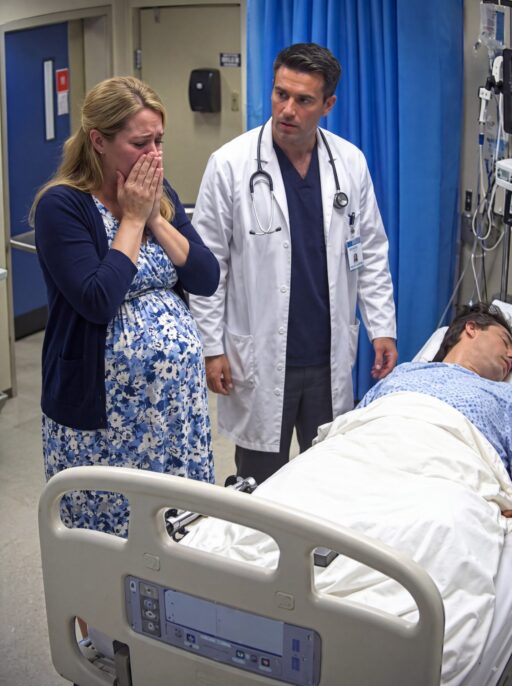
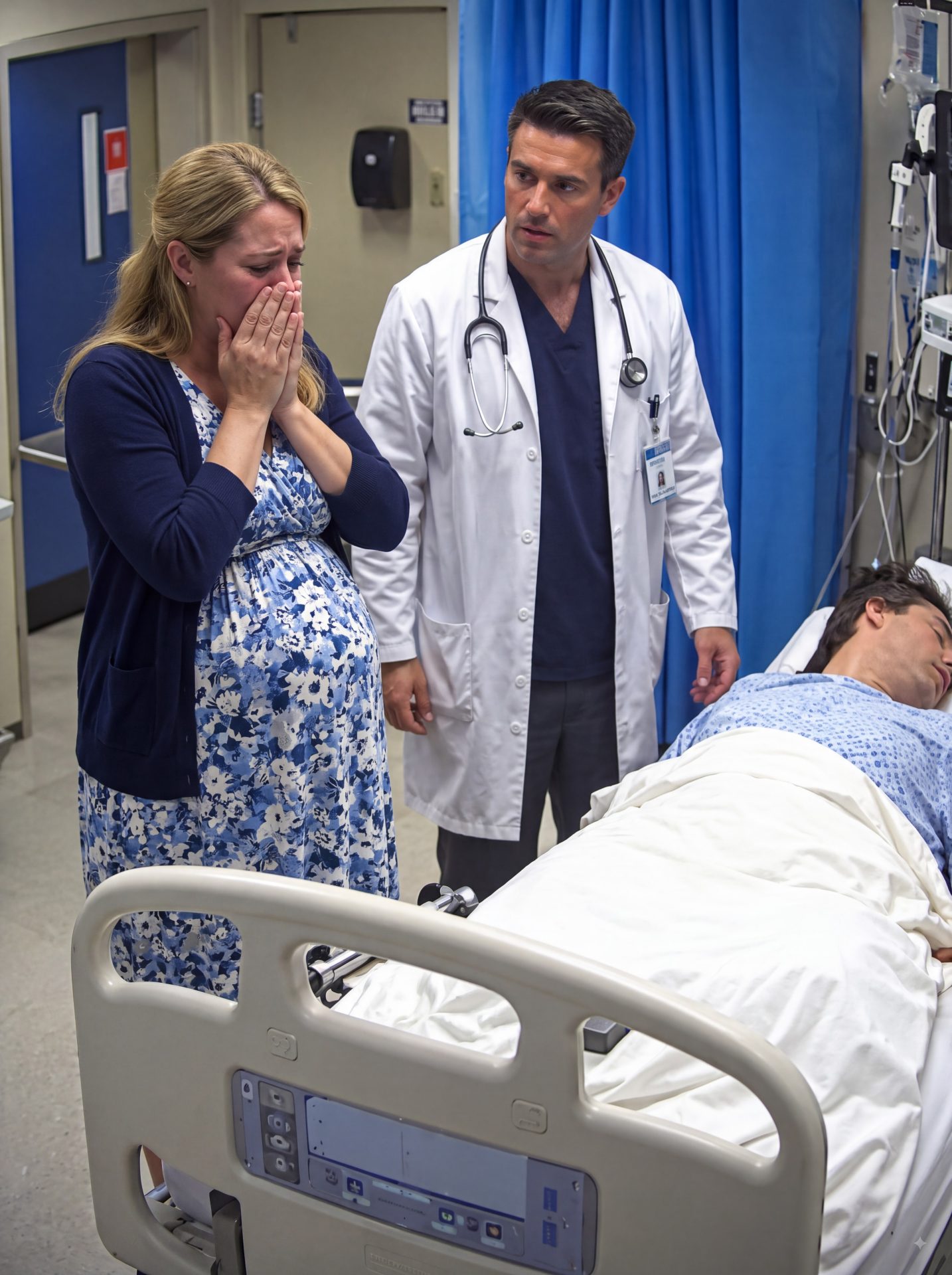
For a moment, I remembered the hospital room, the two beds, the lies, the wedding ring I had left beside Michael’s water pitcher, and the certainty that everything good in my life had just ended. Now I could see how wrong I had been.
Something had ended.
But something else had begun.
“I didn’t just survive the crash, David.”
He looked at me.
“I think I finally woke up.”
He squeezed my hand again, and this time I did not pull away. I watched Leo and Sam tumble onto the blanket beside us and realized that the family I had now was imperfect, complicated, and nothing like the one I had planned.
It was also honest.
For the first time in years, that was more than enough.
The storm had not disappeared from my memory, but it no longer filled the sky. The sunlight was finally stronger.