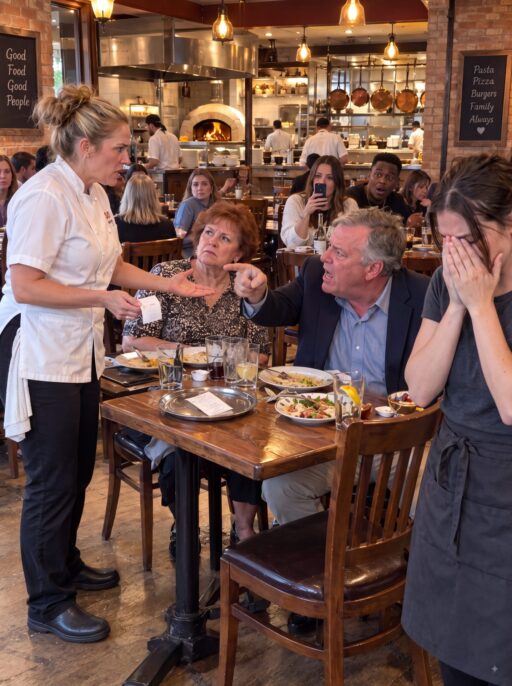
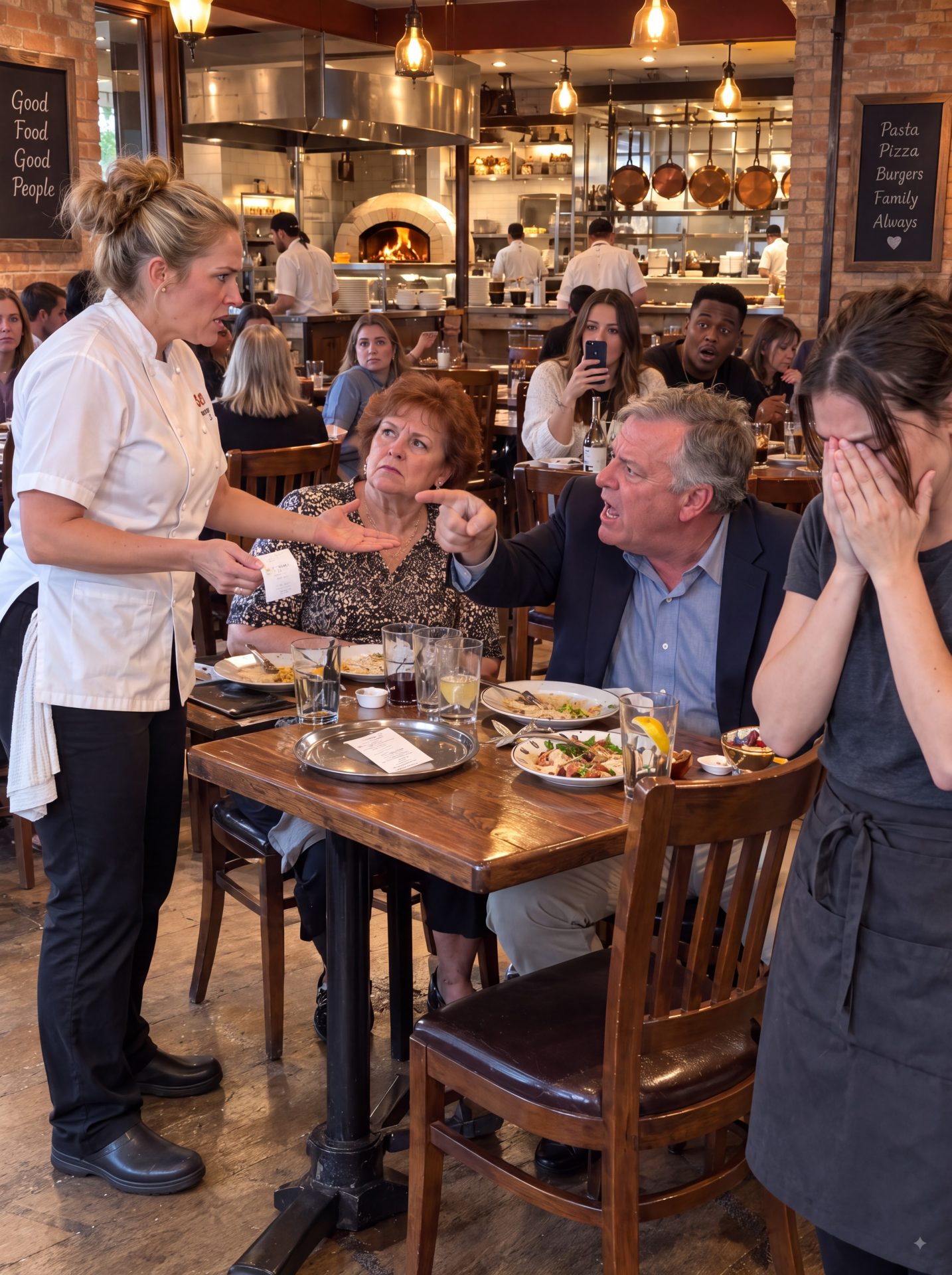

Ten years after my parents threw me out of their house, I saw their last name appear on the reservation list of my Michelin-starred restaurant. It was a fully booked Saturday night at Ember, and seeing “Mitchell, party of four” on the screen felt less like a reservation and more like a warning from a life I thought I had already left behind.
My sous chef, Christina, noticed me staring at the booking during afternoon prep. She had worked beside me long enough to recognize when something had unsettled me, even when I tried not to show it.
“You know them?”
“Used to.”
I could have canceled their table and invented any excuse I wanted, but I decided against it. Instead, I left the reservation untouched and added a simple note for the staff: no complimentary dishes, no special treatment, standard service only.
That decision only made sense because of what had happened ten years earlier. I grew up in a house where cooking was the only thing that made me feel visible, while my parents valued achievements that could be easily explained to neighbors, employers, and relatives.
My father sold industrial equipment, my mother managed a dental office, and my older sister Natalie excelled at school, sports, and every other activity that earned approval in our family. I was the quiet daughter who came home and went straight to the kitchen, teaching myself how to make stock, experiment with spices, and turn ordinary ingredients into something worth remembering.
Mom treated my fascination with food as a phase she expected me to outgrow. By seventeen, however, I knew exactly what I wanted and told my parents I planned to pursue culinary school.
“That is not a plan.”
Dad dismissed the idea, while Mom redirected the conversation toward Natalie’s college applications. Neither of them openly forbade me from becoming a chef because they seemed convinced that ignoring my ambition would eventually make it disappear.
Instead, I took a job at a small Italian restaurant and started at the bottom. I washed dishes, chopped vegetables, worked late into the night, and came home smelling like garlic and grease, but for the first time I felt certain that I had found the place where I belonged.
My parents saw the same job as evidence that I was wasting my future. During the summer after high school, months of arguments finally ended with Mom telling me that if I refused to become serious about my life, they could no longer afford to support me.
The claim had nothing to do with money because my father earned well and the house was already paid off. What my mother could no longer tolerate was watching me build a future she did not understand, so she gave me two hours to leave.
“You’re eighteen. If this is the life you want, you can support yourself.”
I packed everything I could into two black trash bags while Dad remained in his recliner watching television. Then I stepped outside with twenty-three dollars, no permanent place to sleep, and the humiliating realization that nobody inside the house intended to follow me.
For two weeks, I slept on a coworker’s couch before renting a tiny room above a bakery. I worked morning prep at one restaurant, dinner service at another, and weekend dish shifts wherever I could find them, surviving on staff meals and day-old bread while my hands collected burns, cuts, and cracks from constant work.
My parents never called to ask whether I was safe or where I was sleeping. That silence continued for ten years while I slowly built the career they had insisted would lead nowhere.
Eventually, I became the chef they never believed I could be, earned a Michelin star, and opened Ember under my own name. Then, after a decade without a single phone call, my parents finally returned by booking the full tasting menu at the restaurant I had built without them.
They would spend that Saturday night photographing my food and telling strangers how proud they were of me. But when the check reached their table, I would discover that pride was not the only reason they had suddenly decided we were family again.
After my parents threw me out, survival came before ambition. I spent two weeks sleeping on a coworker’s couch before renting a cramped room above a bakery downtown, where the window barely opened and the futon sagged so badly that I woke every morning feeling twice my age.
The rent was four hundred dollars a month, which might as well have been four thousand at the time. I worked morning prep at one restaurant, dinner service at another, and weekend dish shifts wherever someone needed an extra pair of hands, while staff meals and day-old bakery bread became most of my diet.
Through all of it, nobody from my family contacted me. Weeks became months, months became years, and eventually the silence stopped feeling temporary because I understood that my parents had not thrown me out to frighten me into changing direction; they had genuinely decided that the version of me they could not understand was no longer their responsibility.
My first real break came when I joined a better restaurant and met Grace, a demanding chef who had worked in New York and Paris. She watched me chop vegetables on my first day and immediately identified the difference between enthusiasm and discipline.
“You’re fast, but you’re sloppy.”
Grace never tried to replace my mother, and I never needed her to. What she gave me was far more useful: she taught me how to break down fish without wasting meat, how to recognize what a sauce needed before I could name the missing ingredient, and how to understand that talent meant very little without consistency.
One night, after I ruined a reduction and stood fighting tears at the sink, she gave me the lesson I carried for the rest of my career.
“The kitchen isn’t going to love you back. That’s not its job. Its job is to test you, and your job is to pass.”
So I kept passing.
By twenty-five, I had become a sous chef at a restaurant people drove an hour to visit. Two years later, I was running my own kitchen, creating dishes based not only on technique but on everything I understood about hunger, endurance, and the difference between wanting something and needing it.
At twenty-eight, I received the phone call that changed my career. My restaurant had earned a Michelin star, and I sat on the floor of my apartment with both hands over my face because the achievement was bigger than anything I had imagined when I was eighteen.
The strangest part was realizing there was nobody from my childhood I wanted to call.
My parents had not seen the nights I worked three jobs or the mornings I arrived before sunrise to receive deliveries. They had not seen the burns, failures, promotions, or tiny victories that slowly transformed me from the unwanted daughter with two trash bags into a chef whose work people crossed cities to experience.
The following year, I opened Ember. It had sixty seats, an open kitchen, and a seasonal menu built entirely around the way I wanted to cook, and every difficult part of it belonged to me: the recipes, the risk, the bills, the sleepless nights, and the satisfaction.
My family remained silent.
They did not call when I earned the star, when Ember opened, or when a food magazine put my photograph on its cover. Ten full years passed without a single attempt to reconnect.
Then, on one Saturday afternoon, their name appeared on my reservation screen.
By seven that evening, my mother, father, Natalie, and a man I did not recognize were walking through Ember’s front door.
They had finally come to see what I had built.
The question was whether they had come to see me at all.
I saw my mother before she saw me, though I recognized her less by her face than by the way she examined the dining room. She looked around Ember slowly, taking in the polished tables, the open kitchen, the wine service, and the guests who had waited weeks for reservations, as though she were measuring the value of everything her daughter had built.
Dad looked older than I remembered, broader through the middle and grayer at the temples, while Natalie arrived dressed as though the evening were meant to be photographed. The man beside her seemed polite and slightly nervous, like someone who had been invited into a family story without realizing several important chapters had been deliberately removed.