
The message arrived late on a rainy Thursday afternoon while I was standing in my kitchen waiting for the kettle to boil. My daughter Caroline’s name appeared on my phone, and when I opened her message, I felt something inside me go completely still.
“You’re choosing yourself over your own grandchildren, and that’s the hill you want to die on. Fine.”
I was sixty-eight years old and had spent most of my life taking care of other people. I had worked for forty-one years delivering mail through freezing winters and brutal summers, then came home to raise Caroline with whatever money and energy remained.
All I had done this time was say no to babysitting.
Caroline and her husband, Wade, wanted to take a three-day holiday trip with friends. They expected me to care for four-year-old Hudson and eight-month-old May, but I had cataract surgery scheduled for the following Tuesday and an important preoperative appointment that Saturday.
The clinic had specifically warned me to rest and avoid unnecessary strain before surgery. Caring for a baby who woke repeatedly during the night while chasing a preschooler around the house was exactly what they had told me not to do.
“Honey, could you ask Wade’s mother? Or postpone the trip for a week?”
Caroline never asked whether I was nervous about surgery or who would drive me home afterward. Instead, she sent that message accusing me of choosing myself over her children.
An hour later, Wade sent me a screenshot showing that the eight hundred dollars I had recently transferred for Hudson’s preschool had been returned. There was no explanation, but the meaning was obvious: if I refused to help the way they wanted, they would reject the help I had already offered.
The next morning, I drove to their house anyway. Both cars were in the driveway, I could hear cartoons playing inside, and I even heard Hudson talking in the living room before Caroline quietly said something that made him stop.
They knew I was standing outside.
I rang the bell twice.
Nobody opened the door.
When I eventually returned home, a brown envelope was waiting against my front door. Inside was a typed letter accusing me of creating an unhealthy “transactional relationship” with money and explaining that Caroline and Wade needed distance to establish healthier boundaries within their family.
The language did not sound like my daughter.
But her signature was there.
I carried the letter into the spare bedroom and pulled a green accordion file from the highest shelf of the closet. My late husband, Royce, had created it years earlier after Caroline missed payments on a car loan we had cosigned.
“We’re not keeping this to punish her, Margaret.”
“We’re keeping it so we remember the truth when love starts editing our memory.”
At the kitchen table, I opened the file.
Inside were thirteen years of bank transfers, medical payments, emergency bills, groceries, preschool costs, vehicle repairs, house expenses, and countless moments when Caroline and Wade had promised they would manage before eventually asking me to rescue them.
I added the numbers. Seventy-three thousand four hundred and twenty dollars.
That total did not include babysitting, school pickups, gasoline, birthday money, or the groceries I had quietly left at their house over the years.
For thirteen years, I had said yes so often that my help no longer felt like generosity to them.
It felt like something they owned.
I closed the file, found the number for Royce’s longtime attorney, Otis Beaman, and called him.
“Otis, it’s Margaret. I need to discuss my will, my power of attorney, and a few other matters.”
He offered me an appointment for Tuesday.
“I’ll be there.”
At the time, I thought I was simply protecting myself from being taken for granted again.
I had no idea someone had already used my name to create a debt worth nineteen thousand four hundred dollars.
Otis listened while I explained thirteen years of loans, emergency transfers, unpaid bills, and promises that Caroline and Wade would eventually become financially independent. He compared my bank records with Royce’s carefully saved receipts, then read the typed letter they had left at my door.
“Did Caroline write this?”
“She signed it.”
“That wasn’t my question.”
I looked again at phrases like “healthier patterns” and “family unit,” words that sounded nothing like the daughter I had raised.
“No. It sounds like Wade.”
Otis began asking questions that made me increasingly uncomfortable. He wanted to know whether Caroline still had access to any of my accounts, whether Wade possessed copies of my identification, and whether I had ever given them my Social Security information or tax records.
Years earlier, I had done all of those things while helping them secure their mortgage.
“Do they still have those documents?”
“I don’t know.”
That answer was enough for Otis. He immediately prepared paperwork removing Caroline from my accounts, changing my executor, and revoking the power of attorney that would have allowed her to control my finances if I became incapacitated.
Instead of telling me to cut my daughter out of my will, he suggested creating an independent trust for Hudson and May so their parents could not directly access the money.
“That seems harsh.”
“It seems careful.”
I thought of Royce’s warning about love editing memory.
“Do it.”
Otis also told me to freeze my credit as soon as possible. I promised I would, but with cataract surgery approaching, I decided a few days would not matter.
I was wrong.
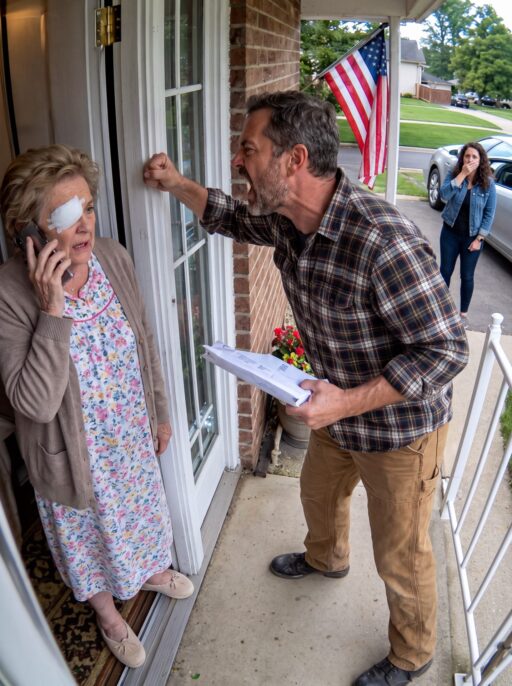
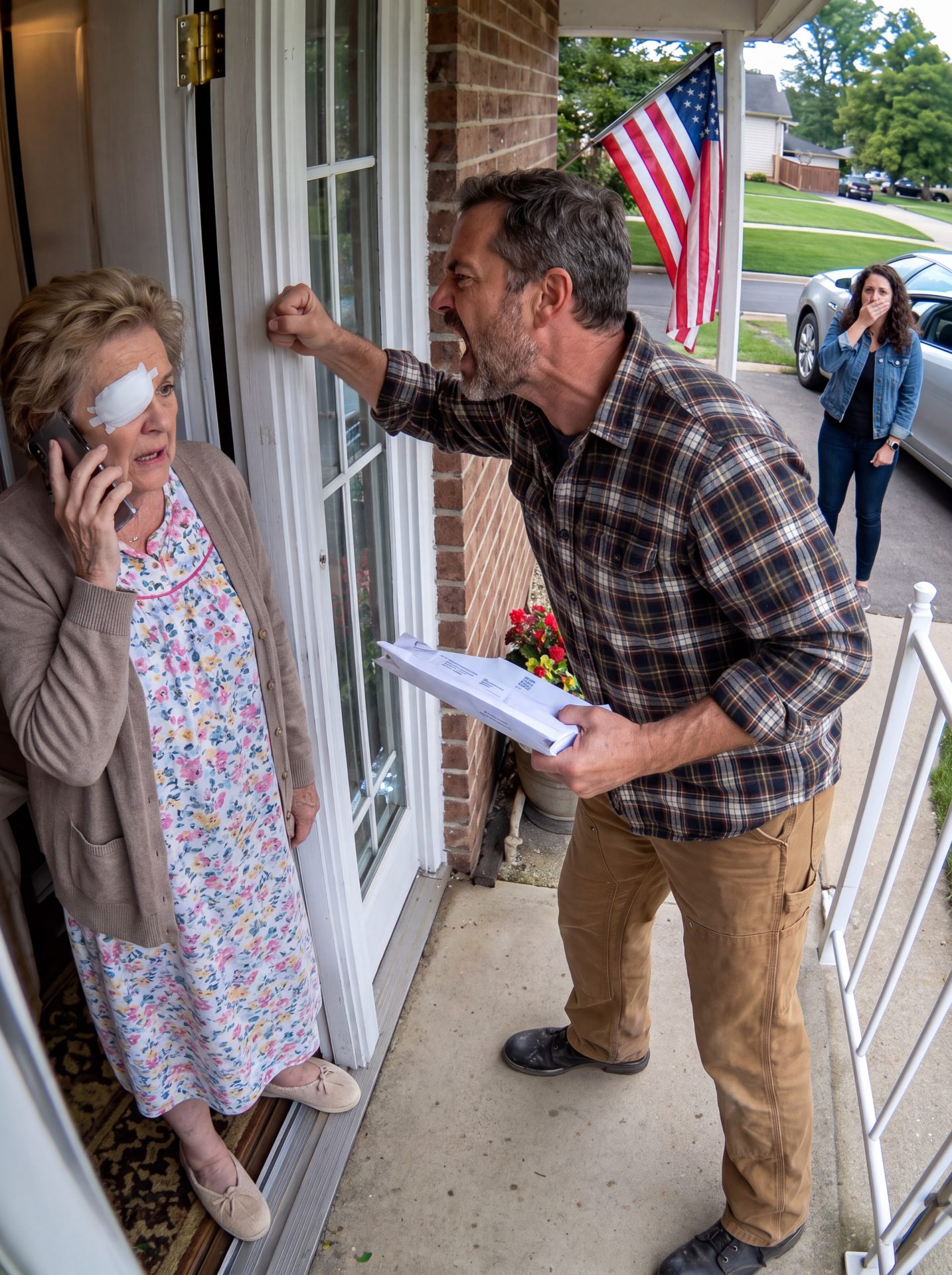
The surgery went well, although Caroline never called before or afterward. A woman from church drove me home, made soup, and stayed until I could manage alone with the protective shield covering one eye.
A week later, at seven in the morning, the bank called.
“Mrs. Holloway, did you recently guarantee a business line of credit?”
“No.”
The woman hesitated before telling me that the outstanding balance was nineteen thousand four hundred dollars.
My hand tightened around the phone.
“What business?”
She named a small investment company belonging to Wade. The account listed me as guarantor and contained personal information that only someone close to me should have possessed.
Before I could ask another question, someone began pounding on my front door.
“Margaret! Open the door!”
It was Wade. I kept the bank employee on the line and opened the door, and Wade stood in the rain, visibly panicked, with his eyes immediately dropping to the phone in my hand.
“Did the bank call?”
“They mentioned nineteen thousand four hundred dollars in my name.”
He rubbed his wet hair.
“There’s been a misunderstanding.”
“Then explain it.”
Wade claimed the money had funded a business opportunity that collapsed after a partner withdrew. When I asked why I was legally responsible for his business debt, his explanation became much less confident.
“We thought the financing had been arranged.”
“Who is ‘we’?”
“Caroline and me.”
The answer hurt more than I expected.
“Did Caroline know my name was being used?”
“She thought you had agreed to help.”
“I never agreed to anything.”
“We were going to repay it before you noticed.”
Then came the question I did not want to ask.
“Whose signature is on the guarantee?”
Wade hesitated.
“Caroline handled the paperwork.”
“My daughter signed my name?”
“I didn’t say that.”
The bank employee suddenly spoke through the phone.
“Mrs. Holloway, do not affirm this debt until our fraud department completes its review.”
Wade froze.
“You put me on speaker?”
“The call was already happening when you arrived.”
His voice hardened.
“Margaret, hang up.”