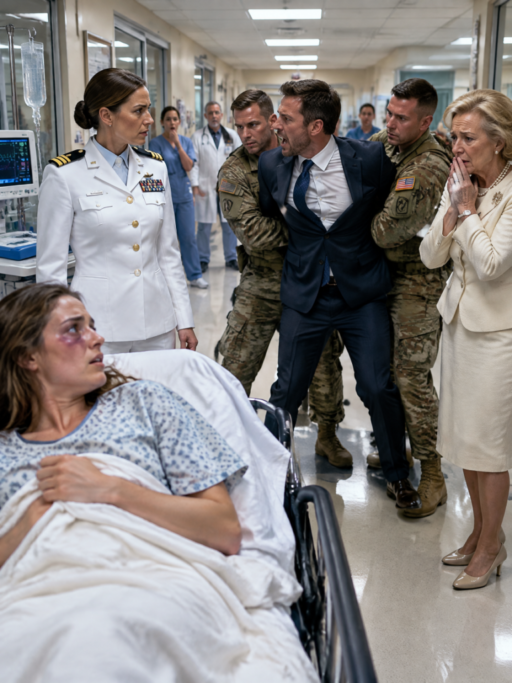
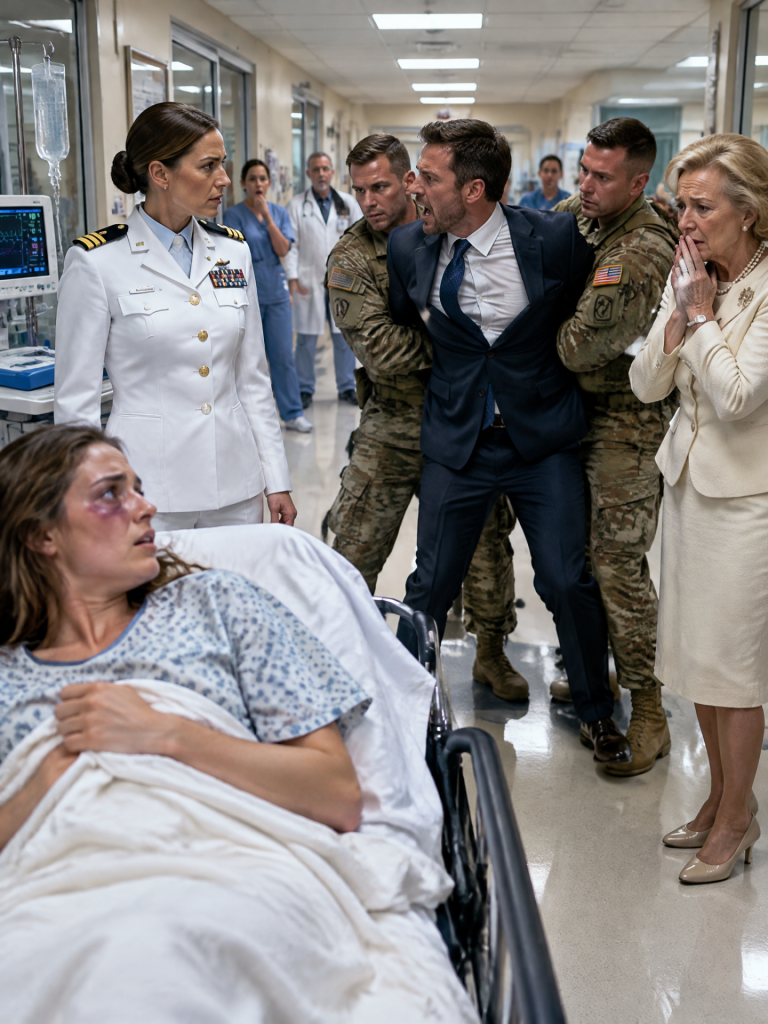

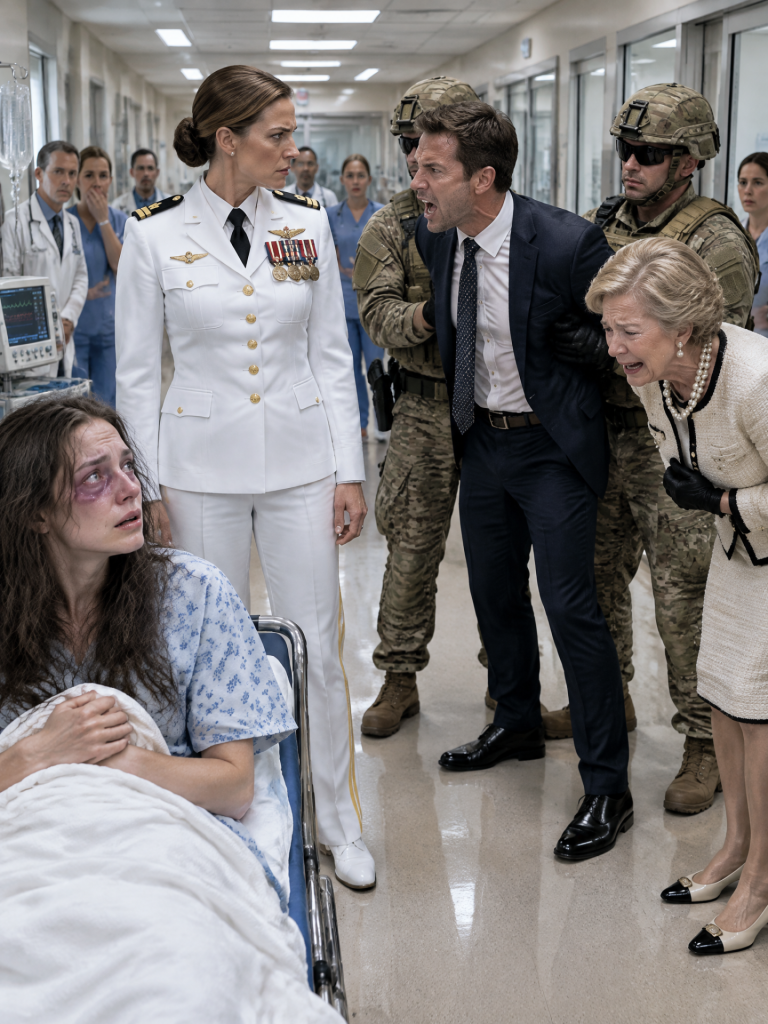
He lunged toward the bed. A military police officer restrained him against the wall before he reached her.
Vivian began shouting about the outrage. Reed remained calm.
“The outrage is taking money intended for wounded veterans to finance your lifestyle.”
The reporter raised her camera again. This time, she recorded what the Whitmores had never intended anyone to see.
Part 3: The Witness They Expected to Save Them
By midnight, federal vehicles surrounded the Whitmore estate. Reporters gathered outside its gates as news of fraud allegations, abuse, and federal warrants replaced stories about the family’s wealth.
Three days later, Hannah sat beside me in a secure hearing room. A high-collared sweater concealed her injuries, and my military jacket rested over her shoulders.
Before we entered, she had told me, “I want them to see that I survived.”
Across the table, Andrew looked diminished, Grant looked furious, and Vivian remained convinced that influence could protect them.
Investigators presented medical photographs, guest-house security footage, and records of the financial transfers. Their lead attorney responded by accusing me of directing a military vendetta against a respected family.
I stayed silent. Then the doors opened.
General Arthur Whitmore entered slowly, leaning on a silver-handled cane. He had founded Whitmore Defense Group and was Vivian’s father-in-law, Andrew and Grant’s grandfather.
Vivian stood, visibly relieved. “Arthur, thank God you’re here.”
He looked past her toward Hannah and removed his hat.
“I owe this young woman an apology. It will never be enough.”
Vivian urgently told him to remain quiet. He ignored her and approached the judge’s desk.
“My son helped build this company honorably. After he died, I trusted Vivian and my grandsons to protect what he left behind.”
He placed an encrypted flash drive on the table.
“They betrayed that trust.”
Vivian stared at him as he explained that Hannah had brought him evidence months earlier. She had asked him to stop the misconduct quietly because she still cared about the family.
“I asked her to wait while I verified every transaction,” he said. “That delay nearly cost her life.”
Vivian called him bitter and accused him of not understanding what he was doing. He turned toward the judge instead.
Before the assault, he had amended his legal trust. If an executive was found to have misused company funds, voting control would transfer to the person who exposed the wrongdoing.
“Hannah now holds the controlling vote.”
Andrew buried his face in his hands. Grant looked ill, while Hannah stared at her husband’s grandfather in disbelief.
She had risked everything to expose the fraud. Now she held control of the company the family had used to make itself powerful.
The judge ordered Andrew and Grant held pending trial. Deputies also escorted Vivian from the room as she screamed at Hannah.
“You’ve destroyed everything!”
My daughter stood and met her eyes.
“No. You did that yourselves.”
Part 4: What She Built in Its Place
Months later, Hannah returned to the Whitmore estate as chairwoman of the board. On her first day, she ordered the guest house where she had been imprisoned demolished.
In its place, she built a recovery center for veterans and military families. A bronze plaque above the entrance read: “No one is too powerful to be held accountable.”
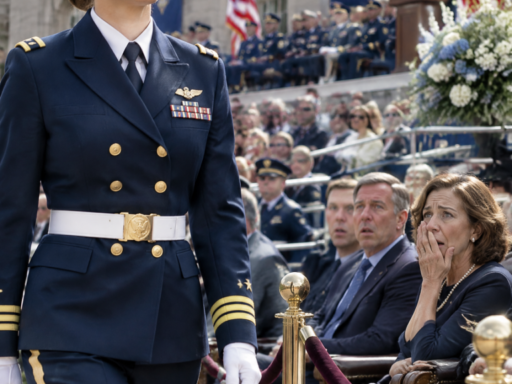
I stood beside her in uniform on opening day as survivors, families, and soldiers gathered. General Arthur arrived in his wheelchair and wept when she cut the ribbon.
That evening, Hannah rested her head against my shoulder while people continued entering the center.
“I thought calling you would make me seem weak,” she admitted.
I squeezed her hand. “Asking for help was the bravest thing you could have done.”
She smiled, and I recognized the daughter I had feared losing in that hospital room.
Her injuries had left scars, and freedom had not erased what happened. But the place once used to frighten her now offered safety to others, and she was finally choosing the direction of her own life.