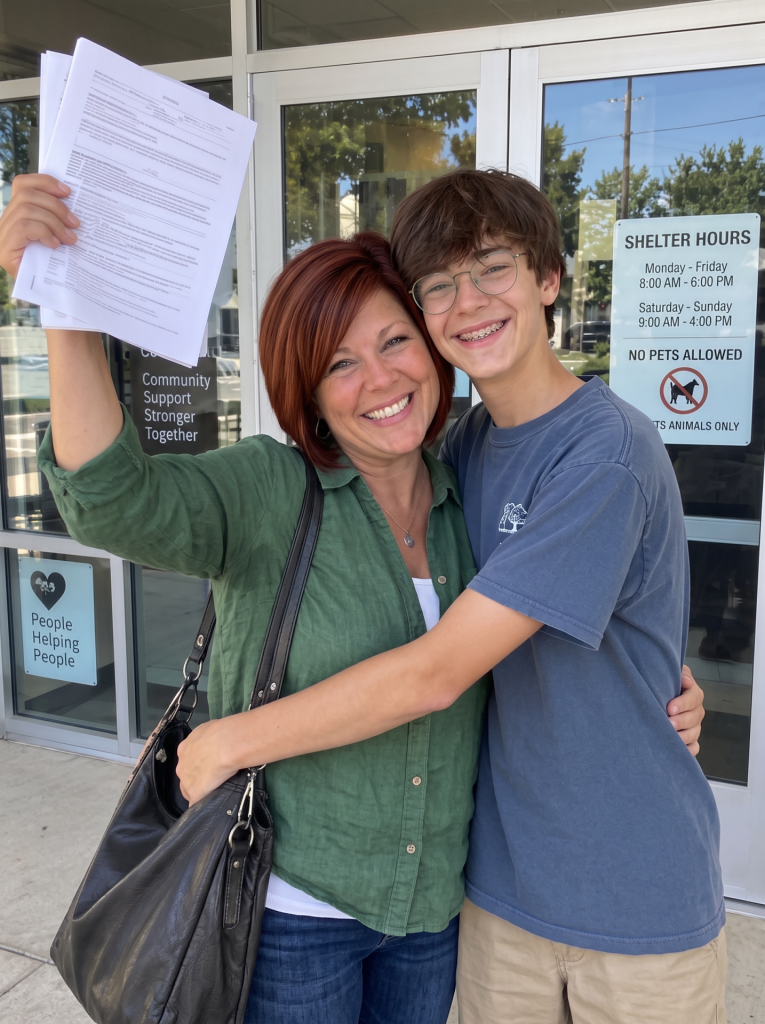

Everyone warned me that adopting Luke was a mistake. He was sixteen years old, had already lived in ten different foster homes, and according to the people around me, that meant he must be carrying problems no ordinary parent could handle.
My sister was especially worried.
“Caroline, do you understand what ten placements means? Kids who have been moved that many times carry things with them. Things you may not be able to fix.”
I understood her concern, but I had learned long ago that everyone carried something. Three years earlier, I had lost both of my children, fourteen-year-old Grace and eleven-year-old Noah, after another car crossed the median on a rainy afternoon.
Their father had died two years before them, so for a while the three of us had been learning how to live as a smaller family. Then suddenly I was the only one left.
For months, I kept Grace and Noah’s bedroom doors closed because seeing their things hurt too much. Eventually, the grief became quieter, but the house never did, and every empty room reminded me that it had once been filled with footsteps, music, arguments, and laughter.
One morning, I realized I could no longer spend the rest of my life listening to silence. That decision eventually led me to a foster care agency, where a caseworker named Denise asked the question I had secretly been afraid to ask myself.
“Are you trying to replace your children?”
The words hurt because part of me had wondered the same thing.
“No one could replace Grace or Noah. I’m not looking for replacements. I’m looking for someone else to love.”
Months of training, interviews, inspections, and painful conversations followed. Then Denise invited me to an informal event where prospective parents could meet children in foster care.
That was where I first saw Luke.
He was sitting alone near a window with a paperback open on his knees while younger children played around him. When a little girl dropped a box of crayons, Luke immediately put down his book, crouched beside her, and gathered every one, even crawling beneath a table to retrieve the last blue crayon.
After he returned quietly to his seat, I asked Denise who he was.
“Luke. He’s sixteen.”
“Can I meet him?”
She hesitated before answering.
“You should know he’s had ten placements.”
I immediately asked whether he had been violent, used drugs, or hurt younger children. Denise said no to every question.
“Then what happened?”
She paused.
“Luke is complicated.”
I had heard adults use that word before when they did not know what to do with a child’s pain. After Noah lost his father, teachers had called him difficult because grief made him quiet, so I was not willing to let a single label decide who Luke was.
“I still want to meet him.”
Our first conversation lasted nearly an hour. Luke was intelligent, observant, unexpectedly funny, and so careful with every word that I could already tell he had learned not to trust adults easily.
When I finally stood to leave, Denise reminded me that one good conversation did not erase ten failed placements. I knew she was right, but I also knew something she did not.
I was coming back.
And I did. Again and again.
At the time, I believed I was slowly discovering who Luke really was. I had no idea that the truth behind those ten homes was something no case file had ever told me.
For the next four months, Luke and I kept meeting. At first, every visit was supervised at the agency, but gradually we moved to libraries, diners, and parks, where our time together began to feel less like an official appointment and more like two people simply getting to know each other.
I kept waiting for the troubled teenager everyone had warned me about to appear. I expected anger, destruction, or some behavior that might explain ten failed placements, but that version of Luke never showed up.
He was guarded, and I could feel him watching me each week to see whether I would return. Beneath that caution, however, he was thoughtful and quietly kind, with an almost unsettling ability to remember small details other people overlooked.
One afternoon, I casually mentioned that Grace had hated raisins. Three weeks later, Luke pushed a cookie toward me at a café without looking up from his book.
“Don’t worry. I checked. No raisins.”
I stared at him because he had remembered one tiny detail about a girl he would never meet and carried it around for weeks. That simple gesture was the moment I realized I had stopped thinking of Luke as a teenager I might adopt and started thinking of him as someone I already loved.
Eventually, we began talking about adoption. Even then, Luke approached the subject cautiously, almost as if saying the word too confidently might cause the possibility to disappear.
“You’d really want that?”
“Yes.”
“Permanent?”
“That’s usually what adoption means.”
He picked at the label on his water bottle before asking the question that seemed to matter most.
“What if I mess everything up?”
“Then we deal with whatever you messed up.”
Luke kept his eyes lowered.
“What if you regret adopting me?”
“Then I would be an adult having a complicated feeling, and you would still be my son.”
He told me I made everything sound too simple, but I disagreed.
“Commitment is simple, Luke. It means you stay.”
He became very quiet after that, and I did not yet understand why those words affected him so deeply.
When Luke finally moved into my house, he behaved like a guest who expected to be asked to leave at any moment. He made his bed perfectly, washed every dish immediately, folded towels without being asked, and moved through each room as though leaving any trace of himself might become a reason to send him away.
One Saturday, I nearly tripped over a loose board on the porch. Luke appeared with a screwdriver before I had fully recovered my balance and spent the afternoon fixing something I had ignored for two years.
Later, I realized that repairing things was one of the few ways Luke knew how to say he wanted them to last.
About a month later, he accidentally called me Mom while looking for his charger. We both froze, and I turned toward the counter so he would not see the tears filling my eyes.
“Kitchen counter. Beside the toaster.”
He thanked me awkwardly, and neither of us mentioned what had happened. But eventually he said it again, then again, until “Mom” became part of ordinary sentences and the silent house I had once dreaded slowly began sounding like a home again.
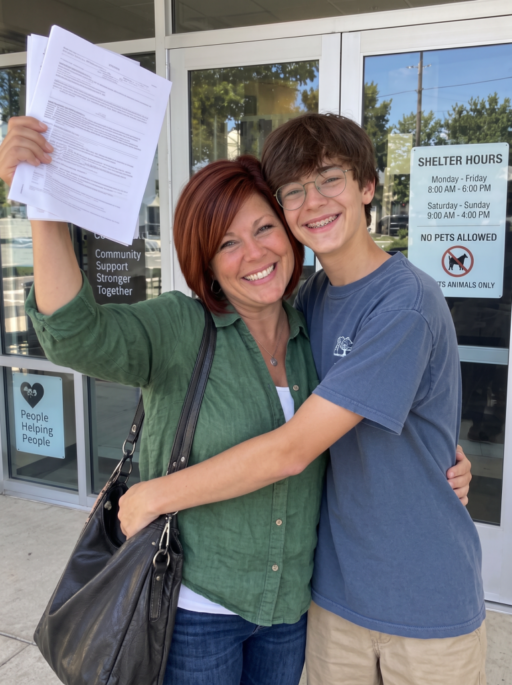
By the time the adoption became final, I had stopped waiting for Luke to become the difficult boy everyone had described. He was simply my son, and I thought the hardest part of our story was finally behind us.
Two weeks later, Luke sat across from me at dinner, barely touching his favorite meatloaf. His hands were trembling when he finally looked up.
“Mom, I need to tell you something. And you’re probably going to wish you never adopted me.”
Every warning I had ever heard suddenly returned to me. I reached across the table and told him to say whatever he needed to say.
Luke stared down at his plate as tears filled his eyes.
“I have a sister.”
Luke kept his eyes on the table as he explained that Emma was his nine-year-old half-sister. They had entered foster care together years earlier, and from the beginning, Luke had taken on responsibilities no child should have been expected to carry.
He made Emma breakfast, helped her get ready for school, struggled to do her hair, and sat beside her while she worked on homework. Whenever she woke frightened in the middle of the night, she did not search for a foster parent or another adult.
She searched for Luke.