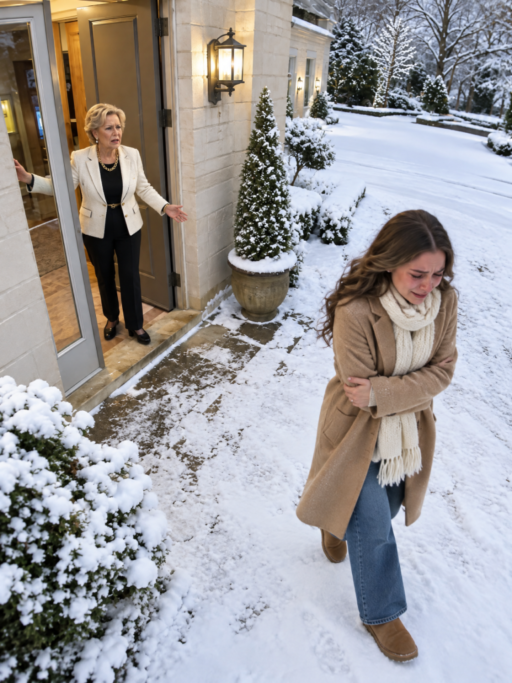
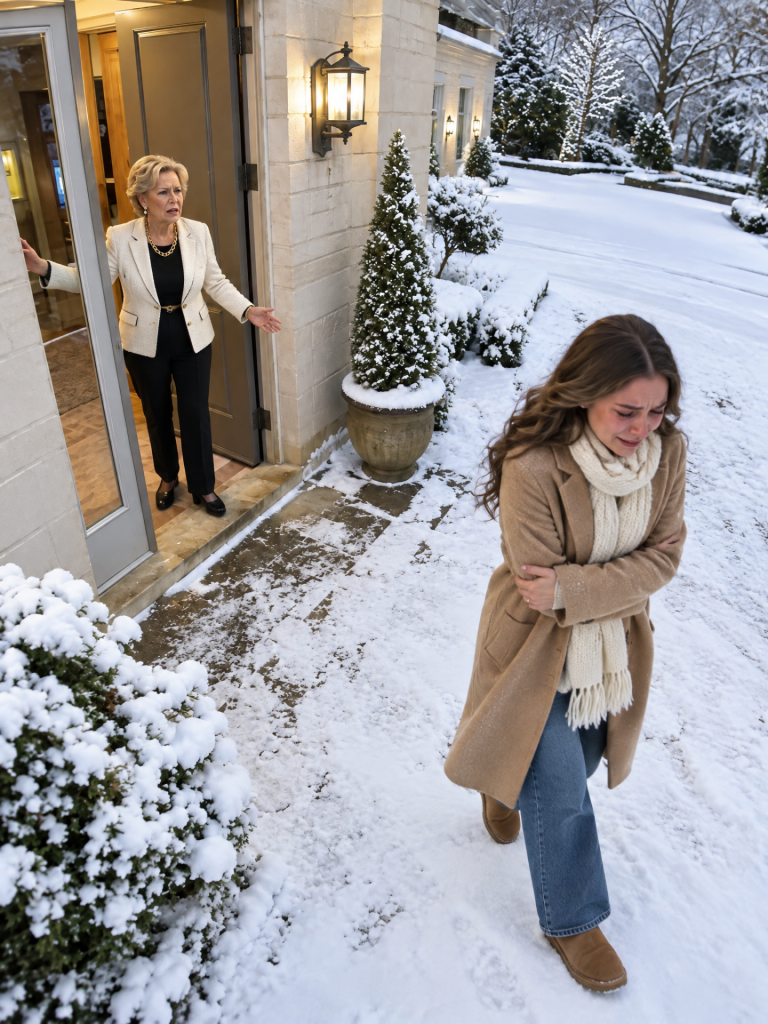

I never answered.
For years, I had believed that being a good daughter meant absorbing whatever my parents demanded and smoothing over whatever damage they caused. Walking away from that role felt uncomfortable at first, but the silence that followed was different from the silence Abby had endured on Christmas Eve.
This silence felt peaceful.
Mark and I focused on helping Abby understand that she had not caused any of it. She had simply revealed something about my family that I had spent years refusing to see.
The problem was never one missing chair. It was the belief that Abby could be excluded without consequence because they assumed I would eventually forgive them and continue supporting everyone as usual.
Abby needed time to understand that distinction. For weeks, she still occasionally asked whether I thought Grandma might have simply been overwhelmed or whether she herself should have handled the situation differently.
“You were sixteen years old. You arrived expecting to spend Christmas with your family. Adults were responsible for making sure you were safe, fed, and welcome.”
She looked down at her hands.
“They made me feel stupid for even showing up.”
That sentence hurt more than any angry voicemail my mother had left. My daughter had driven home believing she had somehow committed a social mistake simply by expecting a place at her grandparents’ table.
I could not change what happened that night, but I could make sure she never confused rejection with something she had deserved.
The money from selling the house remained untouched for a while. Mark and I discussed what to do with it, and eventually the answer became obvious.
We decided it would go toward Abby’s future.
My parents had treated the house as though my financial support were something they were automatically entitled to receive. I preferred to use that same money to give my daughter opportunities without attaching guilt, control, or obligation to them.
Meanwhile, Janelle’s relationship with our parents deteriorated quickly. After thirteen days of living with them, she had already admitted I had been right, and afterward she became much quieter whenever the subject of loyalty came up.
I did not need an apology from her. Watching her finally experience the behavior she had spent years excusing was explanation enough.
Months passed, then a year. Christmas came around again, and for the first time we did not plan our holiday around what my parents expected.
We stayed home.
Abby helped Mark cook dinner, I worked only a short hospital shift, and when I came through the door that evening, there was a plate waiting for me at the table.
Nothing elaborate happened.
That was what made it perfect.
There was no performance, no tension, and no one wondering whether they had earned the right to sit down. There were simply three chairs and three people who wanted one another there.
That Christmas taught me what the previous one had already begun to show me.
A home is not defined by how many people you can squeeze around a table.
It is defined by whether the people you love ever have to wonder if there is room for them.
Two years passed, and the anger that once dominated everything eventually lost its grip on us. By then, Abby was eighteen and home from college for fall break, studying to become a veterinarian just as she had dreamed of doing since she was five.
The money from selling my parents’ house had covered her tuition and given her something I had wanted for her more than any inheritance ever could. It gave her the freedom to build a future without feeling indebted to relatives who treated financial help and affection as tools of control.
One quiet Friday afternoon, Abby and I sat together on the porch swing with glasses of iced tea. There were no family obligations waiting for us, no frantic phone calls, and no invisible pressure to make ourselves smaller so someone else could stay comfortable.
Abby looked across the yard for a long moment before speaking.
“You know, I was thinking about them the other day. I don’t miss them.”
There was no anger in her voice. She said it simply, like someone noticing that an old wound had finally stopped hurting.
“I don’t either.”
And I meant it.
I did not miss my mother’s passive-aggressive comments or my father’s demands for loyalty. I did not miss Janelle standing silently beside them whenever speaking up would have required courage, and I certainly did not miss constantly wondering whether I had done enough to earn the approval of people who had accepted years of support as though it were their birthright.
My parents still occasionally tried to reach me. Aunt Elaine continued sending a Christmas card every year, usually including updates about their health and thinly disguised suggestions that time was running out for reconciliation.
I never responded.
That decision was not about revenge. I simply stopped believing that forgiveness required reopening the same door to people who had never taken responsibility for why it closed.
What happened to Abby that Christmas Eve had changed the way I understood family. My parents had welcomed neighbors, distant relatives, and twenty-eight guests into a house I owned, then looked at my sixteen-year-old daughter and told her there was no place for her.
She had driven home alone, eaten toast and half a banana for Christmas dinner, and curled herself into a small ball on our couch because the people who should have made her feel safe had made her feel unwanted.
I would never forget finding her there.
For years, I had been the daughter who solved problems, covered expenses, ignored insults, and convinced herself that maintaining peace was more important than setting limits. My parents had mistaken that patience for permanent permission.
They learned otherwise when the house was sold.
But the most important consequence was never their eviction or their smaller apartment. It was what Abby learned afterward.
She learned that love did not require tolerating humiliation. She learned that protecting yourself did not make you cruel, and that being related to someone did not give them unlimited access to your life.
Most importantly, she learned that when she arrived at my door, there would always be room for her.
I looked at my daughter sitting beside me, healthy, independent, and building the future she wanted. For the first time in years, I felt no guilt about the family I had walked away from.
I had spent too much of my life trying to please everyone.
When the moment finally came to choose, I chose my daughter.
And I would make the same choice every single time.