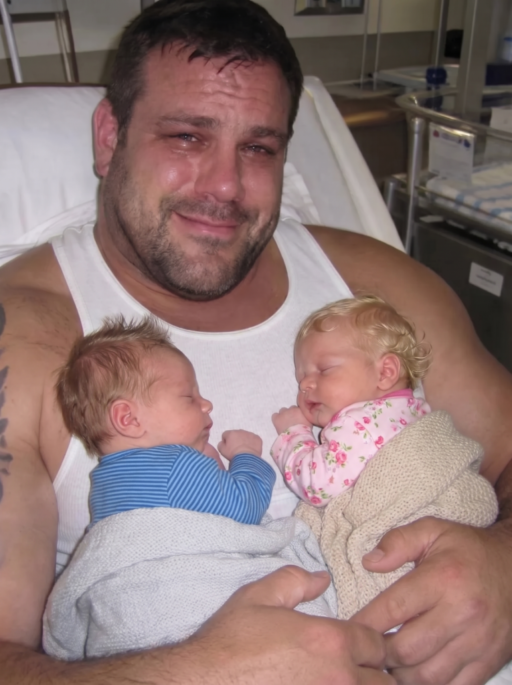
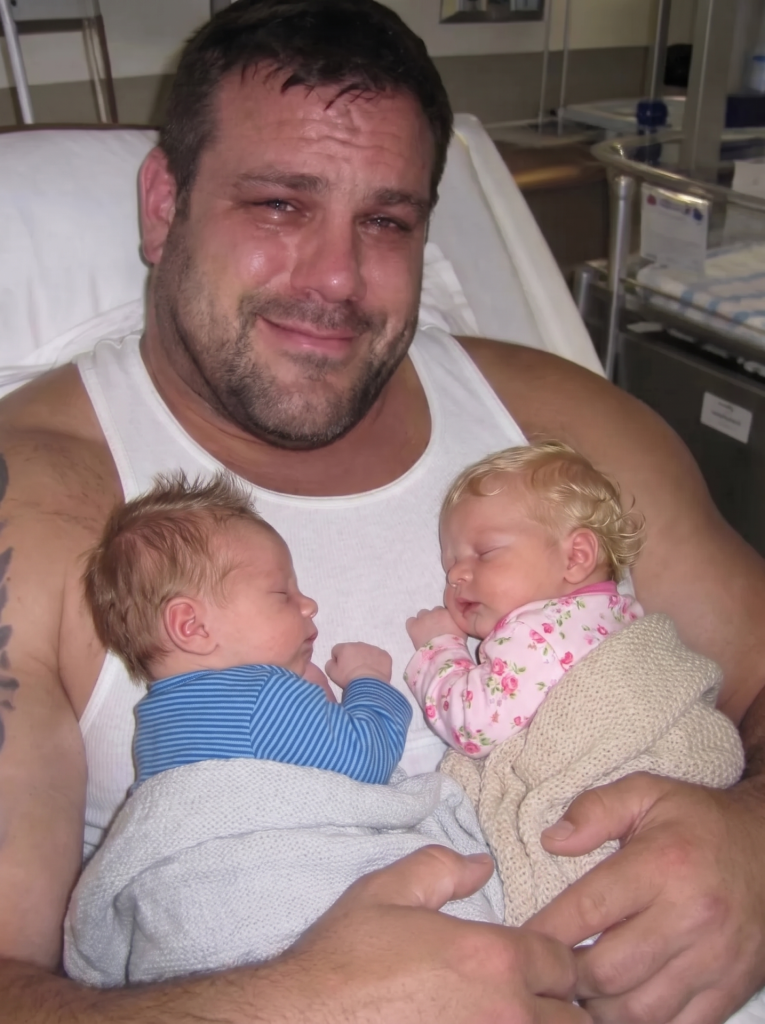

For eighteen years, I convinced myself that hiding the truth from my daughter was an act of love. I told myself that silence would protect Hannah from a grief she had never asked for, even though deep down I knew I was really protecting myself from reopening a wound I had spent years trying not to touch.
Hannah had been born with a twin sister.
Her name was Rosie.
Rosie arrived eleven minutes after Hannah, weighed just over six pounds, and had dark hair with a tiny crease beside her left eye whenever she cried. Hannah was always the louder baby, while Rosie was quieter, and I used to joke that one of them had apparently been assigned enough crying for both.
Then Rosie died. She was nine days old.
The doctors called it Sudden Infant Death Syndrome. There had been no warning, no mistake we could point to, and no person we could blame, which turned out to be far less comforting than people often imagine.
The day Rosie died, my husband David went to the funeral home while I stayed behind. By the time he returned, I had dismantled her crib, carried every piece into the garage, and removed anything that forced me to look directly at the empty space she had left behind.
“You did this?”
“I couldn’t look at it.”
He simply nodded.
We were both twenty-seven and had no idea how to grieve together. Somehow, while trying to survive Rosie’s death, we also had Hannah waking every few hours, needing to be fed, held, and reassured by parents who were barely functioning themselves.
Some nights, I held Hannah against my chest and felt overwhelming relief whenever I noticed she was still breathing. Then guilt followed immediately, because I hated myself for feeling grateful for one living daughter while mourning the one we had lost.
Somewhere inside that grief, David and I made a decision. Hannah did not need to know.
At first, it seemed harmless because she was a baby. Then she became three, then five, and I convinced myself that nobody sits a kindergartner down and explains that she once had a twin sister who died before either child was old enough to remember.
David was never as certain as I was. When Hannah was seven, he brought up Rosie while we were driving home from a birthday party.
“Maybe we should tell her soon.”
“Tell her what?”
“The truth about Rosie.”
“Why?”
“Because she deserves to know.”
“She’s seven.”
“I didn’t say tonight.”
“Then when?”
He had no answer, and that became our pattern for years. David would raise the subject, I would find another reason to postpone it, and eventually another birthday would pass.
Every September 9, Hannah had cake, presents, balloons, and later sleepovers with friends. Every September 9, I woke up thinking about the daughter who should have been celebrating beside her.
Rosie at ten. Rosie at fourteen. Rosie at sixteen.
I never said her name around Hannah. Nobody did.
My mother removed the hospital photograph that showed me holding both babies. My sister learned not to mention Rosie at family gatherings, and once, when my father accidentally referred to “the girls,” one look from me was enough to make him quickly change the sentence.
Everyone knew. Everyone helped hide it.
At the time, I called that protection. Looking back, it was something else.
By the time Hannah turned eighteen, nearly our entire family had spent almost two decades pretending that one of my daughters had never existed.
And that was the year David finally decided the lie had lasted long enough.
As Hannah grew older, I became increasingly skilled at finding reasons not to tell her about Rosie. When she struggled socially at twelve, I decided she was already carrying enough, and when grades began making her anxious at fifteen, I convinced myself that adding the truth about a dead twin would only make things worse.
At sixteen, Hannah went through her first painful breakup. At seventeen, college applications consumed nearly every conversation, and somehow there was always another perfectly reasonable excuse to postpone the truth for one more year.
David continued bringing Rosie up, usually while we were driving because I could not simply walk away from him. He believed Hannah deserved to know where she came from, while I remained terrified that learning she had survived when her twin had not would burden her with guilt for the rest of her life.
“She has the right to know.”
“And then what? She spends the rest of her life wondering why she survived and Rosie didn’t?”
“Maybe she won’t.”
“You don’t know that.”
“Neither do you.”
That usually ended the argument. Sometimes I resented David for continuing to push, and other times I resented him for eventually allowing me to silence him.
We had both developed private ways of carrying Rosie. Every year after Hannah’s birthday celebration, David disappeared into the garage for about an hour, while I always found some laundry to wash and fold because repetitive tasks gave my hands something to do.
Then Hannah turned eighteen.
We filled our house with nearly thirty relatives, neighbors, and friends. My brother managed the grill, my sister arrived with far too much potato salad, and a grocery-store cake sat on the table with HAPPY 18TH, HANNAH! written across it in bright blue frosting.
Her biggest present was a used car. It was nothing luxurious, but when David handed over the keys, Hannah screamed and wrapped both arms around him.
“Oh my God! You actually bought it?”
“No. That’s a random car I stole for the occasion.”
She smacked his shoulder while everyone laughed. I remember watching her smile and thinking that her happiness had always been the reason I used to justify waiting.
That excuse ended that afternoon.
Once the presents had been opened, David stood and asked everyone for a moment of privacy. The instant our eyes met, I knew exactly what he was about to do, and judging by my sister’s expression, she knew too.
“No.”
David looked at me without anger. There was only determination in his face.
“Today is the day.”
Hannah looked between us, immediately sensing that something had shifted.
“What’s going on?”
My mother quickly began ushering guests away from the patio while Hannah’s friends exchanged confused looks. Our relatives moved more slowly because every one of them knew what was about to happen.
David disappeared into the garage and returned carrying a handmade wooden chest I had never seen before. After nearly eighteen years in the same house, I stared at its dark wood, uneven corners, and imperfect hinges and wondered how he had managed to keep it hidden from me.
He placed the chest on the table in front of Hannah.
“Dad, what is this?”
“There’s something we should have told you a long time ago.”
Hannah looked toward me, but I could not hold her gaze.
“You weren’t born alone.”
Her forehead creased.
“What?”
“You had a twin sister. Her name was Rosie.”
Hannah froze with both hands resting on the wooden lid. David’s voice broke as he told her Rosie had been born eleven minutes after her and had died only nine days later.
For several seconds, Hannah said absolutely nothing.
Then she asked the question I had never prepared myself to answer.
“Does everyone know?”