
My name is Mabel, and I was twenty-six when I married into a family that had already endured years of hardship. My father-in-law had died when his children were still young, leaving my mother-in-law, Fiona, to raise four children almost entirely on her own.
For most of her life, Fiona worked farmland in rural Ohio, growing corn and soybeans through harsh winters and exhausting summers. She never had much money, never had insurance or a pension, and certainly never had the kind of savings that could make old age comfortable.
By the time I joined the family, most of Fiona’s children had already moved away and built lives of their own. They visited occasionally and called when it was convenient, but long stretches often passed without any of them making much effort to check on their mother.
Eventually, Fiona came to live with my husband and me, and without anyone formally discussing it, most of her daily care became my responsibility. As her health declined, she became increasingly dependent on me while her other children became increasingly distant.
The neighbors noticed what was happening and occasionally made comments when they thought I could not hear them. Some said I seemed more like Fiona’s full-time nurse than her daughter-in-law, while others wondered whether her children would suddenly become attentive once there was a funeral to attend.
I heard those remarks, but I rarely responded because Fiona was more than an obligation that came with my marriage. She was a woman who had spent decades wearing herself down to provide for her children, and now those once-strong hands trembled so badly that she sometimes struggled to hold a glass of water.
My husband often worked long shifts in Chicago, so most days it was just Fiona, my young son, and me at home. I cooked, cleaned, helped Fiona bathe, changed her clothes, prepared her medication, and made warm oatmeal whenever she had enough appetite to eat breakfast.
Even nighttime did not completely belong to me because I had developed the habit of waking up and quietly checking her room. I would stand near the bed until I could see her chest rise and fall, reassuring myself that she was still breathing before returning to sleep.
That routine continued for twelve years, and during that time I watched a woman who had once worked entire fields slowly lose the strength to walk across a bedroom without assistance. I loved her deeply, but there were days when the exhaustion felt heavier than I wanted to admit.
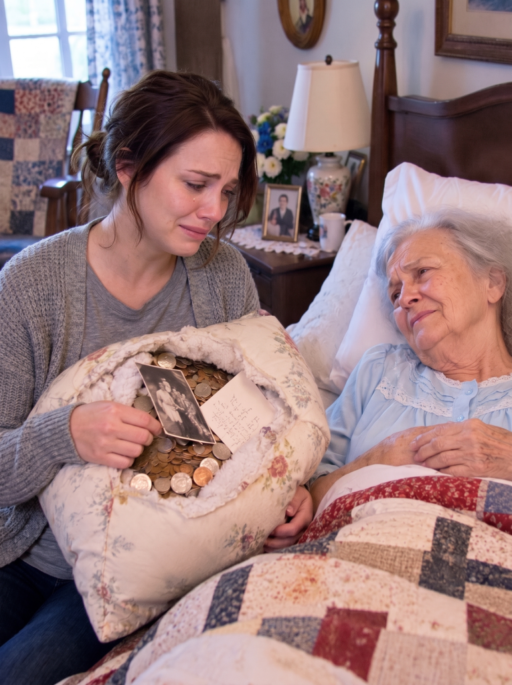
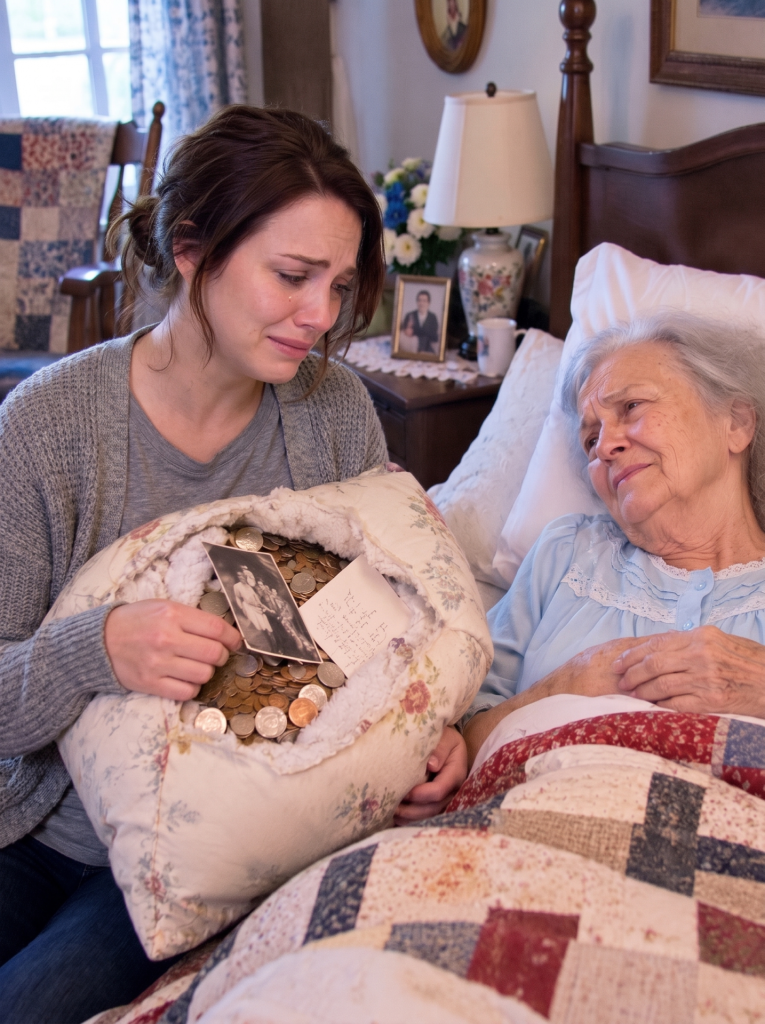
One evening, after barely sleeping the night before and spending another difficult day caring for everyone around me, I finally broke down beside Fiona’s bed. Tears came before I could stop them, and for once I allowed myself to admit how overwhelmed I had become.
“Mom, I’m only your daughter-in-law. Sometimes I feel like I just can’t keep doing this anymore.”
Fiona had never been a woman who wasted words, and she remained silent for several moments before reaching for my hand. Her cold, weathered fingers squeezed mine gently while she looked at me with an expression I have never forgotten.
“That’s exactly why, honey. That’s why God is going to look at you differently.”
Something about those words stayed with me, and from that night forward, I tried to stop thinking about how much longer this responsibility might last. I simply focused on whatever Fiona needed that particular day and reminded myself that one day I would miss even the difficult moments.
If her stomach bothered her, I made rice soup, and if she was cold, I wrapped her in heavy blankets and rubbed warmth back into her feet. When she could not sleep, I stayed beside her for hours even when I knew I would be exhausted the following morning.
I never expected Fiona to repay me for any of it because I was not caring for her in exchange for money, property, or an inheritance. I did not even expect a formal thank-you because by then caring for her had simply become part of the way I loved her.
Her other children treated the situation differently whenever they came to visit. They usually stayed for only a short time, brought a basket of fruit or another small gift, asked a few questions about their mother, and then prepared to leave again.
“Mabel, it’s so good that you have this much patience.”
“We could never do what you do.”
“You know how Mom is. She’s always been stubborn.”
I usually smiled politely, although their comments gradually became harder to hear. They knew I cared for Fiona, but they never stayed long enough to witness the nights when she called for her late husband in her sleep or the mornings when she cried because she could no longer walk to the porch by herself.
Her final winter was the hardest. Fiona’s appetite nearly disappeared, speaking for more than a few sentences exhausted her, and she sometimes spent long periods staring toward the bedroom doorway as though she were waiting for someone who never arrived.
One afternoon, she asked me to help her sit upright in bed, so I carefully adjusted the old pillow behind her back. Instead of settling against it, Fiona began running her fingers slowly along its worn and frayed edges, studying the pillow with unusual concentration.
“What is it, Mom?”
She remained quiet for a moment, still touching the faded fabric as though it carried a memory I could not see. Then she looked at me with tired eyes and gave an answer that made little sense to me at the time.
“Nothing, Mabel. Not yet.”
I assumed she was simply tired and did not press her for an explanation, but during the days that followed, I noticed her looking at that same old pillow again and again. I had no idea why it mattered so much to her, or why, after twelve years of caring for Fiona, that worn piece of fabric was about to become the most important thing she would ever leave behind.
That night, the house was finally quiet after hours of phone calls, relatives arriving, and neighbors stopping by to offer condolences. I sat alone at the kitchen table with Fiona’s old pillow in front of me, still unable to forget the way she had pointed toward it during her final moments.
Earlier that day, one of my brothers-in-law had tried to throw it away because the fabric was torn, faded, and stained from years of use. I had taken it from his hands immediately, not because I believed it was valuable, but because Fiona had used her last strength to tell me that it belonged to me.
I ran my fingers along the damaged seam and noticed old goose feathers pushing through the opening. The pillow smelled faintly of lavender salve, mothballs, and the bedroom where Fiona had spent so many of her final years.
For a moment, I wondered whether her final gesture had simply been the confused instinct of someone whose body was shutting down. I nearly put the pillow away in a closet, thinking I might keep it only because it was one of the last things she had touched.
Then I reached into the torn section to push the stuffing back into place, and my fingers struck something that did not feel like feathers. It was small, firm, and wrapped tightly enough that I immediately knew it had been hidden there on purpose.
My heart began beating faster as I carefully pulled the object from the pillow. Resting in my hand was a small velvet pouch, heavier than I expected and tied closed with an old piece of discolored twine.
I cut the string with a kitchen knife and emptied the pouch onto the table. A tarnished brass key landed beside a folded piece of thick yellowed paper, and the key looked old enough to belong to another generation.
I unfolded the paper slowly and recognized Fiona’s handwriting almost at once. The letters were sharp and precise, nothing like the shaky writing she had produced during the last years of her life, and the date at the top showed that she had written it fifteen years earlier.
“My dearest Mabel,” the letter began.
“If you are reading this, then I have finally gone to rest beside my husband. For years, my children believed I had nothing left after the farm failed, and they assumed I had become completely dependent on them.”
I stopped reading for a moment because I suddenly understood that Fiona had been carrying a secret long before I ever became her caregiver. Then I continued, my hands beginning to tremble as the meaning of her words became clearer.