
I read the message again to make sure I hadn’t misunderstood it. She knew we were at urgent care, yet she hadn’t asked whether our daughter needed stitches or how she was feeling. She wanted me home to discuss what we would say.
My sister looked at my face. “What did she send?”
I showed her the message, then handed her my phone with the video open. She watched without speaking. When it ended, she looked through the doorway at my daughter before handing the phone back.
“Keep the original,” she said quietly.
I called the neighbor again and asked him to save the file exactly as his camera had recorded it. He agreed, and I asked whether it had captured any sound. He said the wind and traffic made much of the audio difficult to hear.
Then he hesitated. “The clip I sent starts late.”
I looked toward the exam room. “How late?”
“About twelve minutes. I saved the longer recording too.”
My daughter had told me about the spraying and the picture, but she was frightened and tired. The camera might have caught the minutes before my wife came outside with the hose.
“Please send me the whole thing,” I said.
A moment later, the longer file appeared on my phone. I stepped into an empty consultation room and pressed play.
The longer recording began with my daughter alone near the flower bed. She crouched beside the plants, stood up, and wandered a few steps across the patio. From what the camera could see, it was an ordinary afternoon.
I watched the timestamp advance, trying to understand why my neighbor had saved the footage before I got home. He had heard her screaming, but I still didn’t know what had led to it.
My wife appeared at the patio door. She came outside carrying the hose and stopped several feet from my daughter, who turned toward her. A moment later, my wife lifted her phone toward the patio.
I paused the video and looked closely at the screen. My daughter had said the picture was taken before she fell. The longer recording showed that she was right.
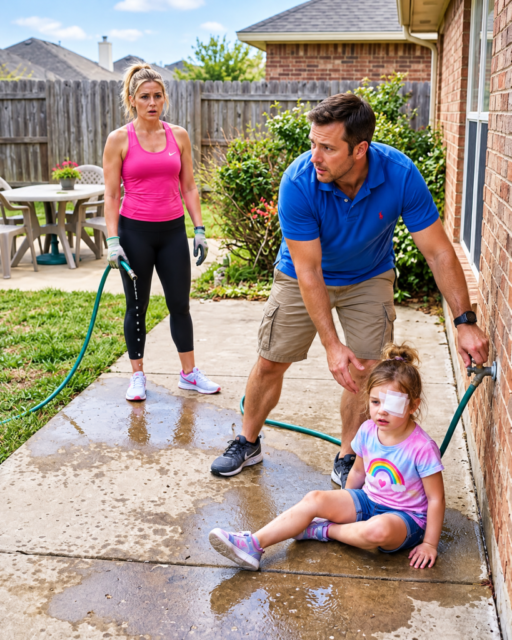
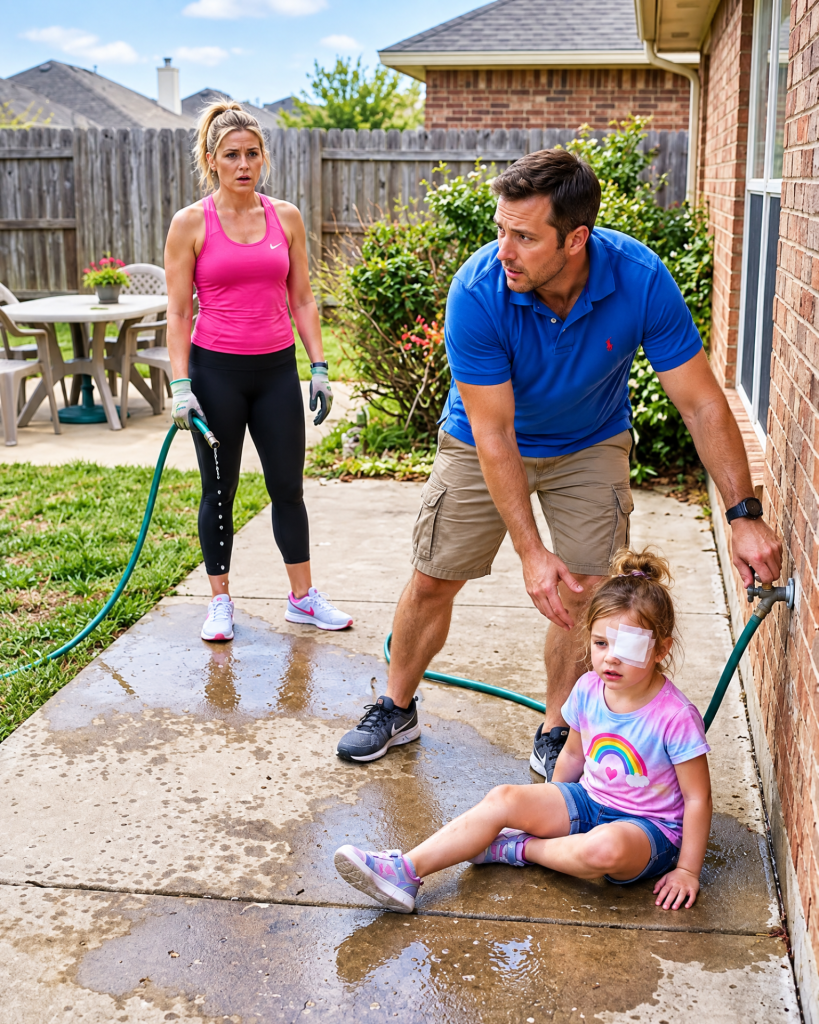
When I resumed, my wife lowered the phone and turned on the water. My daughter moved backward, and the stream moved with her. She raised her arms over her face before her feet slipped near the planter.
I had already seen the fall in the shorter clip. Watching the minutes before it didn’t make the impact easier to bear, but it put the phone in the order my daughter had described: first the picture, then the spraying, then the fall.
The camera couldn’t tell me why my wife had taken the photograph. It couldn’t show what was on her phone, either. I wanted to call her and ask, but after her message about getting our stories straight, I couldn’t trust that she would give me a straight answer.
I asked my sister to come into the consultation room. We watched the recording together, from my daughter’s quiet moments by the flowers through the moment my wife returned with the gauze. My sister kept her eyes on the screen until it ended.
“The phone was out before she turned on the hose,” she said.
“Yes.”
“Do you think the picture is still there?”
“I don’t know.”
I checked that the longer file had saved, then made another copy. My sister went back to sit with my daughter while I called the neighbor to thank him. I asked him again to keep everything his camera had recorded that afternoon, including the original file with its sound.
When I returned to the exam room, my daughter looked up. “Are we leaving?”
“Soon,” I told her. “We’re going to stay with Auntie tonight.”
She glanced at my phone. “Did she call?”
“She sent a message.”
My daughter drew the paper blanket closer around herself. I sat beside her and told her she didn’t have to answer anyone’s questions right then. The doctor had already listened to her, and she could rest.
Another message lit up my screen: SHE’S FIVE. SHE DOESN’T UNDERSTAND WHAT HAPPENED.
I looked at my daughter’s bandage, then at the phone. She might not understand every decision the adults around her were making. But she had told the doctor the water made her move backward, and the camera showed exactly that.
I put the phone away. My wife knew what she had said in her messages; she didn’t know I had seen the recording.
I still needed to find out what she had photographed before the fall.
The doctor returned before we left urgent care. He reminded me to keep my daughter’s stitches dry and explained what changes around the injury we should watch for. My sister listened while I wrote everything down, because I didn’t trust myself to remember every instruction after the afternoon we’d had.
My daughter was nearly asleep by the time he finished. When I helped her down from the exam table, she held my hand and kept close to my side. My sister carried the dry clothes and the paperwork out to the waiting area.
I stayed behind for a moment and opened my wife’s messages. I read them from the beginning, in the order she had sent them. At home, she had said my daughter got dirty after she fell. Later, she said the child had been throwing dirt, so she rinsed mud off her legs. When I asked the doctor to record my daughter’s account, my wife said the hose had swung upward by accident as the child stumbled.
Each explanation placed the hose in a different part of what had happened. None matched what the camera showed: my daughter backing away while the stream followed her, then falling against the planter.