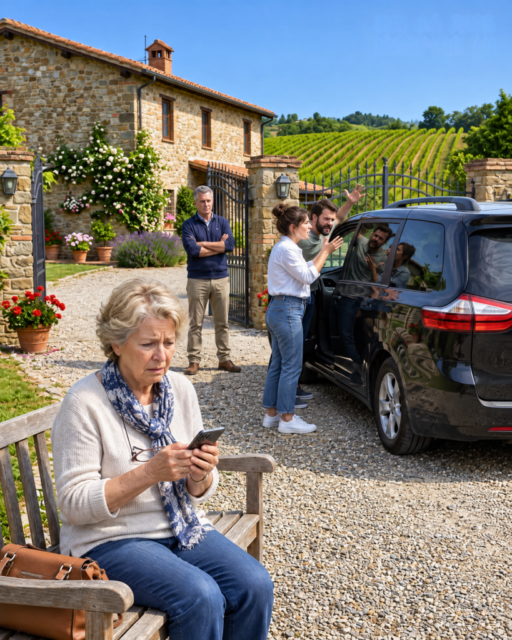
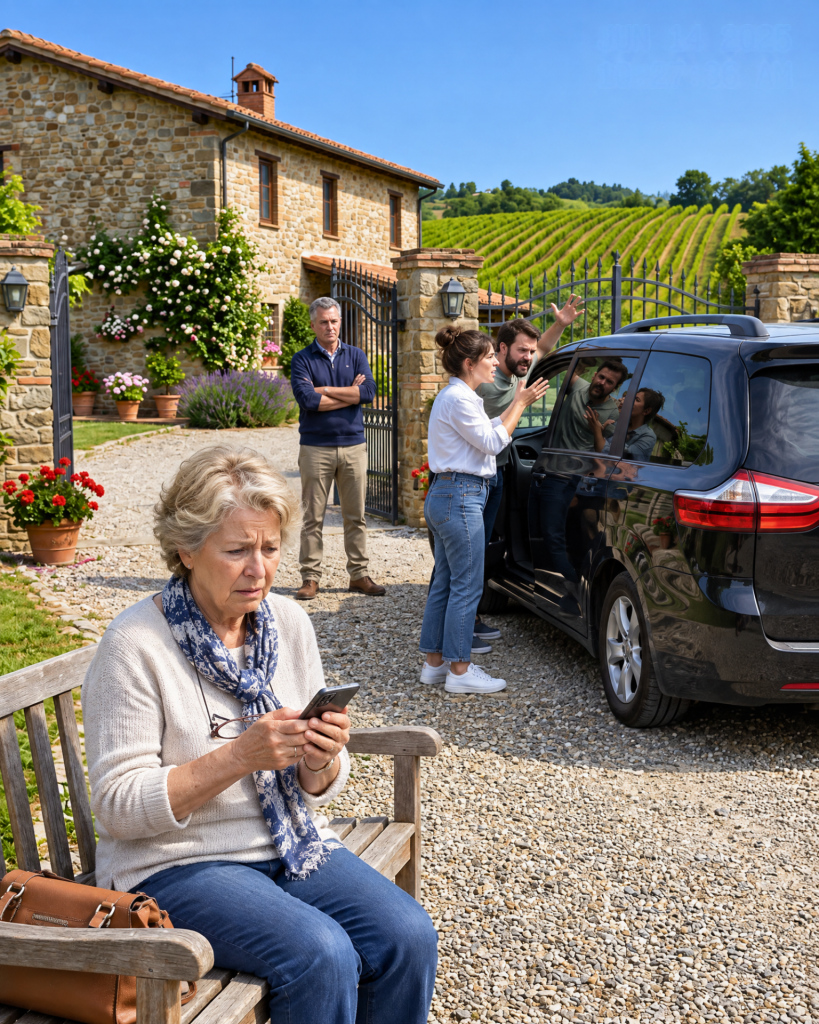

“What time is the florist arriving?” I asked my daughter. “Ben needs to know which gate to keep clear.”
Samantha did not answer. I could hear traffic behind her and the sound of a car door closing. Then she said, “Mom, Greg and I have decided it would be better if you didn’t come to the wedding.”
I stood at the kitchen table my late husband had built, looking out at the vineyard where the ceremony was supposed to take place. I was paying the vendors and hosting the reception. A week earlier, I had given Samantha the key to our stone house by the creek, intending it as a wedding gift.
“You don’t want me at the wedding?” I asked.
“Greg thinks there’s been too much tension. His family will be there, and we need the day to go smoothly.”
“Does that include the reception on my property?”
She paused. “We’ve already planned everything around the vineyard.”
I told her I understood and ended the call. I was sixty-five years old, but for a few minutes I felt as helpless as I had when Richard died and left me to run the place without him.
Richard and I had bought those eighty acres outside Sonoma when we were young. He knew vines; I knew accounting. We learned each other’s work as we planted the first rows, repaired the farmhouse, and raised Samantha among the fields. After his death ten years earlier, Ben, our vineyard manager, helped me keep the operation going while I learned to make the decisions Richard and I had once made together.
Samantha grew up, moved to the city, and built a career in marketing. She still visited often enough that I felt close to her. When she brought Greg home, I wanted to welcome him. He was polite at first, but over time I noticed how he studied the farmhouse and commented on the parts of the vineyard that looked like a working farm rather than a resort.
One week before the call, I had placed a brass key in a velvet box and given it to Samantha. The stone house by the creek was worth roughly eight million dollars. I wanted her to have a home as she began her marriage, though the deed was still in my name while my attorney prepared the transfer.
Samantha cried and hugged me. Greg turned the key over in his hand and said they would need to improve the landscaping before his friends visited. I was hurt, but I let the remark pass. I didn’t know Samantha would soon ask me to stay away from the wedding altogether.
I finished my coffee and opened the account where the wedding payments were scheduled. The florist, caterer, tent company, musicians, and rental service were all due to receive payments at noon. Each contract had been made for an event on my land.
I called Ben first. “Please keep the south gate closed to wedding deliveries,” I said. “I’ll let you know if that changes.”
Then I called the vendors. I told each of them the event on my property could not go ahead as planned. I asked them to send written accounts of work already completed and told them I would honor the cancellation terms. The florist had spent days preparing, and I apologized for the disruption.
When the last call ended, I went outside to trim the roses beside the kitchen path. I needed time to think about my daughter before I spoke to her again.
Two hours later, my phone showed 59 missed calls. Among the messages from Samantha and Greg was one from Greg’s mother: You may have just destroyed their wedding, Andrea.
Then a new message appeared from Greg.
Our attorney says the stone house belongs to us now.
Greg’s message stayed on my screen: Our attorney says the stone house belongs to us now.
I looked across the lower field at the house. I had given Samantha its key a week earlier, but I had not signed a deed. I needed to know exactly what I had promised and what documents existed, so I called Patricia Vance, the attorney who had handled my estate matters for years.
She asked me to describe the gift without skipping anything. I told her about the key in the velvet box, what I had said to Samantha and Greg, and my plan to complete the transfer after the wedding.
“Send me every document you’ve signed,” she said. “I’ll check the property records too. Until we’ve reviewed them, don’t argue about ownership by text.”
While she worked, I read the messages that had accumulated on my phone. Samantha wanted me to call her immediately. Greg said I had humiliated them in front of their vendors. His mother, Margaret, wrote that disagreements within a family should be kept private.
I understood why the vendors were upset. I had told them the event on my property could not proceed, and I would pay what the contracts required. Their work mattered. But no one in Greg’s family had addressed the question that started it: how could they expect me to provide the venue and pay for the celebration while asking me to stay away?
Ben stopped by the kitchen before heading to the south gate. He had received calls from the tent company and the rental service.
“I told them to speak with you about their contracts,” he said. “The gate is closed to deliveries for now.”
“Thank you.”
He looked at the phone on the table. “Samantha called me too. I told her I couldn’t discuss it with her.”
I was relieved he hadn’t been drawn into the argument. Ben had helped Richard and me build the vineyard into what it was. After Richard died, he stayed while I learned to manage every part of it myself. I would not ask him to choose sides in a dispute with my daughter.
Patricia called back that afternoon. She had reviewed the deed and the gift documents we had prepared. The stone house remained in my name; the transfer paperwork had not been signed or recorded. She said Greg’s assertion did not match the records she had seen, though she would respond to any actual claim through the proper channels.
“What about the wedding payments?” I asked.
“You’ve notified the vendors,” she said. “Keep their contracts and invoices, and meet your cancellation obligations. We can review anything they dispute.”
After the call, I placed the brass key’s empty velvet box on Richard’s kitchen table. Samantha had cried when I gave it to her. I had wanted her to have a home of her own on the land where she grew up. I still loved her and still wanted good things for her; I simply couldn’t decide what to do with the house while Greg claimed it belonged to him.
I answered one of Samantha’s calls.
“How could you cancel everything?” she asked before I could say hello. “People are calling me from all over.”
“I’ve spoken to the vendors and will cover what I owe them. You told me I wasn’t welcome at an event on my own property.”
“I said Greg thought it would be easier.”
“You said you had both decided.”
She went quiet. In the background, I heard Greg asking whether she had mentioned the house. Samantha told him to give her a minute, then said she needed to speak to me without him listening.
The next morning, a car stopped outside the private gate. Ben called to tell me Samantha was there alone. By the time I drove down, she was standing beside her car, looking at the vineyards beyond the locked gate.
“I didn’t know Greg was going to claim the house was his,” she said. “But there’s something else he told his family about you, and I should have corrected it before yesterday.”
Samantha stayed on the other side of the gate while she spoke.