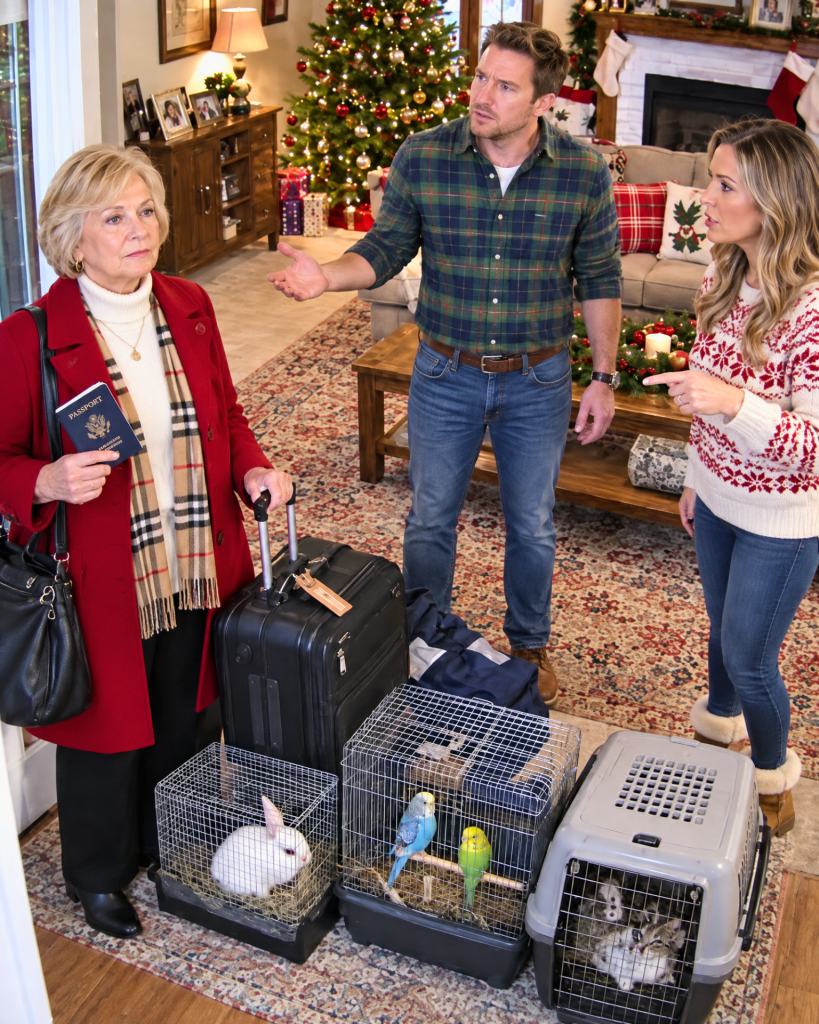

My husband had been buried for only a week when our son walked into my house without knocking. The scent of funeral lilies still lingered in the rooms, and Ernest’s memorial photograph stood in the living room beside a candle I had been lighting each evening.
Austin looked around, but he did not ask how I was. At the funeral, while I was still standing near Ernest’s grave, he had asked what I intended to do with the house. Now he had come with another matter already settled in his mind.
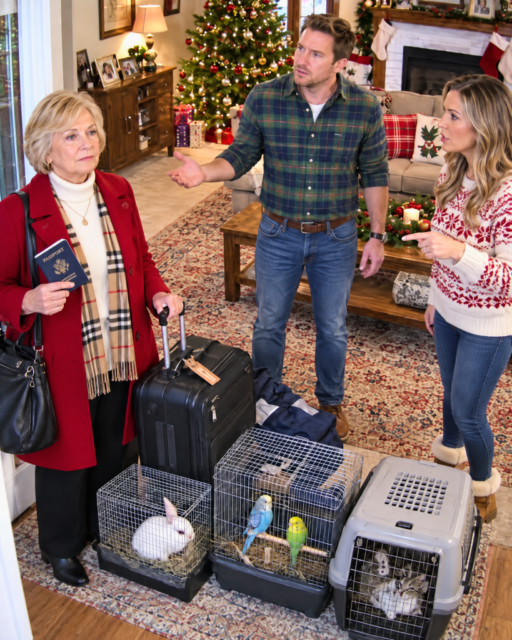
“Chloe and I are going to the Bahamas for a few days,” he said. “You can watch the pets.”
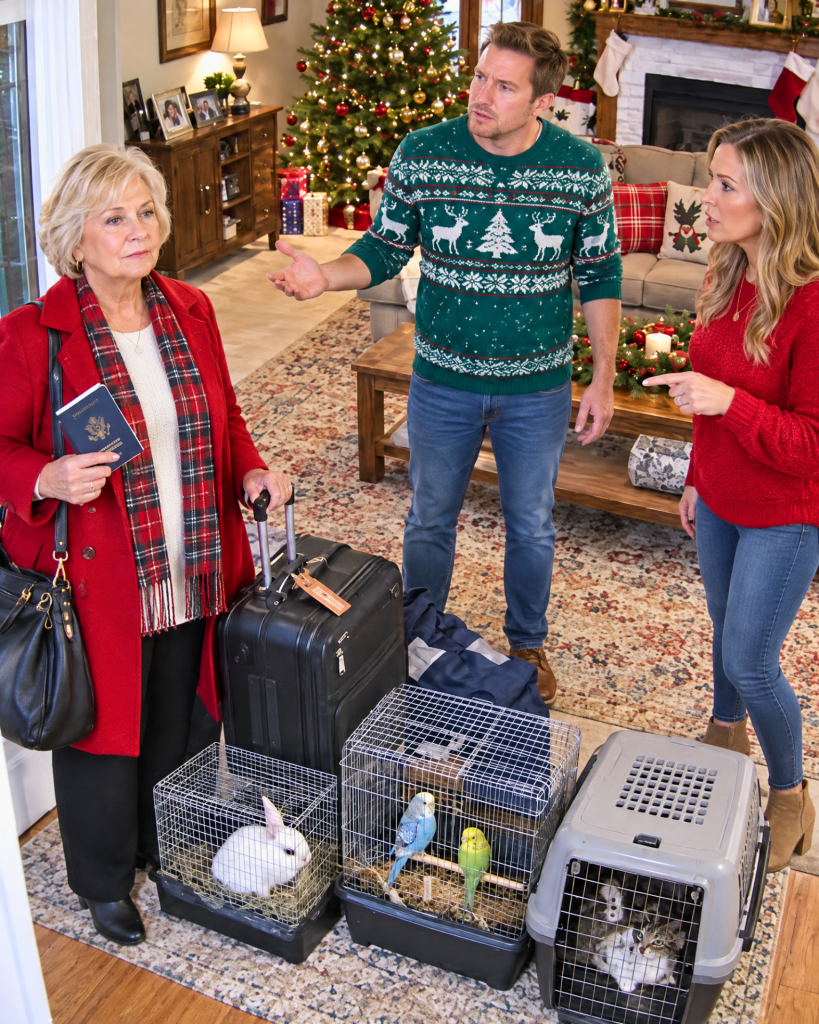
His wife followed him in carrying three cages. Two parakeets cried out in one, a rabbit crouched in another, and their cat pressed itself against the back of its carrier. Chloe set them on my rug near Ernest’s photograph and handed me the food and instructions.
She told me when to change the birds’ water, what the rabbit could eat, and why the cat should remain in its carrier. I waited for her to finish, then reminded her that I had just buried my husband.
“Everyone has problems, Mrs. Theresa,” she said.
Austin stood beside her. Instead of asking Chloe to stop, he said I would only be bored in the house alone.
For years, I had answered every request Austin made before considering what it would cost me. I had used my savings when he lost his job. After Chloe had their baby, I spent three months sleeping on their couch so I could help with the nighttime feedings. During Ernest’s illness, I sold the earrings he had given me at our wedding to help pay for his medicine.
I had also spent seven days crying after Ernest died. On the eighth, I bought a ticket for a one-year cruise. I had told no one, because I wanted to decide what came next without another person making plans for me.
I looked at the cages and told Austin and Chloe I would take care of the animals. Chloe left a spare key in case I needed more supplies from their apartment. Austin kissed my forehead.
“We can always count on you, Mom.”
Once they were gone, I called Mrs. Mary next door. Her nephew was ready to collect the animals and care for them. After they had been picked up, I cleaned the room and packed my blue suitcase with a few dresses, sandals, my passport, Ernest’s last bottle of perfume, and a legal folder my attorney had prepared.
I left my house keys on the table with a note for Austin. It told him to call his lawyer when he read it.
At five-thirty the next morning, I took a taxi to the Port of Miami. Chloe called first, then Austin. I let both calls go unanswered as the ship came into view.
Just before I boarded, Austin sent a message. A woman from the court was at the house, he said, and she had told him it did not belong to him and Chloe. What had I done?
A photograph followed. Austin stood in my living room holding my note, his face drained of color. Behind him, beside Ernest’s memorial photograph, lay the second folder I had left there—the one marked with Austin’s name.
The folder in Austin’s photograph had been lying in plain sight. I had left it beside Ernest’s memorial picture, in the same place where Chloe had set the cages the night before.
Austin called again. This time I answered, but I let him speak first.
“Mom, what is this?”
I could hear Chloe telling him to open the folder. Another woman’s voice asked him to step away from the table. Austin pulled out the papers, and the call went quiet while he read.
The first page was a copy of a document Ernest and I had signed three years earlier. He had been ill, but he still understood what was happening in our family. Austin had begun asking about the house whenever he spoke about the future, and Ernest wanted to make sure I could continue living there on my own terms.
Chloe read one of the lines aloud. The house would remain under my control for the rest of my life. Austin asked what that meant, and the woman at the house urged him to read the entire document.
Ernest and I had placed the property in a protected trust. The papers also addressed savings connected to the house and a small investment account we had built together. My son and daughter-in-law had no ownership claim that allowed them to make decisions about those assets.
I remembered Ernest at our kitchen table, his hand unsteady as he signed. Afterward, he asked me to promise that I would not let anyone turn the house into a burden simply because I had survived him. I gave him my word.
Austin had never asked to see those arrangements. When Ernest tried to discuss the future with him, Austin preferred to talk about what might eventually come to him.
“Where are you?” Austin asked over the phone.
“On my way to a ship.”
He told me I could not leave them to deal with this alone. I looked out of the taxi window and thought about standing beside Ernest’s grave while Austin asked about the house. Then I thought about the cages and Chloe’s instructions.
“You haven’t lost your house,” I told him. “It was never yours.”
He asked me to come back. His voice had softened, but I had spent years changing my plans whenever he needed something. I told him to take care of Chloe and ended the call.
At the port, I boarded with my suitcase and turned off my phone. A crew member welcomed me and asked if I was traveling alone. I said yes. It was strange how much lighter the word felt once I had chosen the journey for myself.
Three days later, I was standing on my cabin balcony with a cup of coffee, watching the water stretch beyond the ship. I had brought one of Ernest’s books. I could still miss him deeply and enjoy the morning; I was beginning to understand that the two feelings could exist together.
That afternoon, I switched my phone on. There were forty-three missed calls, most from Austin and Chloe, and a voicemail from my attorney.
I played the voicemail before opening any of their messages. My attorney said the trust was valid, the house was protected, and Austin and Chloe had no ownership rights. Then she told me what they had been given until Friday to do.
My attorney’s voicemail ended with a clear deadline: Austin and Chloe had until Friday to collect any belongings they had left at my house. The trust Ernest and I had created was valid, and they had no right to claim the property as theirs.
Soon afterward, Austin sent me a message saying Chloe wanted to speak with me. I deleted it. He sent another containing only one word: Please.
I stared at it for a while. Then I replied, “You already did.”
For the first few days aboard the ship, I kept expecting to feel guilty whenever I thought about the calls I had missed. I wondered what Austin might say if I answered and whether Chloe would try to persuade me that I had gone too far. But I also knew the animals were safely cared for and that my attorney was handling the papers. There was nothing I needed to return to Miami to fix.
The cruise took me to Jamaica, across the Caribbean, and eventually toward Europe. I went to places Ernest and I had talked about seeing, places I had always put off until there was more time or someone else needed less from me.
I missed Ernest in all of them. At breakfast, I sometimes caught myself looking across the table to tell him what I had seen. Other mornings, I took his old book to the deck and read for an hour with the sea moving around me. I was learning what a day could feel like when I did not fill every hour with another person’s needs.
I signed up for a watercolor class and learned a few steps at a dance lesson on the upper deck. I talked to strangers over dinner. They asked where I was from and how long I was traveling, and I could answer without first explaining what my family expected of me.
Two months into the voyage, Austin called. I had ignored many calls from him, but I answered that one. His voice sounded quieter than it had on the morning I left.
He told me he had gone to Ernest’s grave for the first time since the funeral. I asked what he had said there. Austin paused, then said he had apologized to his father.
“What were you sorry for?” I asked.
“For acting like taking care of me was your job forever.”
I held the phone and looked out at the water. I had wanted him to understand that for years, and I hoped he meant it. Austin said Chloe understood too, though I knew that would take more than a phone call for me to see.