
At the bottom of the last box, I found an envelope addressed to a lawyer. Inside was a copy of a statement Camden had prepared. I could not tell from what he left whether he had ever sent it.
In the statement, he described unusual transactions and his concern that someone in the family might have altered evidence to make me appear responsible. He also wrote that he no longer trusted the person managing affairs in his home. He did not put Reagan’s name in that paragraph, but beneath it he had added a line in his own hand:
Watch the house after I am gone.
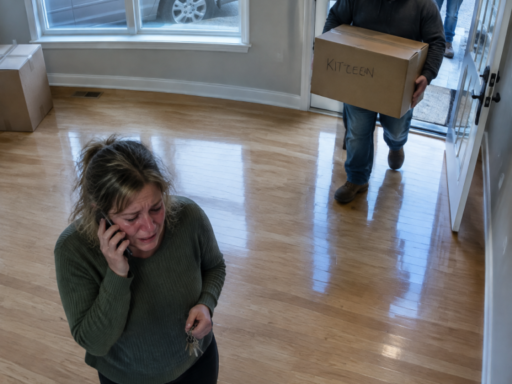
I thought of Reagan at the front door. She had told me my father wanted nothing to do with me, that she owned the house, and that Camden was buried at Pinecrest. The groundskeeper had already shown me one of those claims was false. Now I had my father’s words warning me that she would lie.
One more document lay beneath the statement. It was dated only weeks before the death Reagan had described. I read the first page, then the next. This one concerned ownership of the Silver Lake house, and it showed that Camden had made a change Reagan had never mentioned to me.
I wanted to know exactly what that change meant before I confronted her. I gathered the document with the company records, the photograph of Carter, and my father’s letter. I still did not know where Camden was buried. I did not know who had used the second key or how much he had managed to uncover.
But I no longer had only my word against the conviction. Camden had left behind the questions he had asked and the records that led him to them.
I closed the storage unit and put the old key back in my pocket. Reagan had sent me away from the house expecting me to have nowhere else to go. My father had left me this place—and a trail I could follow before I went back.
I did not go back to Reagan’s house that afternoon. I took Camden’s files to the lawyer named on the envelope I had found in the storage unit.
Her name was Miriam Hale. She stared at my father’s handwriting for a long time before inviting me into her office.
“Camden tried to reach me near the end of his illness,” she said. “By the time I returned his call, Reagan told me he was too sick to speak. I asked to visit him. She refused.”
I showed her the photograph of Carter outside the accounting office. On its back, Camden had written: Ask who had access to the second key.
Miriam searched the company records with me. We found a maintenance log listing two keys to the accounting office. One was assigned to the office manager. The other had been signed out to Carter weeks before the transfers and never recorded as returned.
“That places him with a way in,” Miriam said. “It doesn’t tell us who moved the money. We need the bank’s original records.”
She made copies of everything and contacted an attorney who handled wrongful convictions. I left the originals with her, except for Camden’s letter. That stayed in my jacket pocket.
Then I showed Miriam the document about the Silver Lake house. Camden had signed it shortly before his death. It named me as the person who would receive the house, but Miriam wanted to verify that it had been properly filed and determine what claim, if any, Reagan had to remain there.
“She told me it belonged to her,” I said.
“Let me check the record before either of us tells her otherwise.”
That evening, I stayed at a small motel. I spread Camden’s notes across the bed and read until the numbers blurred. Three years earlier, I had tried to explain why I had no reason to move money out of my father’s company. Camden had been asking a better question: who could have done it while making it look as though I had?
The next morning, Miriam called. The house document had been filed. She also had an appointment to review the bank records, though obtaining everything we needed would take longer.
“There’s something else,” she said. “I called Pinecrest.”
The cemetery had kept a record of Camden’s inquiry about a plot beside my mother. He had wanted to be buried there. After his death, however, Reagan had arranged for him to be cremated. Pinecrest had no record of his ashes ever arriving.
I thought of the groundskeeper’s face when I asked where Camden was buried. He had known only that my father had never come to the place he had chosen.
“Where is he?” I asked.
“I don’t know yet.”
For a while I could not speak. Reagan had told me about my father’s death as though there were nothing left to ask, then sent me to a cemetery where I could not even visit him.
That afternoon, Miriam called again. She had obtained a copy of Carter’s statement from my trial. He had sworn that he could not have entered the accounting office on the night shown in Camden’s photograph.
“Finnley,” she said, “I need you to look at one more record your father kept.”
It was a copy of the office security log. Beside the time Carter appeared in the photograph was an entry made with the second key.
The security log did not prove Carter had made the transfers. Miriam reminded me of that before we sent the records to the attorney reviewing my conviction. But it contradicted his sworn account, and Camden’s files gave them specific transactions to investigate.
Weeks passed. The bank provided original records, and an independent examiner compared the signatures with mine and Carter’s. The examiner found that the transfer signatures were not mine. Carter’s access to the office and the timing of the transactions became part of a new investigation.
I had imagined that finding evidence would feel like opening a door. Mostly, it felt like waiting outside one while other people checked every page my father had saved.
During that time, Miriam found Camden’s ashes. They were still at the funeral home where Reagan had left them. I went there with Miriam and brought my father to Pinecrest, beside my mother, as he had wanted.
I stood between their graves for a long time. I wished Camden had told me himself that he had kept looking into my case. I wished I had known he was ill. Nothing in the storage unit could return those years to us.
A month later, the attorney filed a request to reopen my case. Carter was questioned again. Confronted with the photograph, the key log, and the bank records, he changed his account of where he had been that night. He eventually admitted he had made the transfers using my identity.
I asked whether Reagan had known. Carter said she had learned the truth before my trial and had urged him to stay quiet. I could not tell how much of his account she would admit, but investigators would have the chance to ask her.
The court later overturned my conviction. I had spent three years in prison, and a ruling could not give me a single day back. Still, I carried a copy of it to Camden’s grave.
“You were right,” I told him. “The truth came out.”
The house took longer to settle. Miriam handled the ownership paperwork and Reagan’s departure. I stayed away until she told me I could enter without another argument at the door.
When I finally stepped inside, the rooms were still full of Reagan’s furniture. My mother’s portrait and Camden’s hat had not reappeared. I walked through the hall to the room that had once been his. The walls were a different color, but the window looked onto the same patch of garden where he used to grow roses.
I did not know whether I wanted to live there. I asked Miriam for time before making that decision. For now, I wanted to find what remained of my parents’ belongings and understand what Camden had hoped I would do with the place.
That evening, I took the old key from my pocket and set it on the windowsill. It had opened a storage unit, not the front door. Yet it was the reason I had found my father’s work, learned where he was, and come back into the house with answers Reagan could no longer keep from me.