
The day my son’s family moved into my house, I made the beef stew Edward had loved since he was a boy. By dinner, my daughter-in-law Linda had already told me the guest room was too small, the bathroom lighting was poor, and she and Edward ought to have my bedroom instead.
I was sixty-eight. The red brick house on Chicago’s South Side was the home my late husband, Anthony, and I had bought on two teachers’ salaries. Edward knew what it had taken us to keep it.
We had clipped coupons at the kitchen counter, postponed vacations when the furnace failed, and driven an aging car through winters when we could not afford another payment. After Edward went to bed, Anthony and I sometimes sat at the dining table moving figures around in a notebook, trying to make the mortgage and every other bill fit our paychecks.
Nearly thirty years later, we finally paid the house off. Anthony brought home a grocery-store cake, set the statement stamped paid in full beside my plate, and tapped it with one finger.
“We did it,” he said.
Anthony had been gone for years, but I still left his chair at the head of the table empty. His unfinished book remained on our bedroom nightstand, and one of his gray sweaters stayed folded in the closet. He had died in that room, at home, after the doctors told us there was nothing more they could do.
Linda knew none of that. She had never asked me about Anthony or what the room meant to me. She had simply looked at its size and decided it would suit her better.
Edward had called the previous morning to say he had lost his management job at a logistics company. He sounded frightened as he asked whether he, Linda, and their nine-year-old son Dylan could stay with me temporarily. I knew their suburban mortgage and car payments had left them little room for a setback, but I did not make him explain their finances while he was asking for help.
I gave him the front-door code. Then I cleared the guest room, put clean towels on the bed, and bought the cheese crackers and applesauce pouches Dylan liked. I told Edward to wait until he was working again before worrying about paying me anything. That night, I looked over my pension and savings to make sure I could cover the extra expenses.
The next day, I cooked Edward’s stew, baked bread, and laid out the wedding china Anthony and I had used for family holidays. I wanted their first evening there to feel like coming home, especially for Dylan.
Linda spent the afternoon walking through the rooms and telling me what she intended to change. She wanted different drapes and a new arrangement for the living room. When she said she and Edward should take my bedroom because it was the largest, I kept folding the towels and said no.
She smiled as though she expected me to reconsider. I had often done so before when Linda complained, because giving way seemed easier than making Edward uncomfortable. This time, I left the towels where they were and went to finish dinner.
That evening, Edward sat by the window. Dylan took a seat across from him, and Sarah, Edward’s daughter from his first marriage, joined us near the end of the table. I had just sat down when Linda placed both hands beside her plate.
“I’m the one in charge of this house now,” she said.
Edward lowered his eyes. Then Linda pointed toward my back door.
Linda kept her finger pointed at the back door.
“Take your plate outside,” she said, “and eat with your friend.”
For a moment, no one at the table moved. Dylan looked from Linda to me, his face tight with confusion. Sarah pressed her lips together. My son Edward stared down at his plate.
That was what hurt most. Edward knew whose house this was. He knew what his father Anthony and I had given up to buy it, how long we had worked to pay it off. Less than a day earlier, he had needed somewhere for his family to stay after losing his job. I had opened my door, cleared a room, filled the kitchen with food, and told him not to worry about rent.
Now his wife was ordering me out of my own dining room, and he would not look at me.
I thought of all the times I had kept quiet for his sake. At holiday dinners, Linda had criticized my cooking, interrupted me, or complained about plans I had made for everyone. I usually gave way. I told myself it was easier to change a meal or swallow a remark than to put Edward between his wife and his mother.
One Christmas, I spent three days preparing dinner and bought Dylan a science kit he had circled in a catalog. Linda looked at the gift and said, in front of him, that they were trying not to fill their house with plastic junk.
I apologized. Later, I went into the bathroom and ran the water so no one would hear how upset I was. Then I came back, refilled the glasses, and finished serving dinner.
Sitting at my table now, I saw where all those small moments had brought us. Linda expected me to pick up my plate and go outside because, until that evening, I had always found a way to excuse what she said.
I looked at Edward once more. He kept his eyes on the table.
I would not ask him to repay me for raising him. Anthony and I had loved him through sleepless nights, school projects, and long soccer games in the rain because he was our son. But I could be his mother without accepting this.
I smiled.
Linda leaned back in her chair. She seemed to think the matter was settled.
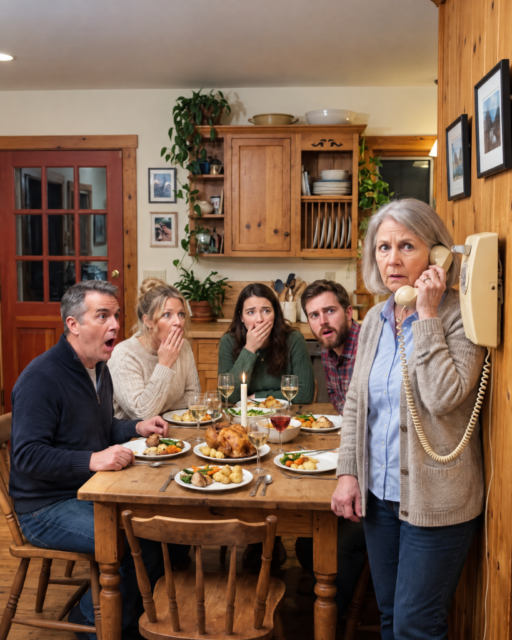
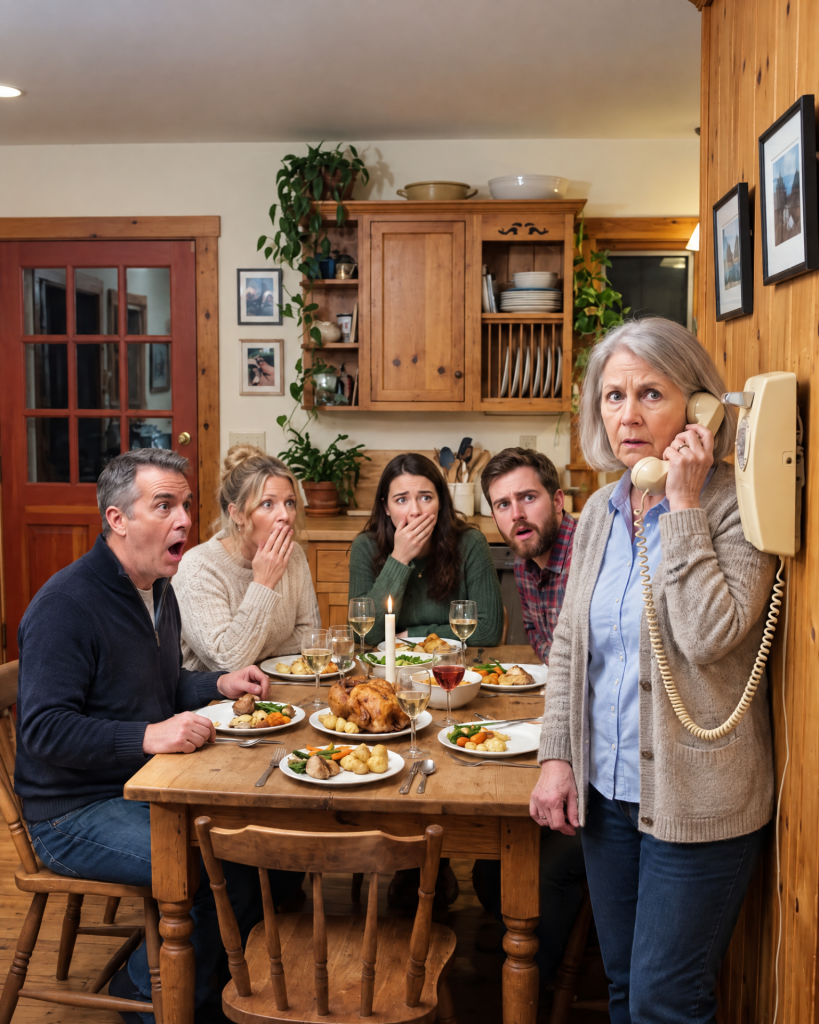
The kitchen clock read 6:48 when I pushed my chair away from the table. I left my plate beside the bread basket and walked to the old phone on the wall. Anthony had wanted to replace it years ago, but I had kept it. Beside it hung a short list of numbers in my handwriting.
“Mom?” Edward said at last. “Who are you calling?”
It was the first thing he had said since Linda announced she was in charge. I took down the receiver and dialed. Behind me, the stew cooled in the wedding china Anthony and I had once unwrapped together.
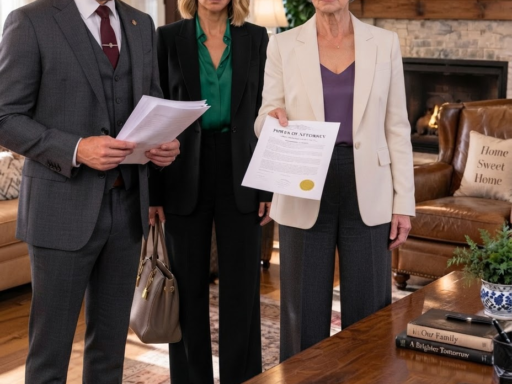
The woman who answered on the second ring was Gabriella Ruiz, my attorney. Two years earlier, after another painful holiday with Linda, I had gone to Gabriella to put my affairs in order. She had prepared my will and helped me establish a living trust. She had also walked me through the documents showing that the house belonged to me.
Until that night, I had only hoped knowing my rights would be enough.
I turned toward the table with the receiver against my ear. Linda’s smile began to fade. Edward was watching me now, and I knew he recognized the name I was about to say.
“Gabriella,” I said quietly. “It’s time.”
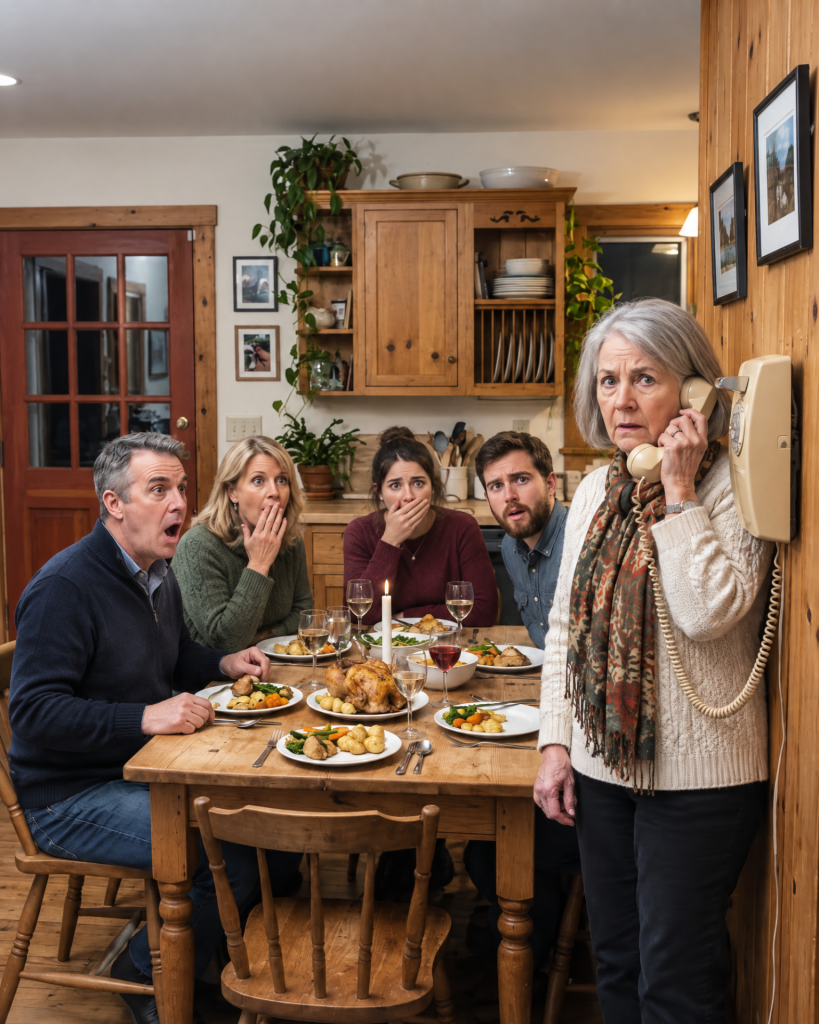
“Gabriella,” I said into the phone. “It’s time.”
Edward knew the name. Months earlier, I had mentioned that Gabriella Ruiz was helping me put my estate in order. He had barely reacted then, but now he stared at the receiver in my hand while Linda’s fingers tightened around the back of her chair.
Gabriella asked whether I wanted her to begin the formal process of removing my guests from the property. She explained it plainly: notice, paperwork, and the legal steps required if they would not leave.
I looked at the table before answering. I had lit candles and served warm bread with the stew Edward had loved since childhood. Anthony’s chair stood empty at the head of the table, where he had sat for so many dinners after we finally paid off this house.
Edward had come to me because his family needed somewhere safe to stay. I had given them a room without asking for rent. Yet he had watched his wife tell me to take my supper outside.
Gabriella asked again. I could hear her waiting while I looked at my son.
“Not yet,” I told her. “I need you to stay on the line while I say something.”
“I’m right here,” she said. “Take your time.”