
My daughter accidentally called me one afternoon, and before she realized the line was open, I heard her future mother-in-law talking about me. I almost announced myself, but something in the woman’s tone made me stay silent.
“There won’t be room at the wedding for a man built like a truck.”
The insult itself hurt, but what came next hurt far more.
My daughter laughed.
“Your wish is my command.”
I sat behind the desk in my construction office staring at an unfinished wall while their conversation continued in the background. When Emily finally noticed that she had called me, her voice suddenly came through the speaker.
“Dad?”
“Yeah. I’m here.”
She immediately began talking about cakes, seating arrangements, and other wedding details as though nothing had happened. I let her pretend, said goodbye a few minutes later, and ended the call without mentioning a single word of what I had overheard.
My name is Noah, I’m fifty-two years old, and I own a construction company. Decades of carrying lumber, swinging hammers, and working job sites have left me broad-shouldered and heavy-built, which apparently made me unsuitable for the elegant wedding photographs Emily’s future mother-in-law had imagined.
Emily is my only child, and I had spent most of her life trying to make things easier for her. I paid for college, bought her first car, helped with the down payment on the house she shared with her fiancé, Matt, and quietly covered some of the largest expenses for their wedding.
The venue was on my card. So were the catering deposit and the photographer.
For several days after that accidental call, I said nothing because part of me kept expecting Emily to admit what I had heard. She never did.
Instead, she sent me a photograph of the seating chart. Matt’s relatives were arranged near the head table with their names written beautifully in calligraphy, while mine had been placed at a table near the edge of the room.
I stared at the photograph for a while before replying.
“Looks nice.”
A few days later, Emily appeared at my shop, and for one foolish moment I thought she had finally come to apologize. Instead, she climbed onto my workbench with a smile and asked for another favor.
“Dad, could you cover another two thousand dollars for a string quartet? Matt’s mom thinks having a DJ might look tacky.”
I put down the piece of wood I had been sanding.
“I’ve already paid for the venue, catering deposit, and photographer.”
“I know, but Matt’s parents are paying for the upgraded bar. I don’t want them thinking we’re cheap.”
That sentence stayed with me because once again everything came back to them. Their opinions mattered, their standards mattered, and their idea of how the wedding should look mattered, yet somehow my wallet was still considered an essential member of the family even when I apparently was not.
“I’ll think about it.”
Then came the rehearsal dinner discussion.
Someone asked in the family group chat where I would be sitting, and Matt’s mother casually suggested that I might be “more comfortable” arriving after dinner, just in time for the toast. Nobody challenged her, including Matt and Emily.
Later that evening, my daughter called.
“Dad, please don’t take this personally. She’s just very particular about photographs and symmetry.”
“And where exactly do I fit into that symmetry?”
Emily went silent.
I sat alone at my kitchen table with the phone against my ear, waiting for her to defend me. She never did.
That silence finally told me something I had been trying very hard not to understand.
They still wanted me involved in the wedding. They just wanted my involvement to come with a credit card instead of a chair near my daughter.
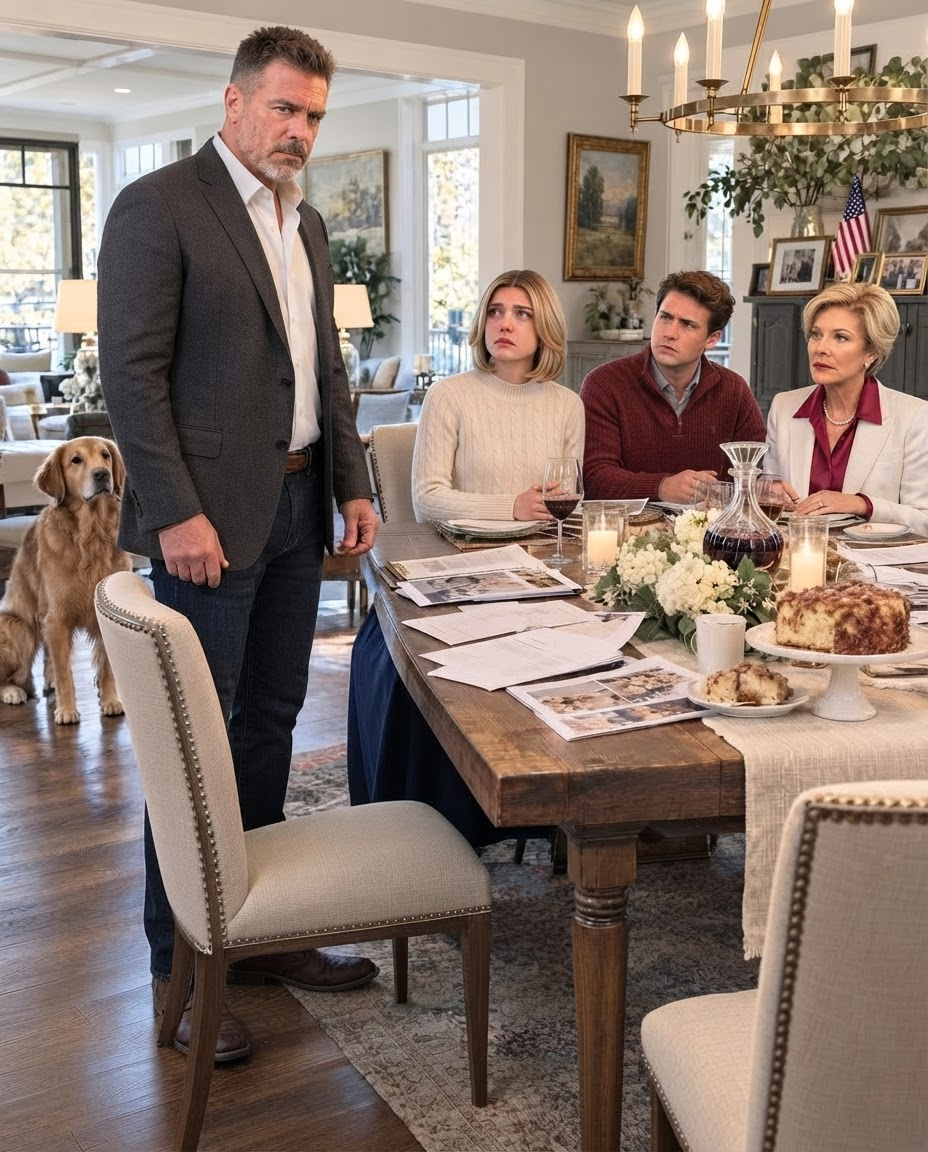
Two weeks before the wedding, Emily invited me to what she called a final planning dinner. Despite everything that had happened, I still stopped at her favorite bakery and brought the cinnamon coffee cake she had loved since she was a teenager, because hurt did not erase the fact that she was my daughter.
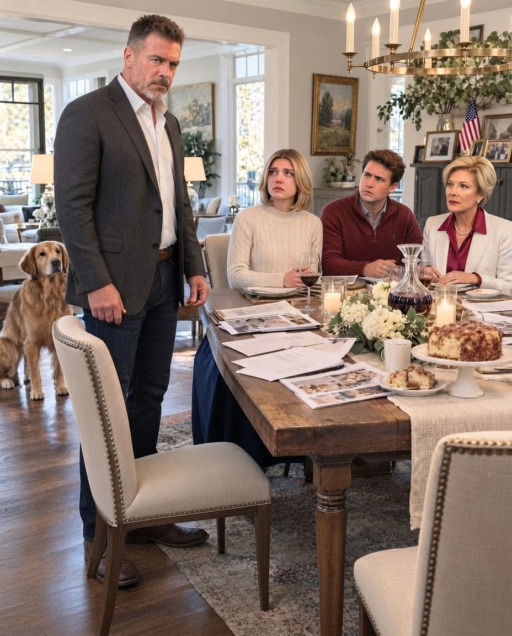
When I arrived, Matt and his mother were already seated at the dining table. After several minutes of awkward conversation, Matt pulled out a stack of papers and pushed them toward me.
“We wanted to discuss a few remaining expenses.”
The list included upgraded chairs, a champagne fountain, and a horse-drawn carriage, all of which added several thousand dollars to a wedding I had already helped finance. I read through the figures before looking directly at Emily.
“You expect me to pay for these too?”
She hesitated before answering.
“I just want everything to be perfect, Dad.”
Before I could respond, Matt’s mother leaned forward with the polite expression she always wore when she was about to say something insulting.
“There’s another issue we should discuss.”
“What issue?”
“The processional.”
I waited while she carefully chose her words.
“We’re concerned that you walking Emily down the aisle might make the photographs look unbalanced. Matt’s father is considerably taller, and the symmetry could look strange.”
For several seconds, I could not believe that anyone had actually said those words aloud. I turned toward Emily, giving her every opportunity to shut the conversation down.
“You don’t want me walking you down the aisle?”
She immediately shook her head.
“Dad, that isn’t what she means.”
“Yes, it is.”
Matt’s mother did not even bother denying it.
“It’s simply about the photographs.”
I slowly stood while Matt raised both hands, apparently hoping to calm me before the discussion became uncomfortable for them.
“Noah, come on. Everyone is just trying to make the day special.”
“For whom?”
Nobody answered.
I looked at Emily, and her eyes began filling with tears. What hurt was not that Matt’s family disliked me because they were free to think whatever they wanted, but that my own daughter had heard them treat me like an embarrassment and decided joining them was easier than defending me.
“What hurts isn’t that they don’t like me. They’re allowed not to like me.”
Emily’s face changed because she already knew what I was about to say.
“What hurts is that you laughed.”
The color drained from her face.
“You heard someone talk about your father like he was an embarrassment, and you laughed with her.”
I tapped the expense sheet still lying on the table.
“And now you’re asking that same father to pay thousands more while discussing whether he’s attractive enough to walk his own daughter down the aisle.”
Nobody had an answer, so I picked up my jacket and left.
That night, I sat alone at my kitchen table and opened the wedding folder. I spread out the venue contract, catering agreement, photography package, rental invoices, receipts, and deposit records, and for the first time I read every page as a businessman rather than as a father.
One detail appeared again and again.
Primary contact: Noah.
On several agreements, another line appeared just beneath it.
Primary payer: Noah.
Major changes required my authorization, and the remaining balances had not yet been paid. For weeks, they had treated me like an unwanted extra in a wedding that my money and signature were largely holding together.
The realization did not make me angrier.
It made me clearheaded.
I picked up my phone and called the venue first, asking who legally had authority to modify the reservation and what would happen if the final balance was not paid. Then I asked the caterer and photographer the same questions, receiving essentially the same answer every time.
I did not cancel anything. Not yet. I simply confirmed exactly what I had agreed to pay for, what remained optional, and what I had no obligation to continue funding.
After those calls, something inside me finally settled. I stopped wondering where Emily planned to seat me and stopped trying to prove I deserved a place in my own daughter’s wedding.
They had spent weeks deciding whether I looked good enough to belong in the photographs.
Now I knew exactly how much of that picture depended on my signature.