
There is a kind of grief that does not arrive loudly. It waits until an ordinary moment opens the door, and then suddenly you are standing outside a church watching your five-year-old granddaughter spin across a parking lot in a pink dress while realizing exactly who should have been there beside her.
Phoebe would have straightened Margot’s dress, taken too many photographs, and probably disappeared somewhere private to cry because her daughter looked beautiful. But Phoebe had been gone for three years, and by then I had learned that grief was not something you defeated; it was something you carried while continuing to show up for the people still here.
Margot had been giving me reasons to keep showing up since the day she was born. She had Phoebe’s eyes, Emmett’s sturdy little build, and an enthusiasm for shoes so serious that she had spent most of that morning testing the sound of her shiny black pair against every patch of pavement she could find.
“These are the best ones. They make a good sound.”
“They certainly do.”
“I’m going to be in Daddy’s pictures today.”
“You are.”
“Daddy said so.”
“Then Daddy said so.”
Margot had been talking about the wedding for two weeks. She told neighbors, strangers, and even a dog down the street that she was going to be in her father’s wedding photographs, and there was something almost sacred about how completely she believed she belonged there.
She was Phoebe’s daughter, which meant that to me, she was proof my daughter had once existed in this world and left something beautiful behind. Margot had lost her mother at two, so most of what she knew about Phoebe came through photographs, bedtime stories, and the little memories I kept placing into ordinary conversations.
For three years, Emmett and I had worked together to keep Phoebe real in Margot’s life. He had been twenty-eight when my daughter died, suddenly becoming a widower, a single father, and my former son-in-law all at once, but instead of allowing grief to divide us, we created routines that gave Margot something steady.
When Emmett eventually told me he had met someone, I did not resent him for it. Claire was a third-grade teacher, and according to him, she was warm, patient, and kind, so when he later decided to marry her, I genuinely hoped she would become another safe person in Margot’s life.
That is why what happened on the wedding day had nothing to do with jealousy over Phoebe being replaced.
I had been looking for Margot near the bridal suite when I heard Claire speaking through a partially open door.
“You’re not the most important girl in your dad’s life anymore. Stay out of the family photos.”
I stopped where I was.
A few seconds later, Margot walked out with tears already running down her face. She did not cry loudly; she simply sat beside a window and stared at the same shoes she had been so proud of that morning.
I waited until I could trust myself to speak calmly before sitting beside her.
“Peanut, I’ve got you.”
She leaned against me for a moment before whispering the question no five-year-old should have needed to ask.
“Did I do something wrong?”
“No.”
“She said…”
“I heard her.”
Margot looked up at me.
“And she was wrong.”
“But she’s going to be Daddy’s wife. Does that mean she’s more important now?”
I chose my words carefully because anger would not help her understand what she needed to know.
“Your father loves you in a way he loves nobody else. There is only one Margot, and nobody else can be his daughter.”
She thought about that for a moment.
“What about the pictures?”
“You’re going to be in them.”
“How do you know?”
“Because I’m going to make sure of it.”
Margot studied my face before nodding.
“Trust me?”
She nodded again.
Then she asked if we could go outside because she wanted to hear her shoes on the pavement.
So we did.
And while Margot spun across the church parking lot until she was laughing again, I began deciding exactly what I was going to do.
I had the entire ceremony to think about what came next. Sitting in the third pew while Emmett and Claire exchanged vows, I kept returning to the same question: what would protect Margot instead of simply satisfying my anger?
There was a difference between making a scene and actually fixing something. Phoebe had never been quiet when someone she loved was treated badly, but she also understood that the loudest response was not always the most useful one.
So I decided to wait.
Before the reception began, I found the wedding photographer, a woman named Sofia. I explained that Margot was the groom’s five-year-old daughter, that she had been promised a place in the family photographs, and that I wanted to know immediately if anyone tried to exclude her.
“Absolutely. She’s in every shot.”
And she was.
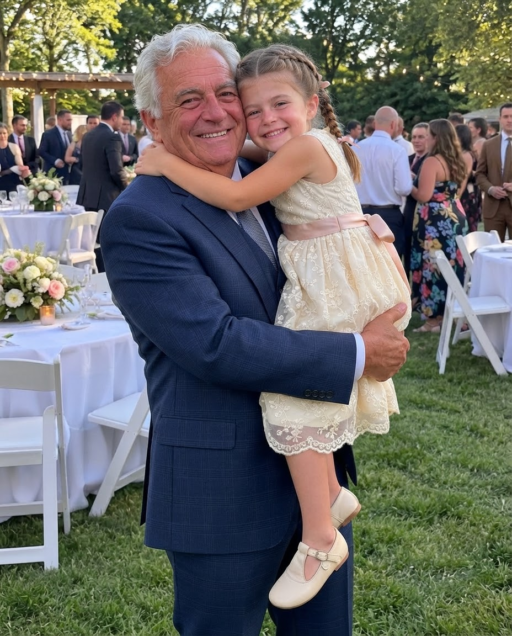
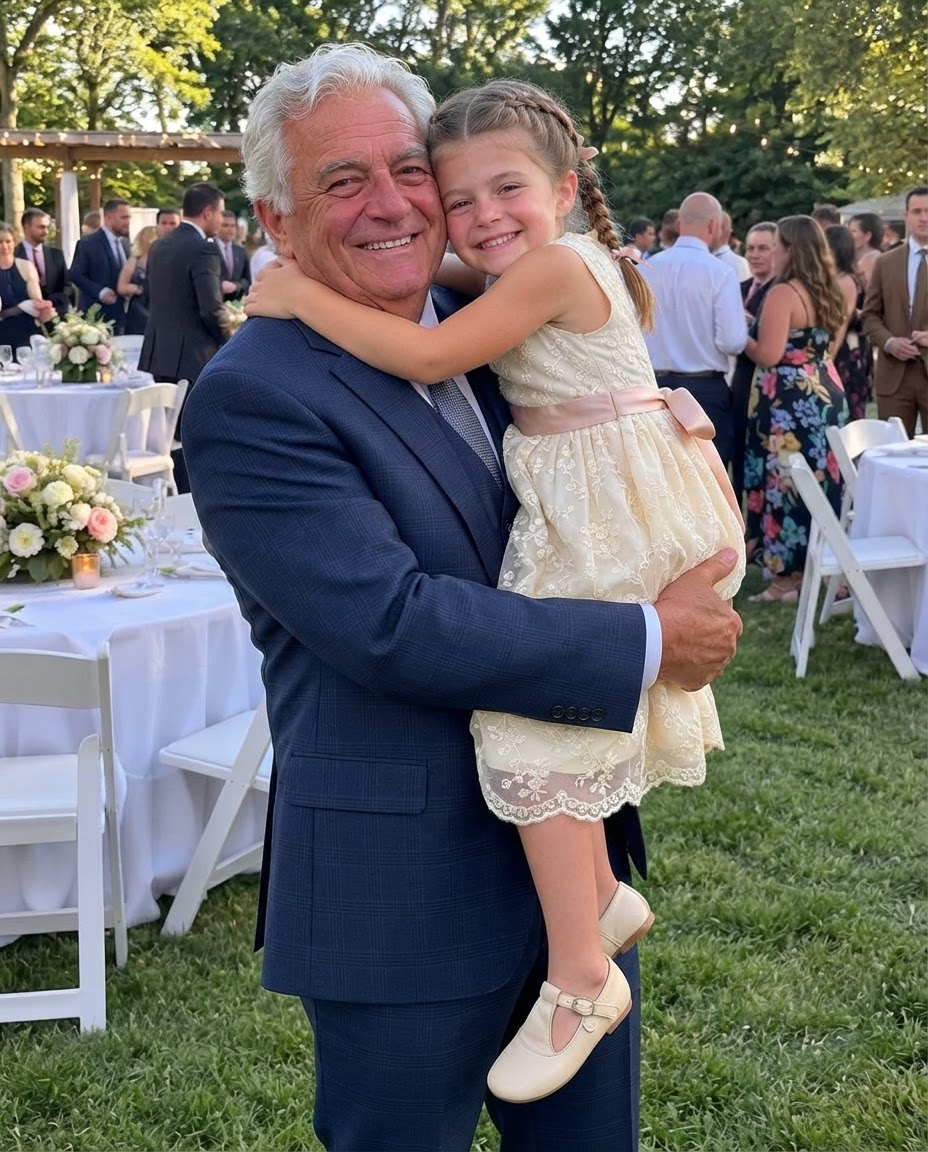
Margot stood beside Emmett, held his hand, smiled until she got bored, and eventually started making silly faces at the camera. In one photograph, Emmett lifted her into his arms while she laughed against his shoulder, and Sofia captured the moment so perfectly that I knew I would keep that picture for the rest of my life.
Claire stood beside them and smiled as well. If she noticed that I was watching carefully, she gave no sign.
The reception was held in a restored barn decorated with warm lights and round tables. Emmett had asked me weeks earlier to give a toast, and I had already written one about second chances, hope, and new beginnings.
It was a perfectly acceptable speech.
I did not use it.
After the best man, a bridesmaid, and one of Claire’s relatives had finished speaking, the emcee announced my name. Margot was sitting nearby at the children’s table, and when she saw me raise my glass, she lifted her cup of apple juice toward me.
I raised mine back to her for a second before turning to the room.
“When my daughter Phoebe died, she left behind a husband who loved her and a little girl who still needed her.”
The room became quiet.
“Emmett, I’ve told you this before, but I’ll say it again. The father you have been to Margot these last three years is something I deeply admire.”
I paused, then looked across the room.
“I had prepared a different speech for today. It was appropriate and polite, but something happened this afternoon that changed what I needed to say.”
Nobody moved.
“I watched a little girl in a pink dress begin to believe, because of something an adult told her, that maybe she did not matter as much as she thought she did. That perhaps she no longer belonged in the family photographs she had been excited about for weeks.”
Claire’s face changed.
I looked toward Margot.
“She is five years old. She lost her mother when she was two, and she has already had to understand absence in ways a child that age never should.”
Then I looked back at Claire.
“She deserves to know every day that she is loved. She deserves to know she belongs in this family, not as something left over from a life that came before, but as part of the life all of you are building now.”
Claire sat completely still.
“She was in the photographs today. I made sure of that. And I hope she is in every photograph that comes after this one.”
I raised my glass slightly.
“Every Christmas. Every birthday. Every ordinary Tuesday. Right in the middle, where she belongs.”
Then I turned toward Emmett.
“You chose someone to share your life with, and I believe you chose someone capable of loving your daughter too.”
Finally, I faced the room again.
“To Emmett and Claire, and to the family they are building. May there always be enough room in it for everyone who belongs.”
I sat down.
For three seconds, there was absolute silence.
Then the room erupted in applause.
Later that evening, Emmett found me outside the reception hall beneath the darkening sky. The music and laughter from inside had softened behind us, and for several seconds he simply stood beside me without speaking.
“You heard what Claire said to Margot.”
“Yes.”
“I didn’t know.”
“I know.”