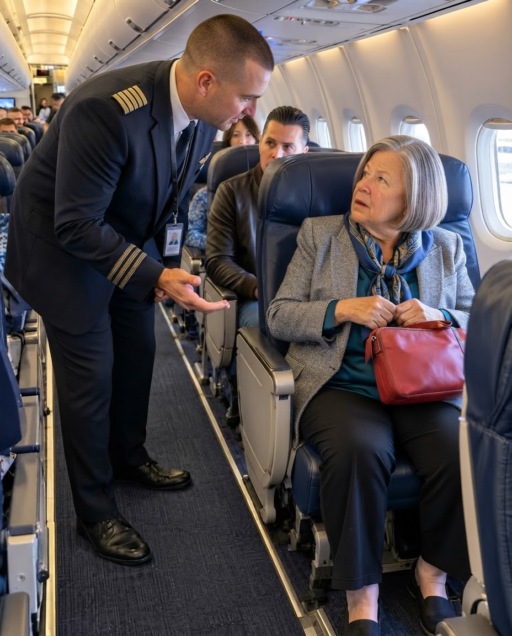
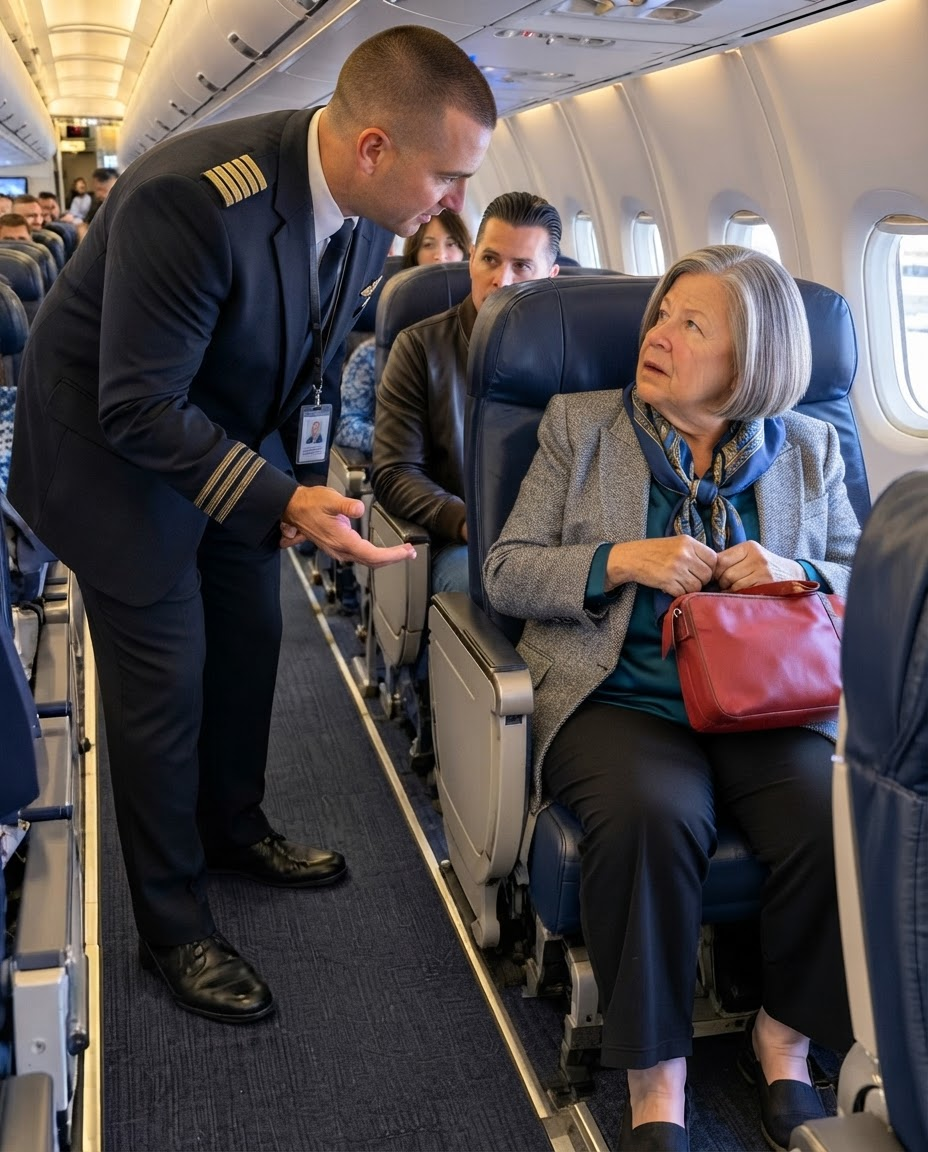

“I’d like to change my seat, please.”
My grandmother, Ruth Walsh, said it so quietly at the gate counter in Boston Logan that I initially thought I had misunderstood her. She was holding her boarding pass in one hand and clutching the worn brown leather purse she had carried for years against her chest.
The gate agent checked the ticket before looking at both of us.
“Ma’am, you’re currently in first class. Seat 3A.”
“I know. I’d like 34A instead, if it’s available.”
The agent explained that voluntarily moving to economy meant there would be no refund for the difference in fare. Grandma accepted immediately, while I stepped forward in disbelief because I had spent nearly a year saving enough money to make this trip special for her.
“Grandma, what are you doing?”
She refused to explain beyond saying she preferred sitting in the back. When the agent handed her the new boarding pass, Grandma carefully slipped it into her purse beside an old yellowed piece of paper that I noticed only briefly.
My grandmother had just turned eighty and still lived alone in the same small gray house in Dorchester where she had spent more than fifty years. She tended her flowers every spring, completed crossword puzzles in ink, and called me every Sunday evening to make sure I was eating properly.
My name is Sam, and at twenty-seven, I worked as a nurse at Mass General. Between rent and student loans, money was tight, but I had spent almost a year saving after Grandma made an unusual request on her seventy-ninth birthday.
“I want to go to San Francisco.”
The request surprised me because Grandma had refused to fly for twenty-seven years. My mother lived in California and normally visited Boston instead, but this time Grandma insisted on traveling west herself.
She was strangely specific about the details. She wanted to leave on March fourteenth aboard Flight 212, the morning flight from Boston to San Francisco, and when I discovered that the same flight number and route still existed, I simply started saving.
When the time came, I booked Grandma into first class, seat 3A, and purchased 3B for myself. I wanted her first flight in nearly three decades to be comfortable, especially because I knew getting onto an airplane again meant confronting something she had avoided for years.
Now she had traded that expensive seat for row 34.
“Then I’ll move back there with you.”
“No.”
Her answer was unexpectedly firm. She insisted that I remain in first class, and because my grandmother almost never asked anyone for anything, I eventually agreed despite knowing there had to be a reason she wasn’t telling me.
After boarding, I settled into 3B while another passenger eventually took Grandma’s abandoned seat. As the plane climbed above Boston, I kept looking toward the curtain separating the cabins and wondering what could possibly make an eighty-year-old woman choose six uncomfortable hours in economy over the first-class seat I had worked so hard to buy.
Then another question began bothering me.
Why had Grandma stopped flying twenty-seven years earlier?
I knew my grandfather, Frank Walsh, had spent thirty-four years working as an aircraft mechanic at Logan. I also knew he had died from a heart attack on March 14, 1999, the day after I was born, but whenever I asked for details, Grandma became quiet and my mother changed the subject.
About two hours into the flight, I finally walked back to row 34. Grandma was sitting beside the window with her purse pressed tightly against her chest, while a nervous red-haired boy traveling alone occupied the seat beside her.
Her hands were trembling.
Before I could understand why, the cockpit door opened twenty minutes later. A pilot stepped into the cabin, spoke quietly with a flight attendant, and began walking slowly toward the rear of the airplane as though he were searching for someone.
I followed him.
When he reached row 34, he stopped directly beside my grandmother and stared at the small silver wings attached to her purse. His expression changed instantly before he crouched beside her seat.
“Mrs. Walsh, why did you choose 34A?”
My entire body went cold.
I had never seen that man before.
But somehow, he already knew exactly who my grandmother was.
The pilot’s question left me frozen several rows away. Grandma’s chin began trembling as she looked up at him, and when she finally answered, her voice sounded almost too fragile to hear.
“Because that’s where he told me to sit.”
There was only one person she could have meant. My grandfather had been dead for twenty-seven years, yet somehow a promise he had made was the reason Grandma had exchanged an expensive first-class seat for 34A.
The pilot asked who had told her, and Grandma slowly opened her purse. Her shaking fingers reached into the side pocket and removed the yellowed paper I had noticed at the gate.
It was an old boarding pass from March 14, 1999. The faded printing showed Flight 212 from Boston to San Francisco, seat 34A, and beneath it was the passenger’s name: Frank Walsh.
The pilot turned the boarding pass over and read the faded pencil writing on the back. His face changed immediately, and he called for the captain before crouching beside Grandma again.
“I need to tell you something before I go back up front.”
Grandma studied his face carefully.
“You were the little boy.”
The pilot froze.
“The boy who sat beside him.”
His eyes filled with tears before he nodded. Then he reached into his shirt pocket and opened his palm, revealing a tiny pair of tarnished silver wings identical to the ones attached to Grandma’s purse.
“He gave these to me. I’ve carried them on every flight since.”
Grandma gently touched the pin and began crying. When Grandpa’s belongings had been returned after his death, those wings had been missing, and for twenty-seven years she had wondered what had happened to them.
The pilot introduced himself as Danny and explained that he had tried to find Grandma afterward. Unfortunately, Grandpa had only referred to her as “Ruthie,” leaving Danny with too little information to locate her.
A flight attendant had noticed the matching wings on Grandma’s purse earlier in the flight and alerted him. That explained why he had walked through the cabin searching row by row, but one question still made no sense to me.
“Why are you on this particular flight?”
Danny looked toward Grandma.
“Every March fourteenth, the captain and I request Flight 212.”
“Why?”
“Because your grandfather died on this flight. In that seat.”
I sat down in the aisle seat beside the nervous boy traveling next to Grandma because my legs suddenly felt unreliable. Everything I had been told about Grandpa’s death was technically true, but almost the entire story had been kept from me.
Grandma explained that I had been born in California on March thirteenth. The moment my mother called Boston with the news, Grandpa decided to take the next available flight west because he wanted to meet his newborn granddaughter.
Grandma was supposed to travel with him in 34B, but she became ill the night before departure. Grandpa offered to remain home with her, yet she insisted that he go without her.
At the gate, her empty seat was reassigned to an eight-year-old boy traveling alone.
That boy was Danny.
Before boarding, Grandpa called Grandma and told her the child seemed frightened. She asked him to look after the boy, never imagining those would be among the final instructions she ever gave her husband.
Then Grandma handed me the old boarding pass. On the back was the message Grandpa had written during the flight, describing sunlight across the snow-covered Rocky Mountains and telling her it was the most beautiful view he had ever seen.