
There is a kind of pride that catches a parent completely unprepared. It doesn’t arrive at a school recital, on a report card, or after a championship game where everyone is already watching and applause is expected.
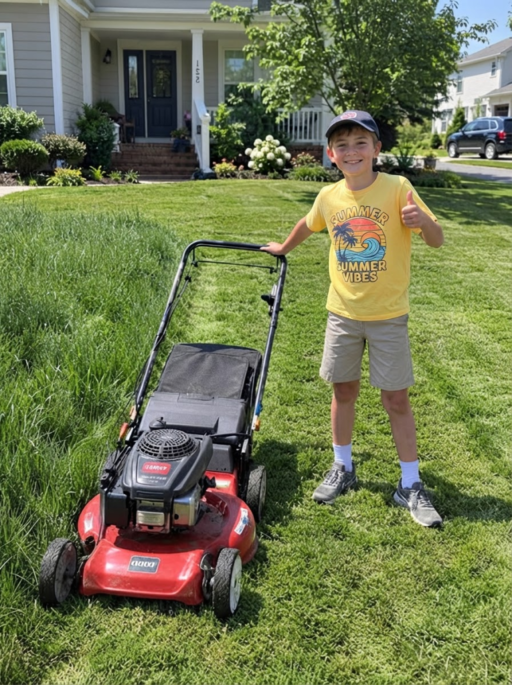
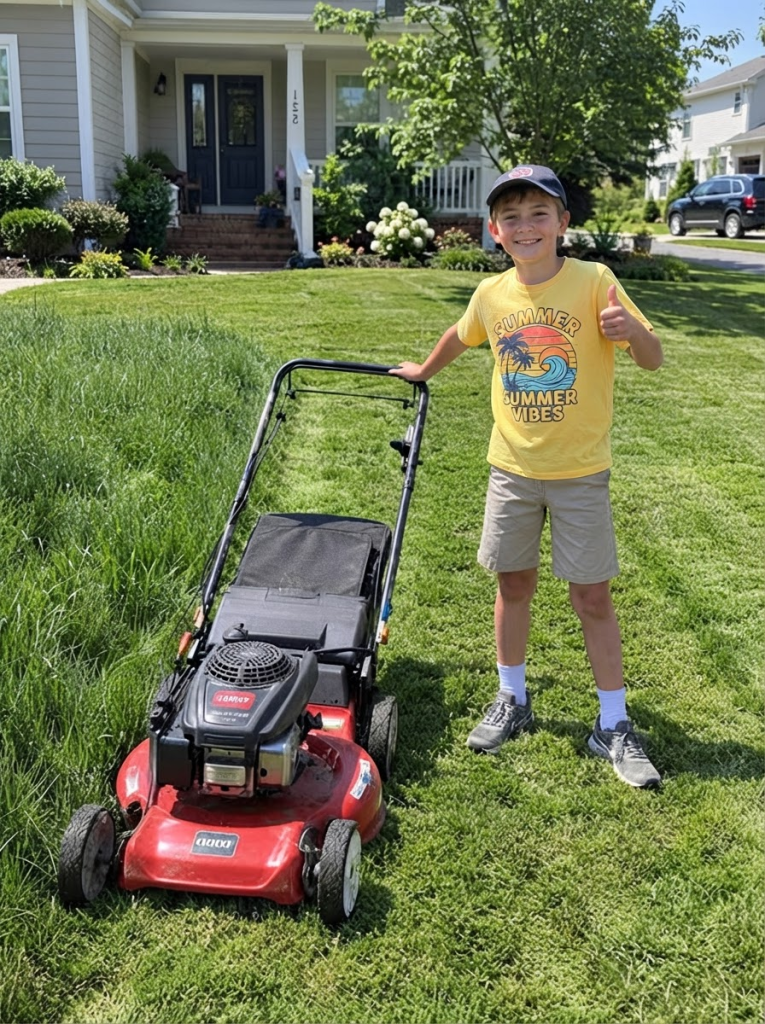
It appears quietly, usually in the middle of an ordinary day, when you look up and realize your child is doing something you never instructed him to do. That was the kind of pride my twelve-year-old son, Justin, gave me all summer.
My name is Lauren Mercer. I’m forty-one, and we live in an older neighborhood in central Ohio where the houses were mostly built in the seventies, the trees have grown enormous, and many of the families have been there long enough to feel permanently woven into the place.
Justin is not a perfect child, and I would never pretend otherwise. At eight, he bluntly told his sister her painting was terrible; at nine, he attempted to repair our bathroom faucet and created a problem that required a professional plumber; and at ten, he somehow lost three library books in four months.
He was simply a normal boy, still growing into himself. But underneath the mistakes and rough edges, Justin possessed something I had noticed developing for years: he genuinely saw other people.
His father, Mark, and I separated three years ago. The separation wasn’t explosive or bitter, but Justin understood far more of it than either of us initially realized, and afterward he went through a period of becoming quieter and spending more time with my mother, who lived only four blocks away.
By spring, something in him seemed to have changed. The attentiveness he had always possessed had deepened, and when summer arrived, that quality finally found somewhere to go.
A few days after school ended, Justin was riding his bicycle through the neighborhood when he noticed seventy-eight-year-old Eleanor Garrity struggling with a push mower. Her husband, Harold, had died four years earlier, and after the person she hired to maintain the yard moved away, she had begun trying to handle it herself.
Justin stopped his bike.
“Mrs. Garrity, do you want me to do that?”
“Oh, Justin, I’m all right.”
“I know you’re all right. Do you want me to do it?”
Eventually, she let him finish the lawn. When she tried to pay him afterward, Justin refused.
Later that afternoon, he came home and found me working at the kitchen table.
“Mom, there are probably other people around here who need help too.”
“Probably.”
“I’m going to go around and ask.”
“Ask what?”
“If they need their lawn mowed.”
I reminded him that mowing several lawns would be a lot of work, especially during an Ohio summer, but he had already finished debating the matter with himself.
“I don’t have school. I have time. And some of those people probably don’t have someone to do it, or the money to pay someone. So I’ll do it.”
Two hours later, he returned with seven addresses belonging to elderly neighbors who had accepted his offer.
“I told them it was free, so they couldn’t say no because of money.”
Some had still tried to pay him, but Justin refused every offer. The only compensation he accepted was when Mrs. Patterson offered homemade cookies, because, according to him, cookies were obviously different from money.
Then he created a schedule. Two or three mornings each week, Justin pushed our old mower through the neighborhood, cutting lawns without charging anyone and slowly learning the lives of the people behind those front doors.
He learned that Mr. Kowalski visited his wife in assisted living every afternoon. He discovered that Mrs. Palmer waited all week for her son in Seattle to call on Sundays, and that the Abernathys had been married fifty-four years and still held hands while walking together.
Justin wasn’t collecting customers.
He was collecting people.
By late August, he had spent nearly the entire summer helping neighbors who had once been strangers. Then, two weeks before school began, he left home to mow one final lawn.
It belonged to Mr. and Mrs. Chen.
At the time, I thought it was simply the last job on Justin’s summer schedule.
I had no idea that before lunchtime, two police cars would pull up outside our house looking for my son.
Mr. and Mrs. Chen lived in a yellow house three blocks away. They were both in their eighties, and during the weeks Justin had been mowing their lawn, they had become two of his favorite people in the neighborhood.
He often came home telling me about them. Mr. Chen had been an engineer who built bridges, while Mrs. Chen had spent thirty-two years teaching second grade, and together they maintained a backyard garden filled with tomatoes and zucchini that frequently found their way into Justin’s backpack.
That Tuesday, Justin left home at nine in the morning to mow their lawn one last time before summer ended. He returned around ten-fifteen looking almost deliberately ordinary, put away the mower, washed his hands, poured himself some water, and sat at the kitchen table.
“How was it?”
“Fine. Good. Really good, actually.”
He explained that Mrs. Chen had made him lunch and that he had stayed longer than expected because they wanted to show him their garden. Mr. Chen had taught him how to recognize which tomatoes were ready, and they had sent several home with him.
“They wanted to give me money.”
“And?”
“I said no.”
By then, refusing payment had become routine for him. Justin admitted that the Chens had thanked him repeatedly, almost enough to make him uncomfortable because he still didn’t quite know what to do with that much gratitude.
“You haven’t gotten used to people thanking you yet?”
“Not really. Is that weird?”
“No. It probably means you’re not doing it for the thanks.”
“I’m just doing it because they need it.”
“I know.”
At 11:42 that morning, I looked through the window and saw two police cars stop directly outside our house.
My stomach tightened instantly. I reminded myself that Justin was safe in the kitchen eating leftover pasta, so whatever had brought two officers onto our street couldn’t possibly involve him.
Then both officers got out.
And both walked toward my front door.
I opened it before they could knock.
“Ma’am, is your son the boy who’s been mowing lawns for some of the elderly residents in this neighborhood?”
“Yes. Why? What happened?”
I called Justin into the entryway. He appeared holding a fork, looked at the officers, and suddenly wore an expression I couldn’t understand, somewhere between confusion and the nervousness of someone wondering whether he had accidentally done something wrong.
My hands began trembling.
One officer addressed him directly.
“Son, I understand you’ve been mowing lawns for some elderly residents around here.”
“Yes, sir.”
“Without charging them anything?”
“Yes, sir. I didn’t want money. They need help.”
The officers exchanged a glance before the first one continued.
“Justin, we got a call this morning from Mr. and Mrs. Chen.”
Justin’s reaction was immediate.
“Are they okay?”
He didn’t ask why they had called the police or whether he was in trouble. His first concern was whether the elderly couple was safe.
“They’re fine. They’re very well. They called us to tell us about you.”