
At sixty-nine, I finally did something that belonged entirely to me. I sold my house, packed my belongings, and booked a trip around the world, even though my four children reacted as though I were abandoning the family instead of simply choosing to live the years I still had left.
For most of my adult life, I had been useful to other people. I worked as a school secretary for thirty-two years while raising four children with my husband, Robert, and later became the grandmother everyone could depend on whenever they needed childcare, money, transportation, or help with another family obligation.
After Robert died twelve years earlier, that dependence only increased. Karen called when she needed someone to watch her boys, David contacted me when rent was tight, Melissa needed help with her daughter, and Eric knew I would usually pick him up from the airport, yet weeks sometimes passed without any of them calling simply to ask how I was doing.
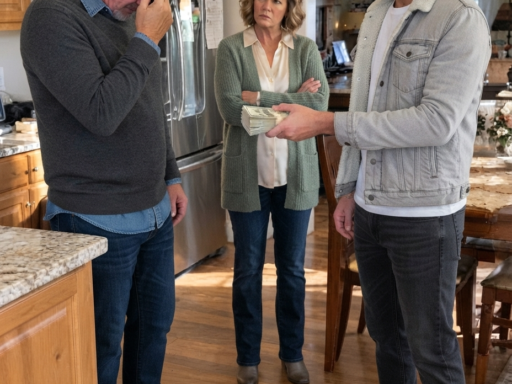
I told myself that this was what families did and that everyone was busy with their own lives. Then one Tuesday morning, I stood in my kitchen studying a calendar filled with soccer tournaments, babysitting commitments, errands, appointments, and reminders to send money, and I realized that almost nothing written there was actually for me.
For decades, Robert and I had talked about the places we would visit someday. We would see Italy and Japan, travel across Australia, and sit together in a Paris café ordering food neither of us knew how to pronounce.
But retirement did not give us the future we expected because Robert became ill before those plans could happen. Our “someday” disappeared with him, and for years afterward, I quietly continued postponing my own life.
That morning, staring at the calendar, I decided I was finished waiting. I sold my house and booked a journey around the world while I could still walk through airports, carry my own suitcase, climb stairs, and explore unfamiliar places without needing anyone’s permission.
My children were furious.
“You’re being selfish, Mom.”
Karen’s reaction hurt, but Melissa immediately followed with another objection.
“What about the grandchildren?”
David seemed more concerned about the money.
“You’re really going to waste all that money traveling?”
Then Eric said something that revealed more than I think he intended.
“That house was supposed to stay in the family.”
I looked directly at him.
“It was my house.”
He didn’t appreciate the answer, and when I refused to cancel the trip, Karen and David stopped speaking to me for a while. Their silence hurt deeply, but for once I refused to let guilt make my decision for me.
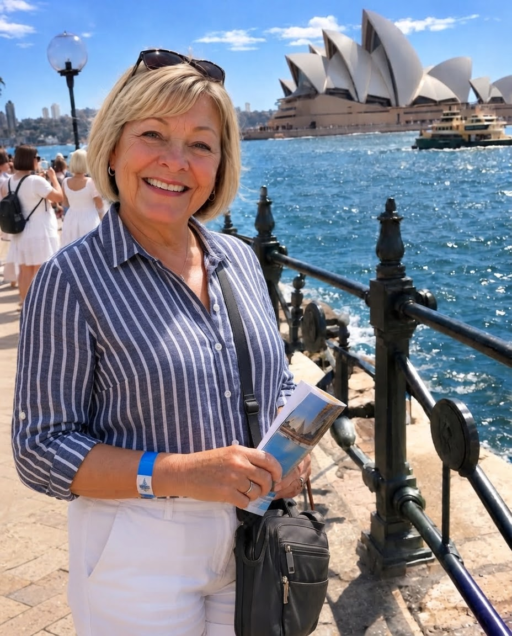
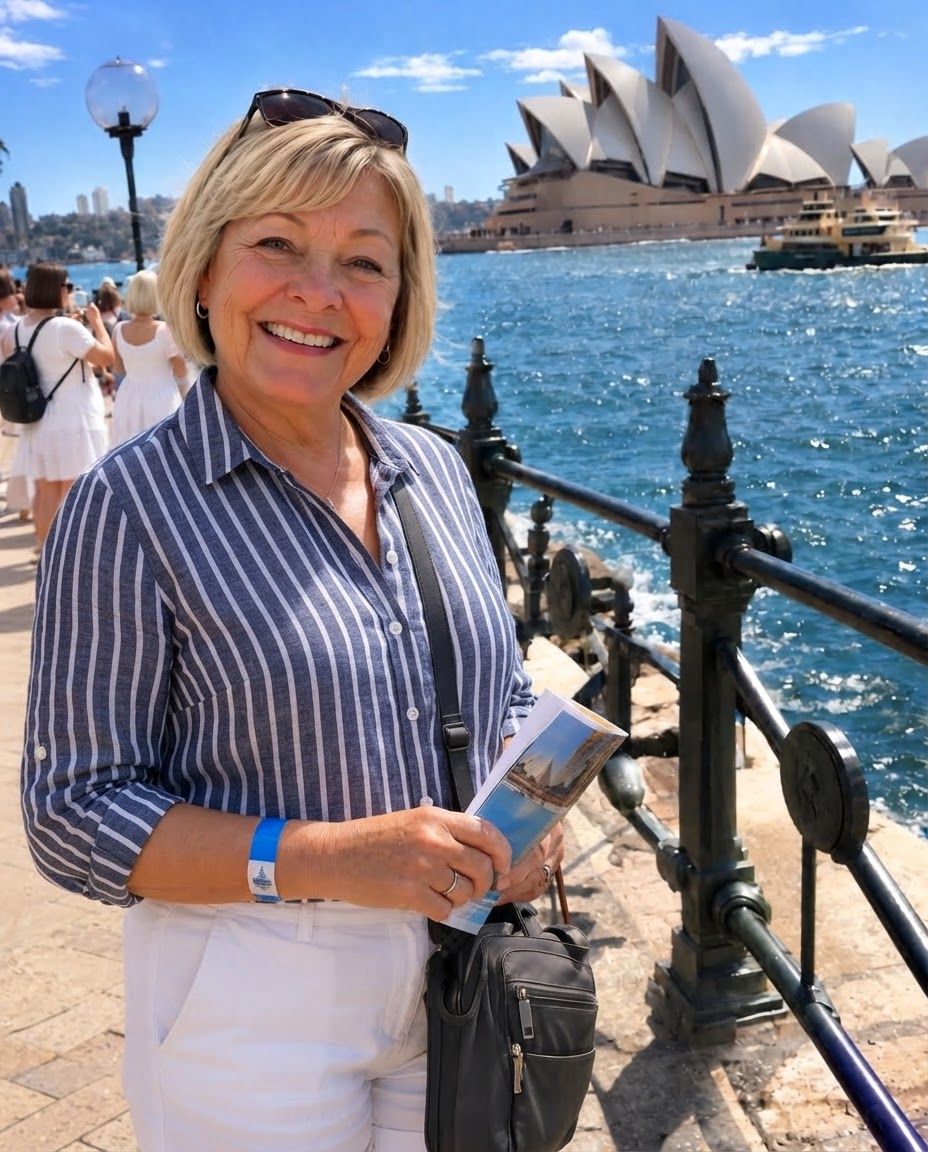
Australia became the fourth stop on my journey, and that was where I met Arthur, a seventy-one-year-old widower with a dry sense of humor. We reached for the same detective novel in a secondhand bookstore in Melbourne, and within minutes, he had me laughing.
“I suppose at our age, fighting over it would be undignified.”
“At our age?”
He smiled.
“Fair point. You look thirty-five.”
“Now I know you’re dishonest.”
Coffee that afternoon became another meeting two days later, followed by long walks, bookstores, jazz, and conversations about the spouses we had lost. After several weeks, Arthur invited me to his home to listen to his collection of old records.
I trusted him, so I accepted.
The moment I stepped into his living room, however, I stopped cold. Hanging above Arthur’s fireplace was a painting of a small cottage beside a lake, with two pine trees leaning toward the water and a crooked wooden dock stretching from the shore.
In the bottom corner were two initials I could never have mistaken.
R.M.
My late husband’s initials.
I had watched Robert paint that scene, and for more than twenty years, I had believed the painting was gone. Yet somehow, halfway around the world, it was hanging inside the home of a man I had met only weeks earlier.
I turned toward Arthur and pointed at the fireplace.
“Where did you get that?”
His expression changed immediately.
And in that moment, I knew there was something about Robert he had not yet told me.
Arthur came into the living room carrying two mugs of coffee and stopped when he saw me staring at the fireplace. My purse had slipped from my shoulder, and I could barely take my eyes off the painting long enough to look at him.
“Abigail?”
I pointed toward the picture.
“Where did you get that?”
His expression changed immediately, and that small reaction told me this wasn’t some impossible coincidence. Arthur set the mugs down and suggested that I sit, but I refused.
“Tell me where you got that.”
He glanced at the painting before answering.
“From Robert.”
For a moment, I thought I had misunderstood him. Robert had been dead for twelve years, yet this man I had met by chance halfway around the world was telling me my husband had personally sent him a painting.
“You knew my husband?”
Arthur nodded and explained that he had met Robert when they were young, long before Robert and I knew each other. Robert had spent almost a year in Australia, where he and Arthur worked together at a hotel outside Melbourne and became close friends.
They spent their weekends traveling, playing cards, listening to records, and taking whatever terrible jobs they could find. Robert had also painted whenever he had enough money to buy supplies, and the cottage above Arthur’s fireplace had been inspired by a place the two young men once visited near a lake.
“But Robert painted that after we were married.”
“He painted it more than once.”
Arthur explained that Robert had created the original during his year in Australia. Years later, after we were married, he painted a second version at home, which was the one I remembered and had believed was lost forever.
Much later, Robert painted the scene a third time entirely from memory and sent it to Arthur. That third version was the painting now hanging above the fireplace.
“Why would he send it to you?”
Arthur stood and disappeared into another room without answering. When he returned, he was carrying a wooden box, which he carefully placed on the coffee table in front of me.
Inside were dozens of letters.
Every envelope carried the same sender’s name: Robert.
My hands began to tremble as I stared at them.
“How long were you writing to each other?”
“On and off for decades.”
“Robert never told me.”
Arthur seemed to read the suspicion on my face before I could say it aloud.
“He wasn’t hiding an affair, Abigail.”