
Then he stuck out his bright blue tongue, and I laughed so hard that I dropped part of mine. For a moment, there was no prison sentence, addiction, illness, or lost childhood between us, just a father making his daughter laugh beside the water.
Later that summer, I made a decision I didn’t tell him about beforehand.
I got a bluebird tattoo.
It was placed on my left wrist, matching my mother’s and Ray’s in size and design. When I showed it to him, he stared silently before placing his faded tattoo beside mine.
“Two out of three.”
His voice was barely above a whisper.
We both understood who was missing.
As the months passed, Ray’s heart problems became harder to ignore. Medication and treatment helped, but years of damage couldn’t simply be reversed, and eventually his energy began disappearing faster than either of us wanted to acknowledge.
The following July, Ray was hospitalized. A week before he died, when he was already too weak to leave his bed, he asked me for one final favor.
“Will you cut my hair?”
I brought my scissors, comb, and salon cape to the hospital. Ray sat propped against the pillows while I carefully trimmed his gray hair, reversing the roles from the evening when a stranger with one dollar had cautiously lowered himself into my chair.
Halfway through the haircut, I started singing the song my mother had always sung when she cut my hair at the kitchen table.
The song about bluebirds somewhere over the rainbow.
Ray closed his eyes.
Then he quietly began singing with me.
For those few minutes, it felt as though June was somehow present in the room with us, connecting three people whose lives had been separated by choices, consequences, and time.
When I finished, I held up a mirror.
Ray inspected my work carefully.
“Perfect.”
Then he smiled.
“Not one crooked piece.”
That became our last real conversation.
Ray died soon afterward.
After his death, I discovered something among his belongings that I never expected to see again: the original dollar bill he had placed on the salon counter the night we met.
It was still folded into the same tiny square.
He had kept it for all fourteen months.
I eventually framed that dollar and hung it beside my mirror at work. To anyone else, it looked like a worn piece of currency worth almost nothing, but to me it represented the eight minutes that had completely rearranged my life.
If Ray had arrived slightly later, the salon might have been locked.
If I hadn’t noticed his tattoo, I might have watched him leave.
And if I had decided that his appearance told me everything I needed to know about him, I never would have discovered who he was.
But Ray’s story didn’t end with his death.
That single dollar, the bluebird on my wrist, and the memory of the stranger who once asked for a chance eventually changed something much larger than my own life.
It changed the salon too.
A year and a half after Ray walked into the salon, I was still working at the same chair. His framed dollar remained beside my mirror, and whenever I looked at it, I remembered the exhausted man who had entered with worn clothes, damaged boots, and no expectation that anyone would see him as more than his circumstances.
After Ray died, the salon changed too. On the first Sunday of every month, we began closing our doors to regular appointments and opening them instead to people who needed a haircut but couldn’t afford one.
Some came from homeless shelters. Others were veterans, teenagers transitioning out of foster care, or people preparing for job interviews who simply needed someone to give them a chance.
We called it Bluebird Sunday.
A bluebird was painted on the sign in our window, with a sentence underneath inspired by the words Ray had spoken the first evening we met:
EVERYBODY DESERVES TO LOOK LIKE SOMEBODY WORTH HIRING.
The program became our way of remembering that dignity could sometimes begin with something remarkably small. A haircut couldn’t repair someone’s life, erase a criminal record, cure an illness, or guarantee employment, but it could remind a person that they were still worth looking at, speaking to, and helping.
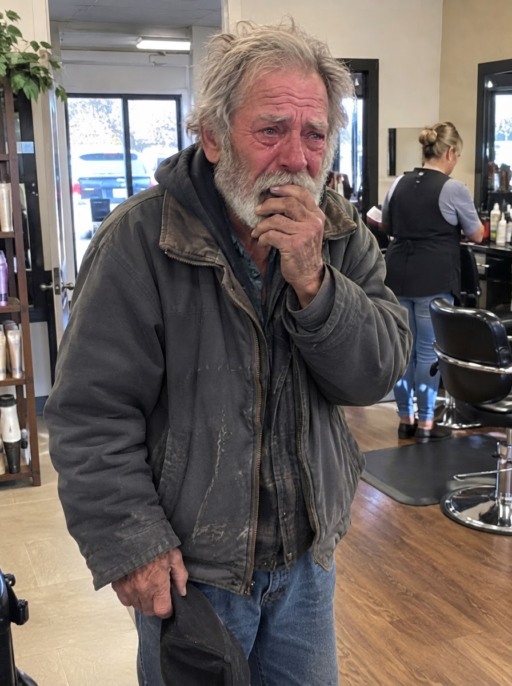
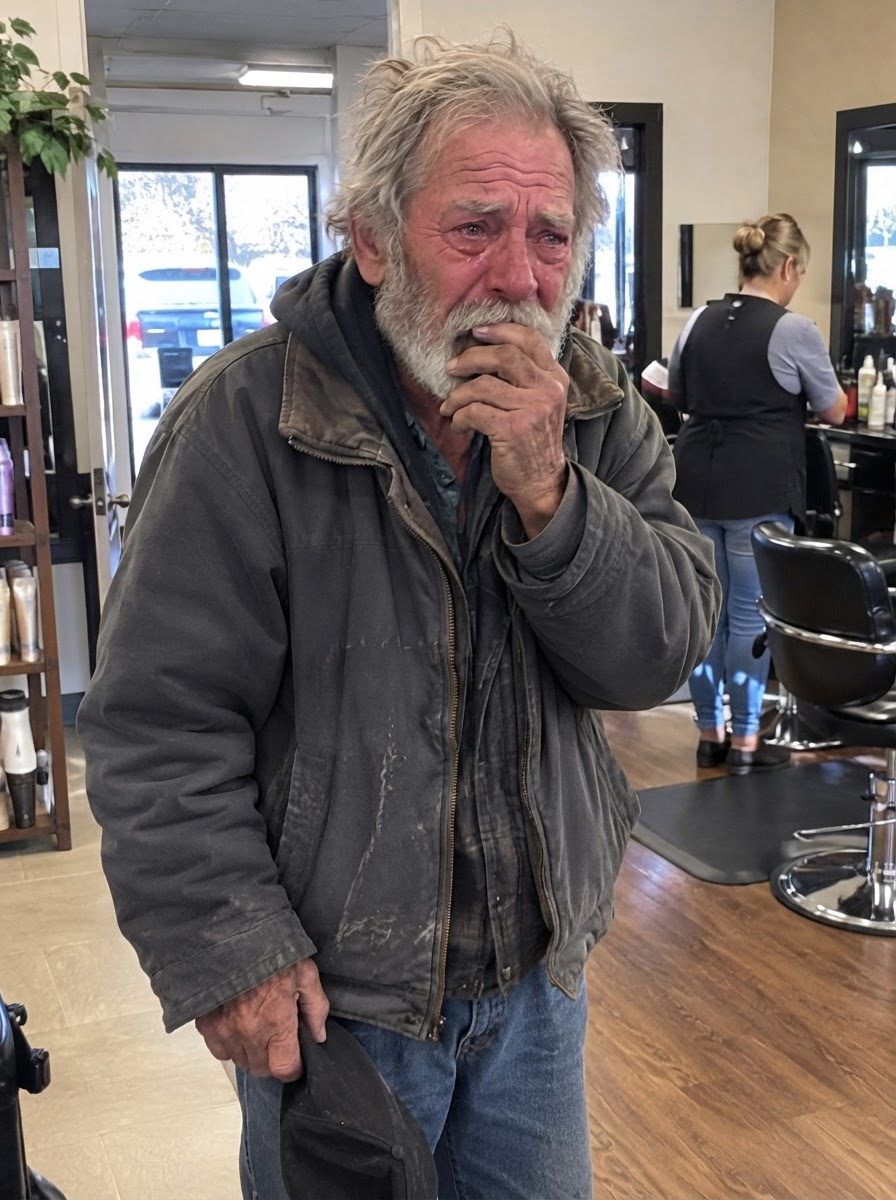
Recently, another older man entered the salon during Bluebird Sunday. His gray hair was unkempt, his clothes were worn, and he approached my chair cautiously, almost as if he expected someone to tell him he didn’t belong there.
He held out a dollar.
“It’s all I have.”
For a moment, I was transported back to 6:52 p.m. on the night Ray entered my life.
I smiled.
“Put it away.”
I fastened the cape around the stranger’s shoulders.
“Today it’s free.”
As I began working, I could see two things reflected in the mirror behind him. One was Ray’s framed dollar, still folded into the tiny square he had carried into the salon. The other was the bluebird tattoo on my wrist.
My mother once believed bluebirds belonged to people who would eventually make it over the rainbow. When I was younger, I imagined that meant reaching some perfect destination where pain disappeared and every broken part of life somehow became whole again.
Ray taught me something different.
There was no perfect ending for us. He couldn’t recover the birthdays he missed, watch me graduate again, undo the robbery that sent him to prison, or return the years my mother spent raising me without him.
Fourteen months couldn’t erase twenty-nine years.
But those fourteen months still mattered.
Ray had stayed sober. He found work, kept his promises, showed up every Sunday, paid back the fifty dollars he owed, and accepted responsibility without demanding that I forgive him faster than I was ready.
Most importantly, he came through my door.
Sometimes making it over the rainbow isn’t reaching some distant place where everything becomes perfect. Sometimes it is simply finding one person willing to leave a chair open.
A stranger appears in a doorway.
Someone chooses kindness instead of judgment.
Five minutes become a conversation, and a conversation changes the direction of two lives.
Most strangers will remain strangers, of course.
But sometimes the man standing in worn-out boots with one dollar folded in his hand is carrying a story you could never guess by looking at him.
Sometimes he is searching for work.
Sometimes he is searching for dignity.
And sometimes, impossibly, he is the father you never knew existed.
That is why, whenever someone uncertain steps into my salon now, I try to remember what Ray taught me during the eight minutes that changed everything.
You cannot know someone’s entire story from their clothes, their mistakes, or the condition of their shoes.
Sometimes all you can do is look at the empty chair beside you and say:
“My chair’s free.”
Then you give them the chance to sit down.