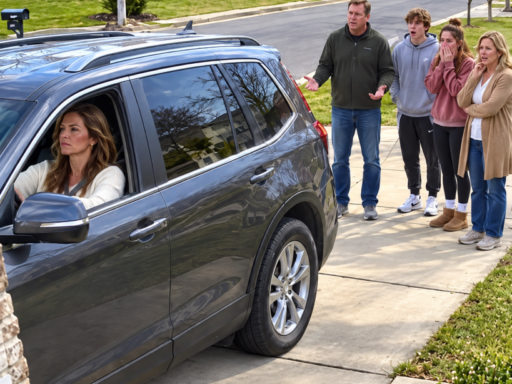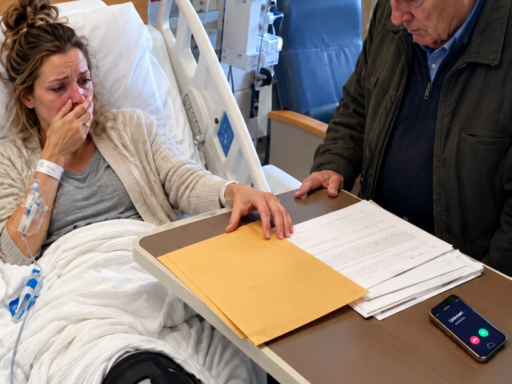

My name is Marlo, and for years, I convinced myself that my parents would eventually accept my adopted daughter as a genuine member of our family. That hope ended during a dinner when my mother looked directly at my thirteen-year-old daughter and said something so cruel that I finally understood how much damage my patience had allowed.
I adopted Sole when she was seven, after she had spent eleven months living with me as a foster child. During that time, I learned everything from her favorite breakfast cereal to her fear of thunderstorms, and I watched her gradually become comfortable enough to laugh freely in our home.
By the time the adoption became official, Sole already knew my daily routines, recognized my car arriving in the driveway, and understood that she belonged with me. She was my daughter in every legal and emotional sense, and becoming her mother remained the most meaningful decision I had ever made.
Unfortunately, my parents never shared that happiness. They maintained respectable public appearances, with my mother organizing church fundraisers and my father enjoying his reputation as a longtime youth baseball coach, but their behavior toward Sole revealed a very different set of values.
To them, biological relationships determined who truly belonged in the family. They rarely expressed that belief openly, preferring small exclusions and carefully disguised comments that left me questioning whether I was overreacting.
During Sole’s first year with us, my mother forgot her birthday entirely. I excused it as an adjustment period, but the following year she sent money to my brother Chris’s sons while giving Sole nothing.
When I questioned her, she claimed she didn’t know what my daughter liked. That excuse was difficult to accept because I had repeatedly explained that Sole loved drawing, mystery novels, and movies featuring animals.
My father was no better. Whenever he became irritated, he sometimes referred to Sole as “that girl,” although he usually avoided doing so when I was present.
One evening, when Sole was nine, she approached me with a question that revealed how deeply his behavior had affected her.
“Mom, does Grandpa actually know my name?”
“Of course he does, sweetheart.”
I reassured her because I wanted her to believe she was loved, but I later regretted offering certainty that my father’s behavior didn’t justify. His indifference continued, and Sole gradually learned to expect less from people who should have welcomed her.
Christmas made the difference particularly obvious. My nephews received carefully chosen presents with their names embroidered on them, while Sole was given impersonal clearance items such as soap sets or candles.
She thanked my parents politely and even wrote handwritten notes afterward. They never responded, and I watched my daughter continue trying to earn affection that should never have depended on her performance.
The questions my parents asked when Sole wasn’t present were even more troubling. They wondered whether adopted children could form normal attachments, whether her difficult early experiences would affect her permanently, and whether I had sacrificed the opportunity to build what they called a real family.
“Have you ever considered what you’ve given up, Marlo? You could have had a completely different life.”
“I have a real family, Mom. Sole is my daughter, and I don’t want you questioning that again.”
Whenever I challenged their comments, they accused me of being overly sensitive. If I reduced our visits, they complained that I was unfairly preventing them from spending time with their granddaughter.
I kept hoping that continued contact would help them recognize Sole’s kindness and understand how wrong their assumptions were. Looking back, I realize I was asking a child to endure repeated rejection while waiting for adults to become more compassionate.
About a month before the dinner that changed everything, I visited my mother and gave her a final warning. I sat across from her at the kitchen table and made my expectations unmistakably clear.
“One more cruel remark about Sole, Mom. Just one more, and we’re finished. I’m not talking about taking a break. I mean no more contact.”
She stirred her coffee and nodded without appearing particularly concerned. I suspect she believed I would eventually forgive whatever happened because I had always been the person who returned, settled disagreements, and helped everyone financially.
For years, my family had mistaken my willingness to maintain relationships for an inability to walk away. They had no idea how close I was to reaching my limit.
A month later, at an ordinary family dinner, my mother would say six words that ended my willingness to give her another chance.
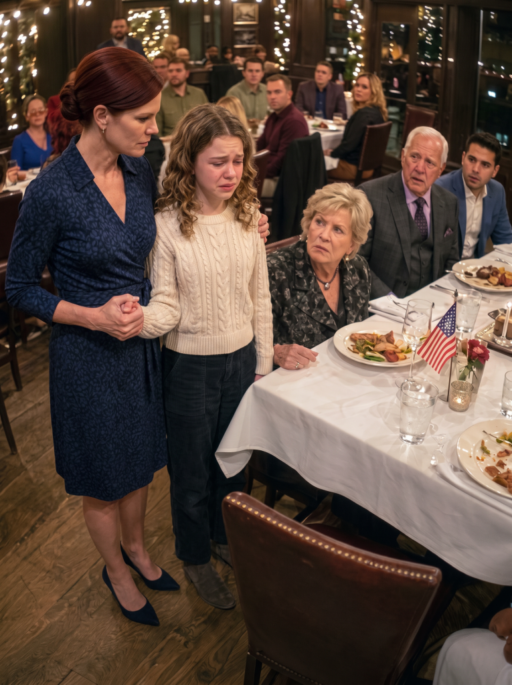
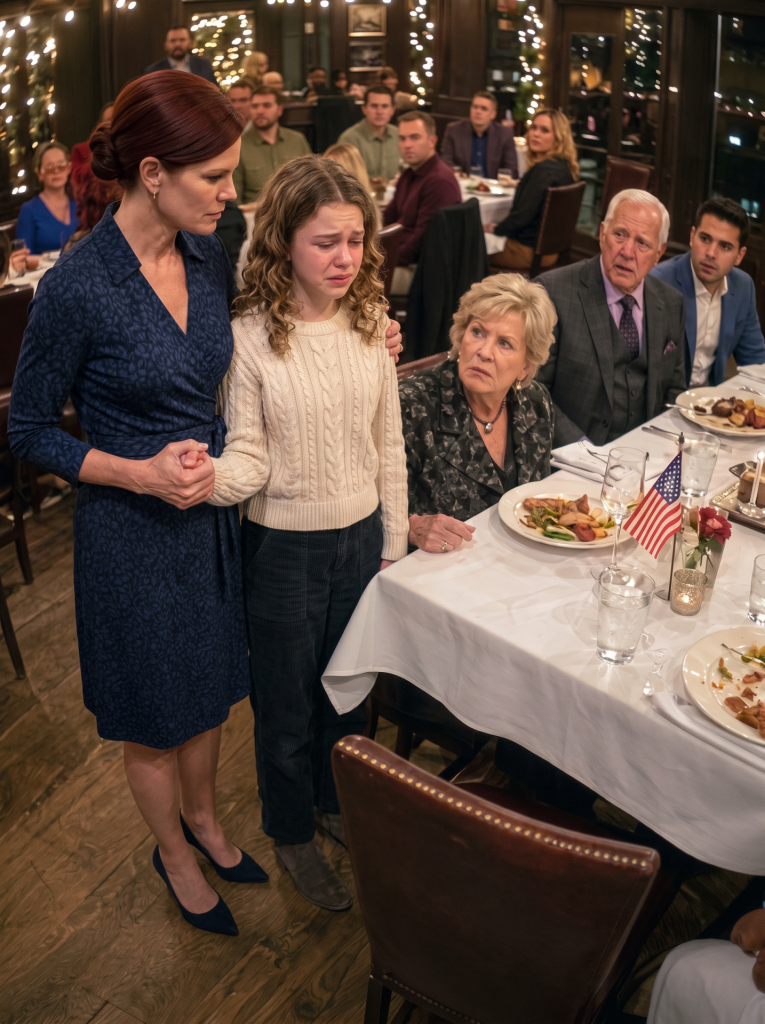
The dinner took place at a familiar restaurant in town, a comfortable place decorated with warm string lights and old-fashioned photographs. Under different circumstances, it might have been a pleasant family evening, but I sensed something was wrong before we even ordered.
My father complained about his drink and sent it back almost immediately, while my mother repeatedly adjusted the silverware in front of her. My brother Chris barely participated in the conversation, spending most of his time checking messages beneath the table.
Sole sat beside me wearing a cream-colored blouse, her back perfectly straight and her napkin carefully folded across her lap. She answered every question politely, but I noticed how cautiously she moved whenever one of my parents looked in her direction.
At home, my daughter was energetic and wonderfully untidy, leaving books on the couch and singing along to songs without worrying whether she knew the words. Around my parents, however, she became quiet and excessively careful, as though making one small mistake might give them another reason to criticize her.
I had noticed that difference for years, but I had repeatedly dismissed it as nervousness. Watching her that evening, I began to understand that she wasn’t simply shy; she was trying desperately to avoid being rejected.
Dinner passed with strained conversation until the waiter brought the dessert menus. My mother leaned toward Sole, lowered her voice, and delivered a remark that would permanently change our family.
“We don’t sit with mistakes.”
For several seconds, nobody moved. Sole tightened her fingers around her spoon, lowered her eyes, and drew her shoulders inward as though she wanted to disappear from the table.
I stared at my mother, waiting for some indication that I had misunderstood her. Instead, she looked completely composed, as though she had merely offered an ordinary observation.
I wanted to demand that she repeat herself loudly enough for every person in the restaurant to hear. I wanted everyone to understand what she had just said to a thirteen-year-old girl who had spent years trying to win her approval.
But I looked at Sole and realized that turning the moment into a public argument would only force her to endure more humiliation. I placed my glass on the table, stood up, and gently took her hand.
“We’re leaving, sweetheart.”
My father immediately looked irritated, while Chris finally stopped checking his phone. My mother stared at me with the offended expression she always wore whenever someone refused to accept her behavior.
“Marlo, don’t make a scene. You’re being ridiculous.”
“You just called my daughter a mistake.”
“She understands what I meant.”
“No, Mom. You understand exactly what you meant.”
I helped Sole gather her belongings and walked her through the restaurant without looking back. Several diners glanced toward us, but I concentrated on getting my daughter outside before she had to hear another word.
The evening air was cold, and Sole climbed into the passenger seat with unusual care. She fastened her seat belt, folded her hands in her lap, and stared through the windshield while I started the car.
We remained silent for several moments before she finally spoke.