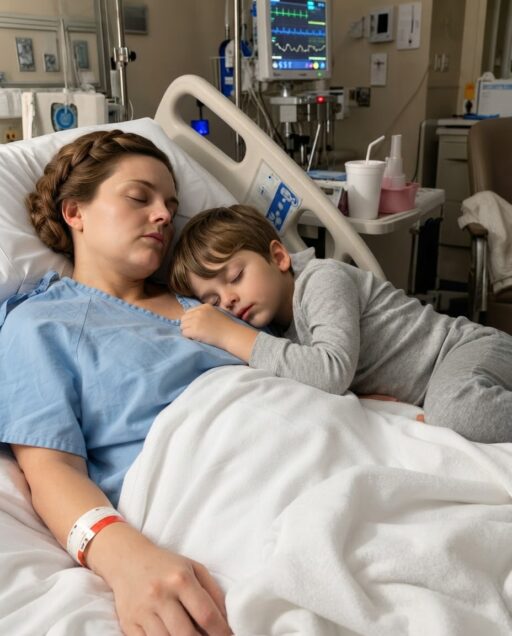
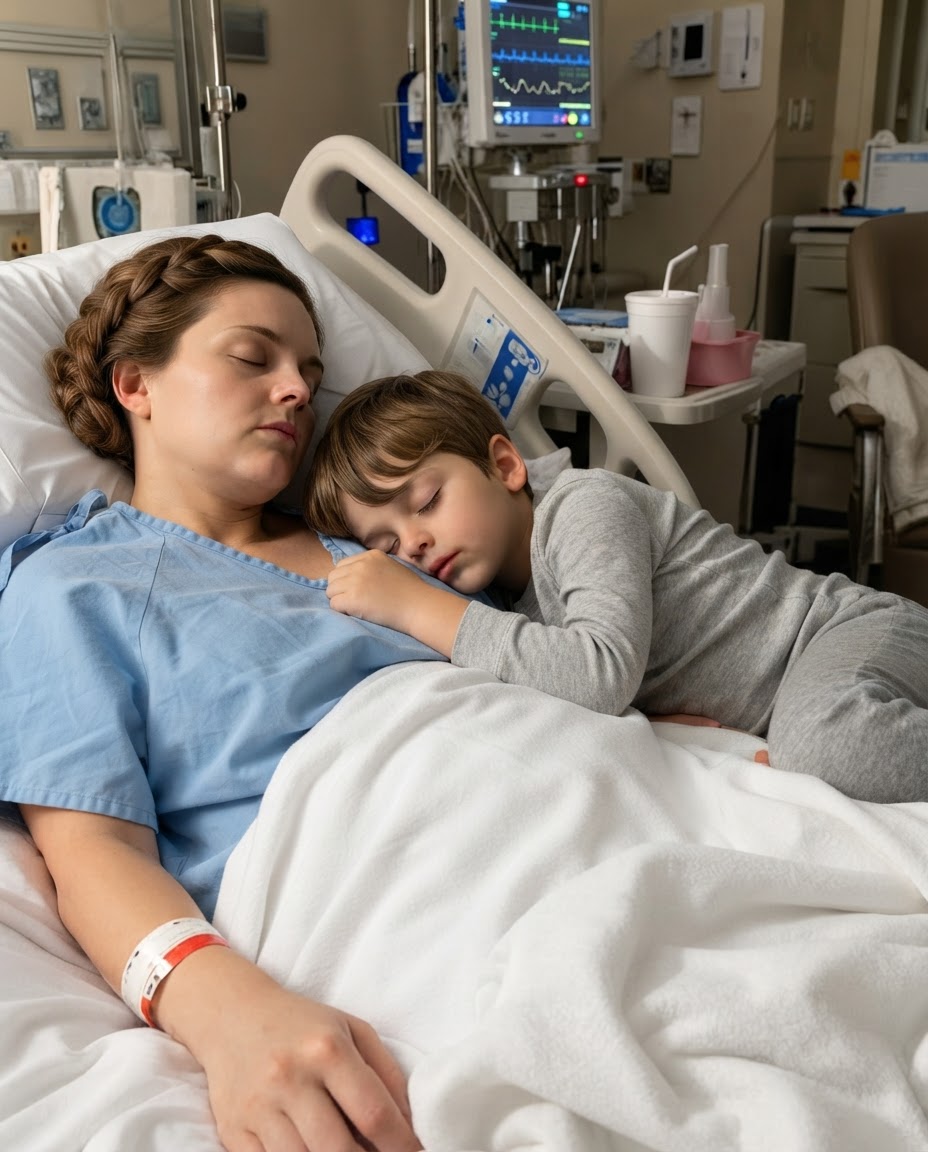

Her fingers remained still, and I didn’t expect an answer. I continued holding her hand as the hours passed, determined to keep the promise I’d made to both my wife and my son.
That night, Noah finally slept peacefully in his own bed, while I stayed beside Emma until morning, unaware that the coming weeks would bring changes none of us had dared to expect.
The following morning, I was still sitting beside Emma when the first sunlight appeared through the hospital window. I’d barely slept, but for the first time since her hospitalization, I didn’t feel compelled to distract myself with emails, phone calls, or another conversation about medical bills.
I had spent the night holding her hand and speaking quietly about our life together. I apologized for the evenings I’d missed, the promises I’d postponed, and the way I’d allowed work to become more important than the ordinary moments she had repeatedly asked me to share.
“I can’t change what happened before my trip, Emma. But if you can hear me, I want you to know that I’m here, and I’m not going to keep running away from the difficult moments.”
Her fingers remained motionless, and I reminded myself that I couldn’t expect every question or conversation to produce a response. What mattered was that I was finally learning to stay without demanding reassurance in return.
Later that morning, the medical team discussed the movements Noah and I had observed. The doctors explained that responses from patients with impaired consciousness could be inconsistent and that additional observation would be necessary before drawing conclusions about Emma’s awareness.
“We’ll continue monitoring her carefully, Jeremy. It’s important that we document these responses, but we also need to avoid assuming that every movement represents intentional communication.”
“I understand. I just want to make sure we’re paying attention to anything that might help us understand her condition.”
Over the following days, the doctors evaluated Emma’s responses while I adjusted my routine around spending meaningful time with her. Sometimes her fingers moved when we spoke, and sometimes there was no reaction at all, but the medical team took Noah’s observations seriously.
That acknowledgment meant more to my son than I initially realized. For weeks, he’d worried that nobody believed him, and now he knew the adults responsible for his mother’s care were listening.
Our home life gradually began changing as well. Noah still visited after school, but he no longer insisted on spending every available hour at the hospital because he trusted that I would remain involved in Emma’s care.
He started eating dinner at home regularly and accepting invitations to play with his friends. One afternoon, he even complained when Grandma arrived to take him to the hospital before he’d finished playing a game with his classmates.
“Can we go a little later today? We’re almost finished.”
I smiled because his request represented something I’d been hoping to hear for months. My little boy was finally beginning to enjoy being seven years old again instead of feeling responsible for watching over his mother every moment.
“Of course, buddy. I’ll be with Mom until you get there.”
“Promise?”
“Promise.”
Saturdays remained important to Noah, although they no longer carried the same burden of fear. We spent those afternoons together beside Emma, sharing stories, reading aloud, and occasionally laughing about the small disasters that seemed to follow Grandma whenever she attempted a new recipe.
Several weeks after our first experience with the finger movements, Emma began showing additional signs that encouraged the medical team to continue evaluating her condition. There were occasional responses to familiar voices, brief periods when her eyes opened, and movements that appeared more purposeful than those we’d seen earlier.
Her progress remained slow and unpredictable, and the doctors carefully explained that these changes didn’t guarantee a particular outcome. We learned to appreciate each improvement without allowing ourselves to make promises about what might happen next.
One Saturday afternoon, Noah sat beside Emma describing a spelling test he’d taken at school. He was particularly frustrated by the word separate, which he’d repeatedly spelled incorrectly despite practicing it with Grandma.
“Dad, you should ask Mom something today.”
I looked up from my chair, surprised that he wanted me to take the lead. Until then, Noah had usually been the one asking questions while I watched and recorded what happened.
“Are you sure, buddy?”
He nodded enthusiastically and moved aside so I could sit closer to Emma. I gently took her hand, feeling its familiar warmth while I considered what question might bring a little normality back into the room.
“Hey, sweetheart. It’s Jeremy, and Noah has been telling us all about his spelling test.”
Noah immediately looked suspicious as I glanced toward him. I smiled, remembering how Emma used to tease him affectionately whenever he complained about his homework.
“Emma, do you think Noah will ever learn how to spell ‘separate’?”
“Dad! That’s not funny!”
I laughed softly, and Noah tried unsuccessfully to hide his own smile. Then we both turned toward Emma’s hand and waited, knowing that she might not respond at all.
Several seconds passed before her index finger moved once. Noah stared at the movement, then burst into laughter, delighted by the possibility that his mother had joined our little joke.
For the first time in months, I found myself laughing alongside my son without immediately feeling guilty about enjoying something. The hospital room that had once seemed filled entirely with fear now held a moment of genuine happiness.
I looked at Emma, then at Noah, and realized how much had changed since the Saturday he’d begged me not to leave. My wife was still facing a long and uncertain recovery, but my son no longer believed he had to face that uncertainty alone.
After that Saturday, I began noticing changes in our family that had nothing to do with medical reports or hospital equipment. Emma’s recovery remained uncertain, but Noah was laughing more often, sleeping through the night, and finally allowing himself to enjoy the childhood he’d nearly forgotten.
The doctors continued monitoring Emma’s responses, explaining that improvements in patients with impaired consciousness could be gradual and inconsistent. Some days, she reacted to familiar voices or opened her eyes briefly, while on other days, we saw little change.
I learned to appreciate those moments without treating them as promises of a complete recovery. More importantly, I stopped measuring my devotion by the number of problems I solved and started paying attention to what my wife and son actually needed.
One afternoon, Noah arrived at the hospital carrying a drawing he’d made at school. It showed the three of us standing outside our house, with Emma smiling between us and an enormous yellow sun floating above the roof.
“Look, Dad. I made this for Mom.”
“She’s going to love it, buddy.”
“Can we put it where she can see it when she opens her eyes?”
I helped him place the drawing near Emma’s bed, where it would be visible during her more alert moments. Noah studied it proudly before climbing into the chair beside his mother and telling her about his day.
Watching him, I remembered how frightened he’d been of leaving her alone. For weeks, he’d believed that if he stopped visiting, nobody would notice when she tried to communicate.
I had contributed to that fear without intending to. I’d been physically present throughout Emma’s hospitalization, but my constant movement and distractions had convinced Noah that he was the only person willing to remain beside her.
That realization changed how I approached fatherhood. Instead of expecting Noah to understand every difficult decision, I began explaining our plans clearly and reassuring him that caring for Emma was an adult responsibility.
One evening, as we prepared to leave the hospital together, he asked a question that reminded me how far we’d come.
“Dad, are you staying with Mom tomorrow?”
“Yes, sweetheart. I’ll be here while you’re at school, and Grandma will bring you afterward.”
“What if she tries to talk before I get here?”
“I’ll listen carefully, tell the doctors what I notice, and make sure you know about it.”
He smiled and reached for my hand, apparently satisfied that he no longer needed to supervise everything himself. We walked toward the elevators together, talking about what he wanted for dinner.
Our Saturdays gradually became something we looked forward to rather than something Noah feared missing. We brought books, shared stories, and occasionally asked Emma simple questions while carefully observing her responses.
Sometimes her finger moved, and sometimes it didn’t, but I no longer allowed those differences to determine whether the day had been worthwhile. I understood that sitting beside her, speaking gently, and holding her hand mattered even when she couldn’t give us a clear response.
I also began confronting the guilt I’d carried since our final argument. Emma’s medical emergency hadn’t been caused by my decision to attend a business meeting, but I regretted how often I’d dismissed her requests for more time together.
I couldn’t return to that evening in our kitchen and choose a different response. What I could do was stop allowing my regret to prevent me from being the husband and father my family needed now.
One quiet Saturday, Noah rested his head against my shoulder while we sat beside Emma. After a few minutes, he looked up at me with the serious expression he’d worn so often during those first difficult weeks.
“Dad, you’re not scared to stay anymore, are you?”
I looked toward my wife, remembering the silence that had once sent me searching for another task or excuse to leave. The uncertainty still frightened me, but I no longer believed I needed to escape it.
“Sometimes I’m still scared, buddy. But I’m not going to let that stop me from being here.”
“Good. Because Mom likes having us together.”
I put my arm around him and smiled, grateful that he could finally say those words without sounding worried. He was still only seven, but he’d taught me something I’d failed to understand throughout years of marriage and two months of hospital visits.
I’d believed that being responsible meant handling every practical problem, from medical appointments and insurance paperwork to work obligations and household expenses. Those things mattered, but they couldn’t replace the comfort of knowing someone you loved was willing to sit beside you when there was nothing left to fix.
Emma’s future remained uncertain, and I knew our family might face difficult months ahead. Yet whatever happened, Noah would no longer have to carry the responsibility of keeping his mother company by himself.
I gently squeezed Emma’s hand while my son leaned against me, and we remained together in the peaceful afternoon silence.
It had taken a seven-year-old boy and one tiny movement of his mother’s finger to teach me the difference between visiting someone you love and truly being present for them. This time, I intended to stay.