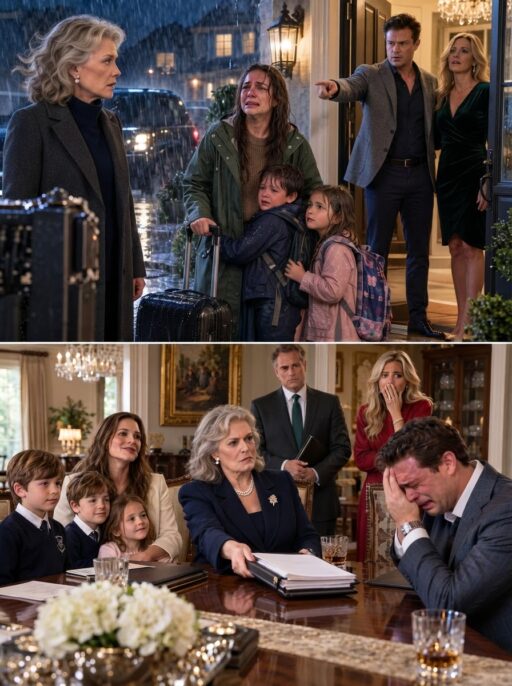
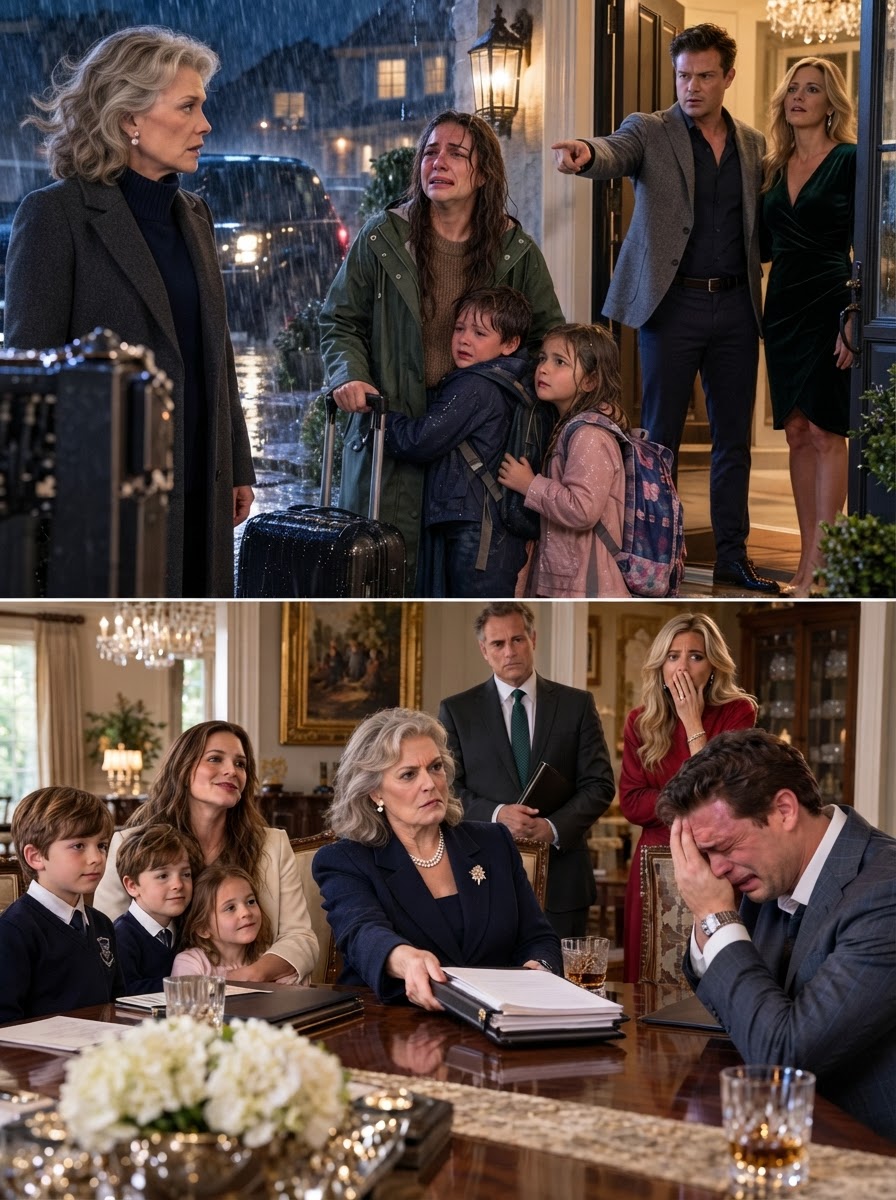

Meanwhile, Claire was slowly rebuilding her life with Lily and Noah in their temporary rented home. Her attorney had secured financial support and access to funds while the divorce proceedings continued, allowing her to concentrate on giving the children a stable routine.
Lily still became anxious whenever her father raised his voice during telephone conversations. Noah occasionally asked whether they would have to leave their new home in the middle of the night, and each question reminded me how deeply Daniel’s actions had affected them.
“You’re safe here, sweetheart. Nobody is going to put you outside again.”
Claire worked hard to reassure the children, even when she was struggling with her own disappointment. I admired her determination because she never used their father’s behavior as an excuse to make them feel responsible for the marriage ending.
Daniel’s professional troubles continued as the investigation into his company’s finances progressed. The delayed warehouse transaction had damaged his standing with his business partners, and the questionable loans and transfers were now being examined through formal channels.
Without his management position, Daniel no longer enjoyed the income and influence he’d once taken for granted. He had spent years surrounding himself with expensive possessions, but those luxuries offered little comfort when his financial decisions came under scrutiny.
Vanessa initially remained beside him, insisting that their relationship was stronger than the problems surrounding them. Yet as disputed accounts were frozen and Daniel’s financial situation deteriorated, her enthusiasm for their future together began to disappear.
Three months after the confrontation in my dining room, Daniel learned that Vanessa had obtained credit in his name. By then, she had vanished from his life, leaving him to deal with another financial problem while attorneys and police handled the matter.
When I heard what had happened, I felt neither triumph nor satisfaction. Vanessa’s disappearance was another consequence of the choices Daniel had made, and I knew that rescuing him from every setback would only allow him to avoid confronting those choices.
I continued helping Claire where I could, but I was careful not to replace one form of dependence with another. She deserved the opportunity to regain control of her own future, and I wanted her children to see their mother building a stable life through her own efforts.
Six months after the storm, Claire found a modest house near Lily and Noah’s school. The neighborhood was quieter, the rent was manageable, and the children were delighted that they could remain close to their friends.
I offered to help with the deposit, but Claire insisted that we document the money as a loan. She explained that after years of having her financial security controlled by Daniel’s decisions, she wanted to know she could support herself.
“I need to stand on my own two feet. I don’t want to spend the rest of my life depending on someone else.”
“You already are, Claire. Accepting a little help doesn’t change that.”
We signed a simple repayment agreement, and I watched her begin arranging furniture in a home that finally felt like hers. Lily chose the bedroom closest to the garden, while Noah announced that his room needed shelves for his toy dinosaurs.
Daniel continued seeing the children under a court-approved arrangement. His visits were quieter than before, and the expensive watch I’d given him when he became a partner was no longer on his wrist.
I didn’t ask what had happened to it. Some possessions become reminders of the life a person has lost, and I suspected Daniel had finally begun to understand that appearances couldn’t replace trust.
One Sunday, he appeared unexpectedly on my porch while a gentle rain fell across the neighborhood. Through the kitchen window, I could see Claire helping Lily and Noah prepare pancakes, their laughter drifting through the open doorway.
Daniel looked exhausted, and for the first time in months, there was no anger in his expression. He stood beneath the porch roof for several moments before speaking in a voice I barely recognized.
“Mom, I’ve lost everything.”
I looked at him carefully, remembering the night he’d stood on another porch and ordered his family into a thunderstorm. I still loved my son, but I could no longer pretend that love required me to protect him from the truth.
“No, Daniel. You lost what you treated as disposable.”
His eyes filled with tears, and he lowered his head without arguing. For the first time since the storm, I wondered whether he was finally beginning to understand what he’d done.
But understanding was only the beginning, and I wasn’t going to rebuild his life for him.
If Daniel wanted a different future, he would have to earn it himself.
When Daniel stood on my porch that rainy Sunday, I could see how much his life had changed. The expensive suits, confident smile, and polished arrogance that had once defined him were gone, replaced by a tired man who seemed unsure of where he belonged.
He had lost his management position, his marriage was ending, and Vanessa had disappeared after leaving him with additional financial problems. Yet the hardest consequence wasn’t losing his possessions or professional status, but discovering that the people he’d treated so carelessly no longer trusted him.
“Mom, I don’t know how to fix any of this.”
I looked through the kitchen window, where Claire was helping Lily pour pancake batter while Noah laughed at something his sister had said. Their happiness was fragile, but it had taken months of patience and reassurance to restore it.
“You start by accepting what you’ve done, Daniel. Then you make different choices, even when nobody is watching.”
He asked whether I could speak to his former business partners or help settle some of his debts. Years earlier, I would have immediately reached for my checkbook, convinced that protecting my son from failure was part of being a good mother.
But I finally understood that my repeated rescues had allowed Daniel to mistake financial support for freedom from responsibility. Helping him escape the consequences again would only teach him that nothing had truly changed.
“I won’t interfere with the investigations or pay your debts. Those are responsibilities you have to face yourself.”
Daniel lowered his eyes, and for a moment, I thought he might become angry again. Instead, he nodded quietly and asked whether he could spend more time with Lily and Noah.
I explained that any changes to his visits would need to follow the court-approved arrangements and consider the children’s well-being. Their trust couldn’t be demanded, and it certainly couldn’t be purchased with expensive presents.
“If you want them to feel safe with you again, Daniel, show them that they can depend on you.”
He left without arguing, and I watched him walk through the gentle rain toward his car. I couldn’t know whether he would become a better man, but I knew that his future choices had to belong to him.
Over the following months, Claire continued building the independent life she’d worked so hard to create. She found full-time employment, kept up with the repayment agreement we’d signed, and gradually became more confident managing her household.
Lily began enjoying school again, and Noah stopped asking whether someone might force them out of their home. Their laughter returned to ordinary family gatherings, replacing the anxious silence I’d grown accustomed to during the final years of Daniel’s marriage.
A year after the thunderstorm, I decided to sell the house where Daniel and Claire had once lived. Although it had been a valuable investment, I no longer wanted to hold on to a property associated with so much fear and betrayal.
I placed part of the proceeds into separate education accounts for Lily and Noah. Whatever happened between their parents, I wanted my grandchildren to have opportunities that couldn’t be taken away by someone else’s reckless decisions.
Claire thanked me when I told her about the accounts, but I reminded her that they were intended for the children’s future. She smiled and said she hoped they would grow up understanding the importance of kindness without confusing it with weakness.
Daniel continued repaying his debts through the appropriate legal channels. The process was slow and difficult, and I resisted the temptation to make it easier whenever I heard that he was struggling.
He also continued seeing Lily and Noah under the court-approved arrangement. I hoped those visits would eventually help him rebuild his relationship with them, although I understood that genuine trust would require consistent effort over time.
One afternoon, Lily asked why I hadn’t let her father keep living in the big house. I considered how to answer without burdening an eight-year-old with the complicated failures of the adults around her.
“Because having a home means more than owning beautiful furniture or expensive things. Everyone who lives there deserves to feel safe and loved.”
She thought about my answer for a moment before slipping her hand into mine. Then she asked whether we could make pancakes the following Sunday, and I promised that we could.
As the seasons changed, I found myself thinking less about Daniel’s betrayal and more about the quiet strength Claire had shown while rebuilding her life. She hadn’t allowed the worst night of her marriage to determine the rest of her future.
I was proud of her, and I was proud of my grandchildren for learning to laugh freely again. Their happiness reminded me that protecting a family sometimes meant refusing to protect the person causing it harm.
Whenever rain struck my windows, I remembered the night I’d arrived at Daniel’s house and found Claire standing barefoot in the storm. I could still picture Lily clutching her backpack, Noah shivering beside his mother, and Vanessa smiling in a robe that didn’t belong to her.
Daniel had believed that his position, money, and my unconditional generosity gave him the right to decide who mattered. He’d forgotten that a family’s strength isn’t measured by the authority of one person, but by the care its members show one another.
I hadn’t stopped loving my son, and I never would. But loving him no longer meant sacrificing everyone else to keep him comfortable.
That storm hadn’t destroyed our family.
It was the night we finally stopped allowing one man’s cruelty to define it.