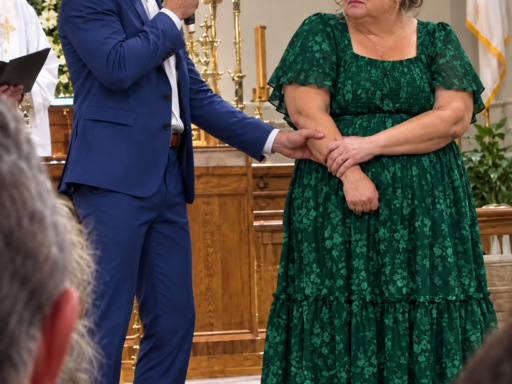


I hugged her back, remembering the frightened seventeen-year-old girl she’d welcomed into her home. Those words meant almost as much as the promise she’d made when I stood outside my parents’ house with nowhere to go.
After graduation, I accepted my first engineering position and began developing practical experience in industrial systems. I became particularly interested in improving energy efficiency for manufacturing facilities, an area where innovative engineering could help companies reduce waste and operating expenses.
Three years later, I decided to establish my own company specializing in industrial energy-efficiency solutions. Starting a business was intimidating, but Eleanor encouraged me to approach the opportunity with the same determination I’d shown throughout university.
That was when I discovered something surprising about her background. Eleanor had spent decades working as an accountant and had carefully invested her savings, developing considerable financial knowledge without ever boasting about it.
She wasn’t extraordinarily wealthy, but she understood budgeting, business projections, and financial risk better than many professionals I’d encountered. She helped me evaluate contracts, prepare realistic forecasts, and recognize investors whose proposals could leave me vulnerable.
With her guidance, my company gradually secured contracts with several major manufacturing clients. By the time I turned twenty-five, I employed thirty-two people and had built a business that was growing steadily.
My parents knew almost nothing about my accomplishments, and I preferred to keep it that way. Eleanor, however, celebrated every milestone as though it were her own.
Then, just as my life seemed to be finding its balance, Eleanor became seriously ill. During one hospital visit, she held my hand and told me there was something important she had kept from me.
“Sarah, I’ve made arrangements for what happens after I’m gone. There’s something you need to know.”
I sat beside Eleanor’s hospital bed, holding her hand as she explained the arrangements she’d made for the future. Although her voice was weaker than usual, she spoke with the same calm determination that had carried me through the most difficult years of my life.
Several years earlier, Eleanor had revised her estate plan to leave me her small white house and whatever savings remained after her death. She explained that she wanted me to have the security she’d spent her life building.
“Eleanor, I don’t need your house. You’ve already given me more than I could ever repay.”
“I know, sweetheart. That’s exactly why I trust you with it.”
I tried to argue, but Eleanor gently reminded me that her decision wasn’t about money. She wanted the home where I’d found safety at seventeen to remain with someone who understood what it represented.
Six months later, Eleanor passed away peacefully. Losing her was more painful than anything I’d experienced since leaving my parents’ house, because she had become the mother I’d always wished I’d had.
Her funeral was small, attended by neighbors, former colleagues, and friends who remembered her generosity. My biological parents didn’t attend, although by then I had stopped expecting them to show up for anything important in my life.
After the funeral, I returned to Eleanor’s house whenever I needed somewhere quiet to remember her. I kept her favorite teacup beside the kitchen window and left the yellow curtains she’d chosen hanging above the sink.
Two months after her death, my assistant informed me that three unexpected visitors had arrived at my company’s headquarters. When she mentioned the surname Mitchell, I felt a sudden uneasiness that I hadn’t experienced in years.
I stepped into the reception area and found my father, mother, and younger brother waiting for me. Dad wore an expensive suit, Mom carried a designer handbag, and Tyler looked around the building with obvious curiosity.
“Sarah! Look at you! We’ve missed you so much!”
Mom hurried toward me with her arms open, but I remained where I was. Nine years had passed since they’d thrown me out, and none of them had contacted me during that time.
“Nine years is a long time to miss someone without making a single phone call.”
Dad gave an uncomfortable laugh and waved away my comment.
“Come on, Sarah. Every family has disagreements. There’s no reason to hold on to the past.”
Tyler examined the framed awards on the reception wall before looking back at me.
“So this company is actually yours? I guess you’re making pretty good money now.”
His question told me more about their visit than my mother’s sudden affection. They weren’t interested in my education, my accomplishments, or the woman who had helped me build this life.
I invited them into my office, determined to discover exactly what they wanted. Dad settled into a chair and began explaining that Mitchell Industrial Supply, the business he’d operated for twenty years, was experiencing temporary financial difficulties.
“We’re looking for a short-term investment to stabilize operations. Once business improves, we’ll pay everything back.”
“How much are you asking for?”
“Four hundred thousand dollars.”
I stared at him, astonished that he could request such an enormous amount after nearly a decade of silence. Before I could respond, Mom leaned forward with a reassuring smile.
“Besides, we heard that elderly woman left you her house. You could always use the property as collateral.”
The room seemed to grow colder as I realized they’d been investigating Eleanor’s estate. They knew enough about her inheritance to suggest risking the home she’d entrusted to me, yet they hadn’t even acknowledged her death.
“You want me to mortgage Eleanor’s house to save your business?”
Dad shrugged as though his request were perfectly reasonable.
“That woman only helped you because we raised you properly.”
I looked at the three people who had abandoned me at seventeen and understood that they still believed everything I possessed should somehow benefit them.
But there was something they didn’t know. Three months earlier, my company had uncovered troubling information about Mitchell Industrial Supply, including documents that used my name without my permission.
And the evidence was already waiting on my laptop.
My father sat across from me, apparently convinced that I would eventually agree to finance his struggling company. He had already asked for $400,000, and my mother had suggested using Eleanor’s house as collateral, as though the woman who rescued me had left behind nothing more than an asset they could exploit.
“We taught you how to be independent,” Mom insisted when I reminded her that they’d thrown me out at seventeen.
Tyler leaned back in his chair, looking thoroughly unimpressed.
“You’re rich now, Sarah. Stop acting like some helpless victim and help your family.”
I didn’t argue. Instead, I opened my laptop and pulled up a financial report that my company’s compliance department had prepared several months earlier.
“Before we discuss any investment, there’s something all three of you need to see.”
Dad smiled, evidently interpreting my willingness to discuss finances as a sign that I was reconsidering.
“Good. I’m glad you’re finally being reasonable.”
I turned the laptop toward him, and his expression changed immediately. Displayed on the screen was a detailed assessment of Mitchell Industrial Supply, the company he’d operated for twenty years.
Three months earlier, his business had approached mine about a potential equipment contract. Before approving any major commercial agreement, our compliance team routinely examined prospective partners’ financial stability and business practices.
The investigation had uncovered unpaid suppliers, overdue loans, and revenue projections that appeared significantly exaggerated. Those findings were concerning, but another discovery had troubled me far more.