

“People kept making comments about you, and I was tired of dealing with it.”
Emily went completely still, her eyes filling with tears as the meaning of his words settled over her. Ryan quickly attempted to soften the statement, but she’d already heard what he’d been trying not to admit.
“You were tired of dealing with people laughing at me, so you decided I was the one who needed to change.”
He reached across the table, attempting to take her hand, but Emily pulled away. She told him she’d spent months believing that if she became prettier, he would finally be proud to introduce her to his friends again.
Ryan tried to reassure her that he still loved her, yet he offered no explanation for the jokes or the pressure she’d felt. His silence became increasingly painful as Emily realized that the person she’d trusted most had helped convince her that her appearance was a problem.
“I can’t stay with someone who laughs at me behind my back and tells me he loves me to my face.”
Ryan apologized and asked her to reconsider, but Emily stood and told him their relationship was over. I followed her out of the lounge without interfering, knowing she’d made a difficult decision that needed to belong entirely to her.
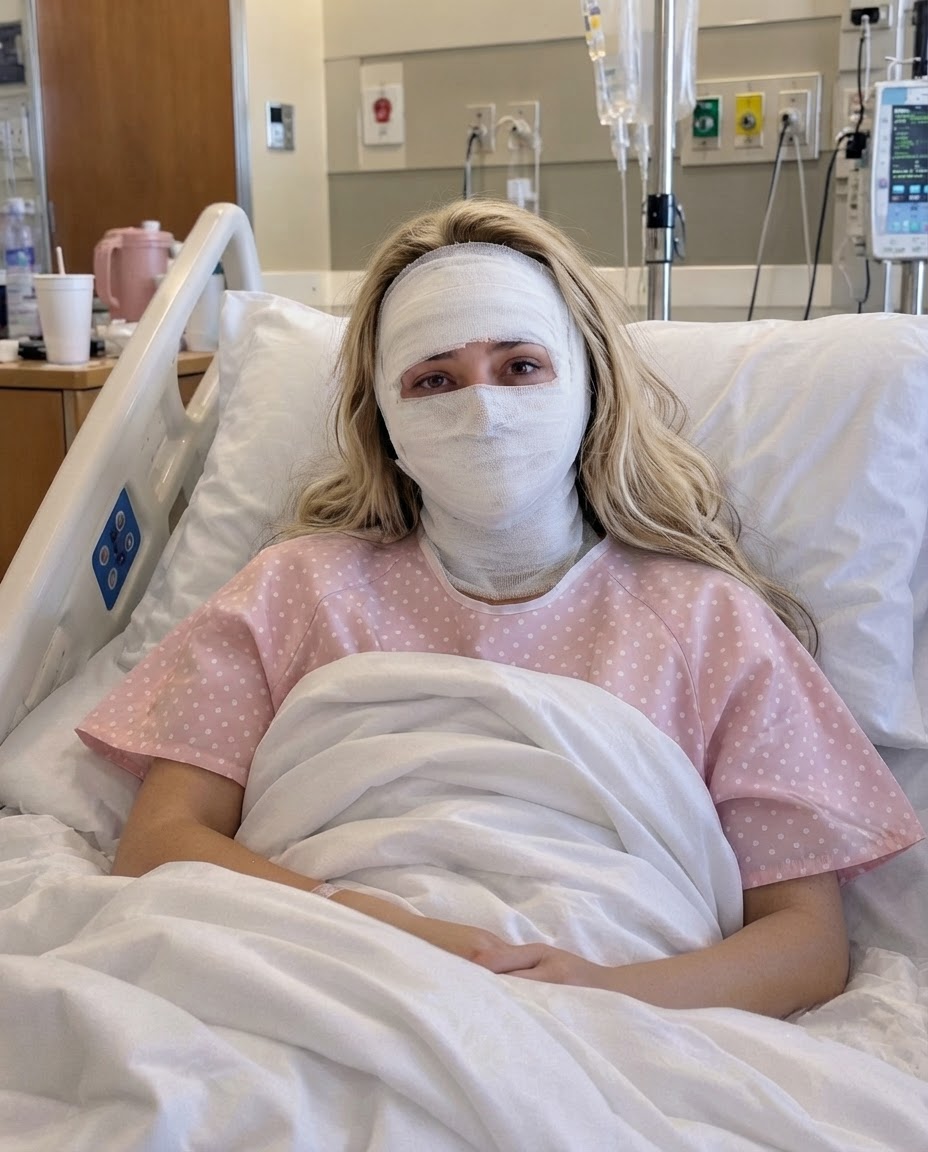
Once we returned to our room, Emily collapsed against my shoulder and cried until she could barely speak. I held her carefully, mindful of her healing face, and waited while she gathered the courage to tell me something she’d kept hidden.
“Mom, I thought Ryan was going to leave me if I didn’t have the surgery.”
She explained that before booking the operation, she’d asked whether he would still love her if she never changed her appearance. Ryan had assured her that he loved her, but he’d also complained that her insecurity was damaging their relationship and suggested she needed to do something about it.
Emily had interpreted those words as a warning that their relationship depended on her becoming someone different. She’d convinced herself that spending $24,000 was the only way to keep the person she loved from eventually abandoning her.
I finally understood why she’d taken such a frightening financial risk and invented a medical emergency to obtain my help. She hadn’t simply wanted strangers to find her attractive; she’d been desperate to regain the affection and approval she believed she was losing.
During the following weeks, I stayed close while Emily continued recovering and began rebuilding her independence. We established a realistic budget, and she agreed to resume her part-time campus job once her doctor cleared her to return.
I also encouraged her to seek support beyond our conversations, because the humiliation she’d experienced wouldn’t disappear merely because Ryan was gone. Emily arranged counseling through her college and began attending her scheduled medical follow-ups.
She eventually contacted Maya to apologize for believing Ryan’s accusations and ending their friendship. Maya accepted the apology, although both young women understood that rebuilding their trust would take time.
One evening, Emily told me that she was beginning to understand how much she’d allowed other people’s opinions to determine her choices. She admitted that the surgery hadn’t magically erased her insecurity, and she was frightened that she might never feel comfortable with her reflection.
I reminded her that emotional recovery wouldn’t necessarily follow the same schedule as physical healing. She needed time to understand what had happened without feeling pressured to decide immediately whether she regretted the operation.
Several weeks later, Emily came home for a weekend visit, with most of her bandages removed and some swelling still visible. The following morning, I found her standing in front of the bathroom mirror, studying her reflection with an expression I couldn’t quite read.
She noticed me in the doorway and hesitated before asking a question that made my heart ache.
“Mom, do you think I ruined my face?”
I stood in the bathroom doorway, watching Emily examine her reflection with an uncertainty that no amount of reassurance could immediately erase. Most of the bandages had been removed, although her face was still healing, and I could tell she was searching my expression for a judgment she was almost afraid to hear.
“Mom, do you think I ruined my face?”
I walked toward her and gently rested my hand on her shoulder, taking care not to touch the areas that were still tender. She had already endured months of humiliation, a painful breakup, and the consequences of a decision she’d made while desperately seeking someone else’s approval.
“No, sweetheart. I don’t think you’ve ruined your face.”
Emily studied my expression as though she suspected I was saying whatever a mother was supposed to say. I explained that her appearance was still changing as she recovered and that my greatest concern had never been whether I approved of the results.
What frightened me was how thoroughly she’d come to believe that her original appearance made her unworthy of affection. I wanted her to understand that no surgical procedure could determine whether she deserved kindness, respect, or a relationship with someone who genuinely valued her.
“I thought I’d wake up after surgery and finally feel beautiful,” she admitted.
“Do you feel that way now?”
She considered the question for several seconds before shaking her head. Sometimes she liked what she saw in the mirror, but then she remembered Ryan’s comments and wondered whether the people who’d mocked her would finally approve.
I told her that those memories wouldn’t disappear simply because her face had changed. The bullying had wounded her confidence, and Ryan’s betrayal had made those wounds deeper by convincing her that love depended on meeting someone else’s expectations.
Emily lowered her gaze and admitted that she still didn’t know how she felt about the surgery itself. She worried that regretting the decision would make her feel worse, but she was equally afraid of pretending she was happy with something she’d done for the wrong reasons.
“You don’t have to decide today whether you regret it. You’re allowed to take time to understand how you feel.”
She leaned against me, and I wrapped my arms around her as carefully as I could. For a while, neither of us spoke, and I was grateful that she finally seemed comfortable being vulnerable without worrying that I would dismiss her feelings.
Eventually, Emily asked whether I wished she’d never undergone the operation. I thought about the frightening phone call, the four-hour drive, and the overwhelming relief I’d felt when I discovered she wasn’t actually suffering from a life-threatening heart condition.
“I wish you hadn’t felt that changing your face was the only way to be loved. And I wish you’d trusted me enough to tell me what was happening.”
Tears filled her eyes as she apologized again for claiming she was dying. She said she’d been so frightened of losing Ryan and so desperate to escape the bullying that she’d convinced herself the lie was the only way to obtain the money.
I listened without interrupting, although remembering that journey still made my chest tighten. I’d spent hours imagining the possibility of burying my daughter, and no explanation could erase the terror she’d deliberately caused.
“Emily, I understand that you were suffering, but you used my fear of losing you to get financial help. I need you to understand why that hurt me so deeply.”
“I do, Mom. I was wrong, and I’m so sorry.”
I told her that forgiveness didn’t mean pretending the deception had never happened. Rebuilding trust would require honesty, especially when she was frightened, embarrassed, or facing consequences she didn’t know how to manage.
Emily promised she would never invent another medical emergency to manipulate me into helping her. She also acknowledged that her financial responsibilities hadn’t disappeared simply because we’d discovered how badly Ryan had treated her.
We’d already established a budget that accounted for her living expenses, tuition needs, and monthly payments toward the surgery. I was willing to help her through temporary difficulties during recovery, but I wouldn’t quietly assume the debt she’d chosen to take on.
At first, setting those boundaries had felt uncomfortable because I knew how vulnerable she was. Over time, however, I realized that helping Emily become responsible for her decisions was more valuable than rescuing her from every consequence.
She had agreed to return to her part-time campus job once medically cleared and was making arrangements to manage her expenses more carefully. We continued discussing her finances openly, without threats, guilt, or the frightening stories she’d once believed were necessary to obtain my support.
Her emotional recovery was progressing more slowly, but there were encouraging signs. Emily had begun attending counseling sessions through her college, where she was learning to separate her own sense of worth from the opinions of people who had treated her cruelly.
She’d also started rebuilding her friendship with Maya, who had accepted her apology without pretending their separation hadn’t been painful. Neither young woman expected everything to return to normal immediately, but they were willing to begin again.
That morning, before we went downstairs for breakfast, Emily showed me a message she’d drafted for Maya. She was suggesting they meet for coffee when she returned to campus, and she wanted to know whether it sounded sincere without being overly emotional.
I read the message and told her it sounded like someone who genuinely wanted to repair a friendship. Emily smiled faintly, then placed her phone on the counter and turned toward the mirror one more time.
“Mom, there’s something I’ve been thinking about.”
I waited while she searched for the right words, noticing that she no longer seemed quite as frightened of saying something I might disagree with. When she finally spoke, her voice was quiet but steady.
“I don’t know if I regret the surgery itself. But I regret why I did it.”
Her words stayed with me because they showed how much she’d begun to understand about the choices she’d made. She wasn’t pretending the operation had never happened or demanding that everyone approve of it, but she was finally questioning the fear that had driven her decision.
I kissed the top of her head and reminded her that she had time to heal physically and emotionally. Her future didn’t have to be defined by Ryan’s cruelty, her classmates’ mockery, or the worst lie she’d ever told me.
We went downstairs together, and for the first time since that terrifying phone call, our conversation wasn’t dominated by medical bills, betrayal, or arguments about the past. Emily talked about her classes, her plans to return to work, and the possibility of reconnecting with friends she’d avoided for months.
I knew there would still be difficult days, particularly when she encountered people who remembered the photograph or when her confidence faltered. But she was learning that she could face those moments without changing herself to satisfy someone else’s expectations.
As I watched her across the breakfast table, I thought about how close I’d come to misunderstanding the entire situation. My daughter had lied about needing heart surgery, yet the deepest injury she’d suffered had nothing to do with a physical illness.
Someone she loved had made her believe that being accepted required changing the face she’d been born with. And in trying desperately to keep his affection, she’d endangered her education, damaged our trust, and subjected herself to an operation she hadn’t been emotionally prepared to evaluate.
I couldn’t undo those choices, and I couldn’t promise that forgiveness would make everything easy again. What I could do was hold her accountable while making sure she never confused my disappointment in her actions with a lack of love.
Emily looked up from her breakfast and smiled at me, still a little uncertain but no longer hiding her face. I smiled back, grateful that we were finally learning how to speak honestly about the things that frightened us.
My daughter had never needed heart surgery, but she’d been carrying a heartbreak I hadn’t recognized, and forgiving her meant helping her heal without pretending her lie hadn’t hurt us both.
And I still wonder what another mother would have done in my place. Could you forgive your daughter for making you believe she was dying, knowing how deeply she’d been suffering?