
The night before our Caribbean cruise, my son sent me a text that changed everything. “Mom, you’re not coming anymore. Megan only wants her family there.” I’d already paid for my cabin, upgraded their vacation package, and covered half my grandchildren’s tickets. Then he sent another message asking me to pay the remaining balance for the children’s excursions.
My name is Eleanor Henderson. I’m sixty-eight years old, and until that evening, I believed my son Patrick still saw me as his mother rather than the person responsible for paying his bills.
My husband, George, and I had been married for thirty-eight years before cancer took him six years ago. Together, we’d saved for decades to purchase a beautiful lake house in North Carolina, where Patrick spent his childhood summers fishing with his father and learning to swim from our wooden dock.
After George died, the property became mine. But somewhere along the way, Patrick and his wife, Megan, began referring to it as their future home, as though my ownership were merely a temporary arrangement.
For years, I’d ignored the comments because I didn’t want to create tension. I also continued helping them financially, especially after Patrick’s business struggled and Megan complained that raising two children had become too expensive.
Their SUV payments, school activities, phone bills, and countless household expenses gradually found their way onto my credit card.
I kept telling myself that family helped family.
Then came the cruise.
Three months earlier, Patrick had suggested we take a Caribbean vacation together. He said the children wanted to spend more time with me, and I was delighted by the idea of making memories with them.
I paid for my own cabin and contributed generously toward the family’s expenses. When Patrick asked whether I could cover an upgraded dining package, I agreed without hesitation.
Now, less than twenty-four hours before departure, I was being told I wasn’t welcome.
I called him immediately.
“Patrick, what do you mean I’m not coming?”
He sighed as though I were making an unreasonable complaint.
“Mom, Megan wants this trip to be about her parents and the kids. It’s nothing personal.”
“Then why did you invite me?”
“Plans change. Please don’t make this difficult.”
I looked at the suitcase sitting beside my bedroom door. I’d packed the blue dress George once said made me look twenty years younger, along with a small photograph of him I planned to carry during the trip.
“And you still expect me to pay for the excursions?”
“Well, yes. They’re already linked to your card. The kids shouldn’t lose out because you’re upset.”
I ended the call before I said something I’d regret.
The next morning, Megan posted a photograph from the airport. She stood beside Patrick, her parents, and my grandchildren, all wearing matching tropical shirts.
The caption read:
“Family only. Exactly how it should be.”
I stared at those words for a long time.
Then I opened my banking application.
I removed my payment information from the excursions and canceled the recurring payments I’d been covering for Patrick’s household. I made sure the changes affected future charges rather than disputing legitimate expenses I’d already authorized.
By nine o’clock, I had finished.
For the first time in years, my monthly budget reflected only my own obligations.
Then I called my realtor, Susan.
Two weeks earlier, a retired couple had offered to purchase my lake house. I’d declined because Patrick insisted that selling it would destroy our family’s legacy.
“Susan, is the Henderson offer still available?” I asked.
“It is, Eleanor. They actually increased it yesterday.”
My heart began pounding.
“How quickly could we close?”
“If the title work and inspections are already in order, we may be able to finish in about eight days.”
I glanced at the cruise itinerary on my kitchen counter.
Patrick and Megan wouldn’t return for nine days.
“Tell them I’m interested.”
That afternoon, Susan arrived with the updated paperwork. We reviewed the offer, the closing schedule, and the arrangements for transferring possession after I removed my belongings.
I signed the purchase agreement.
Three days later, Patrick texted from the ship.
“Mom, your card isn’t working for the excursions. Can you fix it?”
I replied, “You’ll need to use your own card.”
Megan immediately sent an angry message accusing me of punishing the children.
I didn’t answer.
Instead, I began packing.
While clearing the closet in Patrick’s old bedroom, I discovered a thick folder tucked behind several boxes of childhood photographs.
Across the front, Megan had written:
HENDERSON LAKE HOUSE — FUTURE RENOVATIONS.
Inside were plans for a new kitchen, an expanded primary bedroom, and a private office overlooking the water.
The estimates were detailed, and several pages contained handwritten notes about which walls would be removed.
But it was the final page that made my hands tremble.
Beneath a photograph of my bedroom, Megan had written:
Once Eleanor is gone, this will finally be ours.
I sat on the edge of the bed, holding the folder.
My son hadn’t merely assumed he would inherit the house someday.
He and his wife had already begun planning their lives around my absence.
And I was beginning to wonder how much Patrick knew about those plans.
By the fifth day of Patrick’s cruise, I had packed thirty-eight years of memories into cardboard boxes. Every room in the lake house reminded me of George, but the hardest part wasn’t leaving the home we’d built together. It was accepting that our son had come to see it as something he was entitled to take.
My realtor, Susan, helped coordinate the move while the buyers completed their final preparations. Claire and Daniel Hart were a retired couple who had fallen in love with the lake during a visit the previous spring.
They wanted somewhere peaceful to spend their retirement, and their excitement reminded me of how George and I had felt when we first bought the property.
I rented a comfortable two-bedroom apartment in town, close enough to the lake that I could still visit my favorite walking trails. It was smaller than my old home, but for the first time in years, I was making decisions without worrying about Patrick’s reaction.
Before leaving, I carefully separated the belongings my son had stored in his childhood bedroom. I arranged for everything to be delivered to a secure storage facility, prepaid the first month, and sent Patrick the address and collection information.
He never acknowledged the message.
Instead, he texted about his SUV payment.
“Mom, the automatic payment didn’t go through. Did something happen to your account?”
“No,” I replied. “I’ve stopped paying your personal expenses.”
His response arrived almost immediately.
“Seriously? You’re doing this while we’re on vacation?”
I looked around the nearly empty kitchen.
For ten years, I’d paid bills he could have managed himself. Yet the moment I stopped, he behaved as though I’d broken a promise rather than ended an arrangement that was draining my retirement savings.
“I’m no longer covering those expenses, Patrick. You’ll need to make your own arrangements.”
He didn’t reply.
Two days later, the sale closed.
I signed the final documents at Susan’s office, collected the proceeds, and handed over the keys. The house I’d once imagined keeping forever now belonged to people who had purchased it with their own money.
That evening, I sat in my new apartment, looking through photographs of George and me standing beside the lake. I cried for the memories I was leaving behind, but I didn’t regret my decision.
The following morning, Patrick’s cruise ship returned to port.
At eleven seventeen, my phone began ringing.
I knew what had happened before I answered.
“Mom, there’s something wrong with the house.”
His voice was strained.
“What seems to be the problem?”
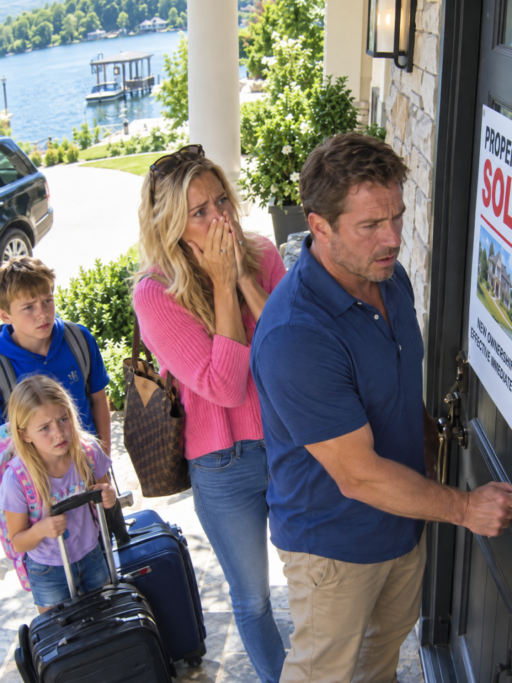
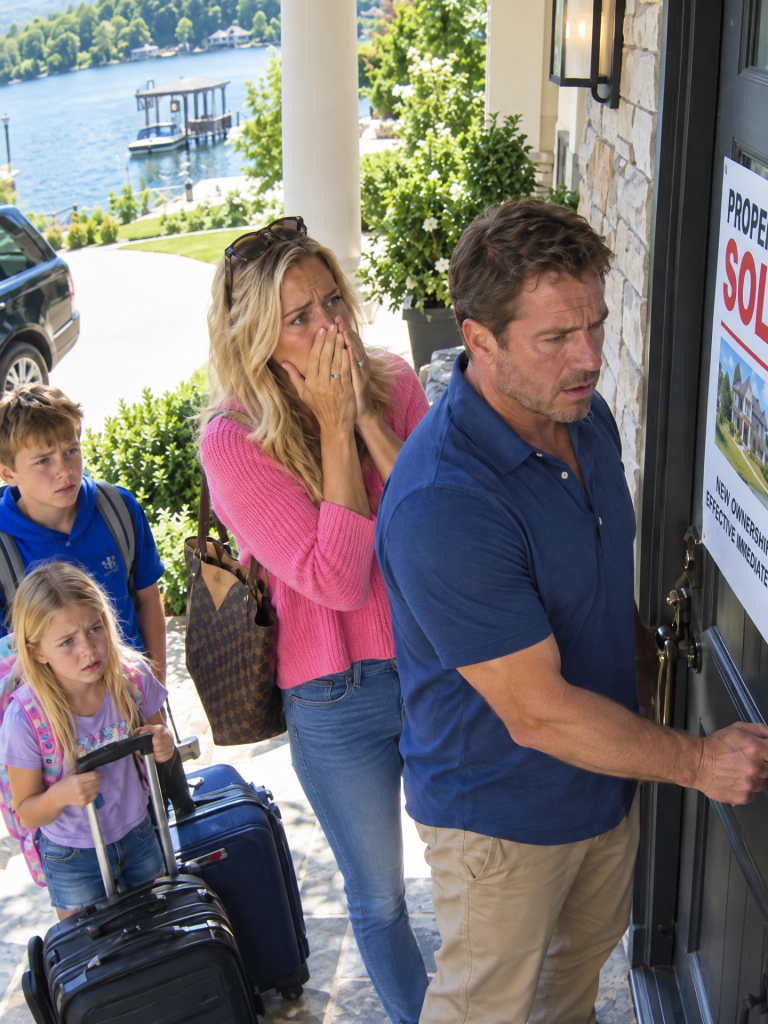
“Our keys don’t work. There’s a sign on the window saying it’s private property.”
I closed my eyes.
“That’s because I sold it, Patrick.”
Silence filled the line.
Then he laughed nervously.
“Okay, Mom. You’ve made your point. Now tell me what’s going on.”
“I’m telling you exactly what happened. The sale closed yesterday, and the new owners have possession.”
“You sold Dad’s house?”
“It was my house.”
“You knew we were coming home today!”
“Yes.”
His breathing grew louder.
“Where are we supposed to go?”
“Your own house, Patrick. Or you can make arrangements with Megan’s parents.”
I heard Megan demanding the phone in the background.
A moment later, her furious voice replaced his.
“Eleanor, you had no right to sell that property without discussing it with us!”
“I was the legal owner, Megan.”
“Patrick was supposed to inherit it!”
“An expectation isn’t ownership.”
She gave a sharp, disbelieving laugh.
“We’ve spent months planning renovations. Do you have any idea how much work I’ve put into that house?”
“I found your folder.”
The silence that followed was immediate.
“What folder?” she asked.
“The one describing what you planned to do with my bedroom once I was gone.”
Patrick spoke in the background.
“Megan, what is she talking about?”
I heard their voices overlap, followed by Megan insisting that I’d misunderstood an innocent renovation estimate.