

No diapers.
No questions about her feeding.
He asked whether we could speak privately.
I said no.
The flowers stayed on the table after he left. Mrs. Rivera asked what I wanted done with them.
“Give them to someone who likes lilies.”
She took them to a friend recovering from knee surgery.
As the financial disclosures progressed, Mark learned the approximate value of the inheritance.
His next message was three paragraphs long.
He wrote about our wedding.
The years we had invested.
The family Grace deserved.
He said he finally understood how much pressure I must have been under.
I forwarded it to my attorney and went back to warming a bottle.
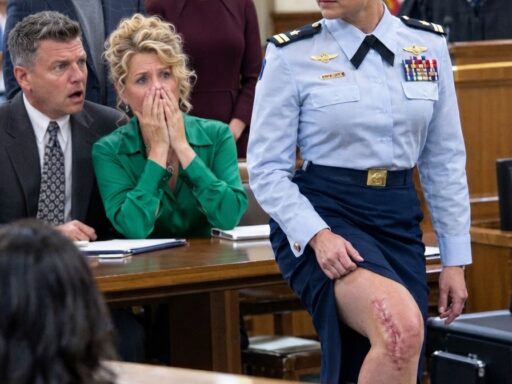
Weeks later, we attended a settlement conference.
I had slept badly the night before. There was a spare blouse in my bag because Grace had developed a talent for ruining one just before I left the house.
Mark looked at me as though we were about to negotiate a misunderstanding.
“Twenty million dollars, Anna.”
I waited.
“You let me worry about bills while you were sitting on that.”
“We had been paying our bills from our salaries. I had asked you for time to understand the trust.”
“You could have told me.”
“Yes,” I said. “I could have.”
He leaned forward, encouraged.
“If you’d told me everything, none of this would have happened.”
I looked at his hands on the table.
Those were the hands that had picked up my hospital bag.
“You knew I was in labor,” I said. “What else did you need to know?”
His mouth opened.
Then closed.
“I was angry.”
“I know.”
“I didn’t think you’d actually leave.”
There it was.
Not a confession rehearsed for an apology.
Just the truth, spoken because he still believed it explained him.
He thought I would stay.
He thought I would find a way to get to the hospital, have our baby, and come home willing to fix what he had broken.
“And Elise?” I asked.
He looked toward his attorney.
“That was complicated.”
“Bringing her to my room wasn’t.”
He rubbed his forehead.
“I wanted you to realize you could lose me.”
For years, that possibility had frightened me.
Sitting across from him, I remembered Mrs. Rivera fastening my seat belt while he remained in the doorway.
“I realized it,” I said.
The meeting continued.
We discussed the house, ordinary marital assets, debts, and arrangements for Grace. My attorneys handled the financial questions through records and negotiation.
The inheritance was not handed to Mark because he called it family money.
Nor did my rank allow me to decide everything about our daughter.
There was work to do, and I did it.
Separately, I submitted my account of Elise’s conduct through the appropriate channel. She eventually provided messages confirming that she and Mark had been involved before Grace was born.
In one, he had written that I would “come around” once I understood he was serious about leaving.
Elise sent me a brief apology through counsel.
She said she had believed his account of our marriage.
But she had known who I was.
She had known I had just delivered his child.
I acknowledged receiving the message.
I offered nothing else.
Margaret wrote to say I was destroying the family over a terrible week.
I put her letter beside the emails showing how long she had been arranging my signature.
Then I closed the folder.
PART 5 — THE PERSON WHO PICKED UP THE BAG
The divorce was final more than a year after Grace was born.
By then, she had four teeth, a fierce attachment to a stuffed rabbit, and a habit of waving at people who weren’t looking at her.
Our former house had been sold.
The proceeds and our other marital finances were resolved in the settlement. The trust remained separately administered for my benefit; Mark had never received authority to act for me.
We had a written parenting plan.
Grace lived primarily with me, and her time with her father followed the agreed schedule. We used a parenting app for arrangements, which meant I could answer questions about pickup times without also answering questions about whether I missed him.
Sometimes Mark was punctual.
Sometimes he needed reminders.
I kept records and followed the plan.
I wanted Grace to have whatever healthy relationship with her father he was willing to build. I could leave room for that without inviting him back into my life.
Margaret’s messages about reconciliation eventually stopped.
Elise received a formal reprimand after the review of her conduct and was reassigned. I learned the outcome through the official process.
There was no ceremony.
No room full of people watching her lose.
By then, I was more interested in whether Grace would sleep through the night.
The money gave us options. I won’t pretend it didn’t.
I bought a comfortable house within a manageable drive of work. I arranged reliable childcare, took advice about the trust, and stopped worrying that one unexpected expense would undo my plans.
But I still had to learn how to be alone after years of explaining myself to someone.
I still reached for my phone sometimes when something funny happened, then remembered Mark wasn’t the person I wanted to tell anymore.
Recovery was ordinary and uneven.
A good meeting.
A difficult bedtime.
A Saturday when I realized I had gone all morning without thinking about the divorce.
Mrs. Rivera came for dinner on Thursdays when her schedule allowed.
She insisted on bringing something, even when I told her not to.
Usually bread.
Once, an enormous watermelon.
“It was on sale,” she said, as if that explained why two adults and a baby needed twelve pounds of fruit.
Grace adored her.
She would hear Mrs. Rivera’s voice and start kicking before I even opened the door.
One afternoon, while sorting baby clothes for donation, I found the little sock from the kitchen floor.
It had been washed several times. The elastic was stretched, and a thread curled from the cuff.
I sat down with it in my hand.
I could still see Mark’s shoe beside it.
But I could also see Mrs. Rivera bending to pick it up.
I placed the sock in Grace’s keepsake box with her hospital bracelet and the card from General Hayes.
Underneath them was a birthday note my grandfather had written years before.
You always notice who needs a chair, Annie. Keep doing that.
I had forgotten the line.
I read it again, thinking of all the people who had quietly made room for me that year.
The nurse who sat while I cried.
The friend who checked the rental before I arrived.
The colleague who brought dinner and didn’t ask for the story.
Mrs. Rivera, who had answered the phone.
That Thursday, Grace was on my hip when the doorbell rang.
Through the window, I saw our neighbor standing on the porch with a loaf of bread tucked under one arm.
Rain dotted her glasses.
I opened the door and reached for her bag.
“You didn’t have to bring anything.”
“I know,” she said.
Grace leaned toward her, both arms out.
Mrs. Rivera laughed and handed me the bread.
For a moment, I stood there watching my daughter settle against the shoulder of the woman who had helped bring her safely into the world.
Then I stepped aside and let them in.
There was a place set for her at our table.