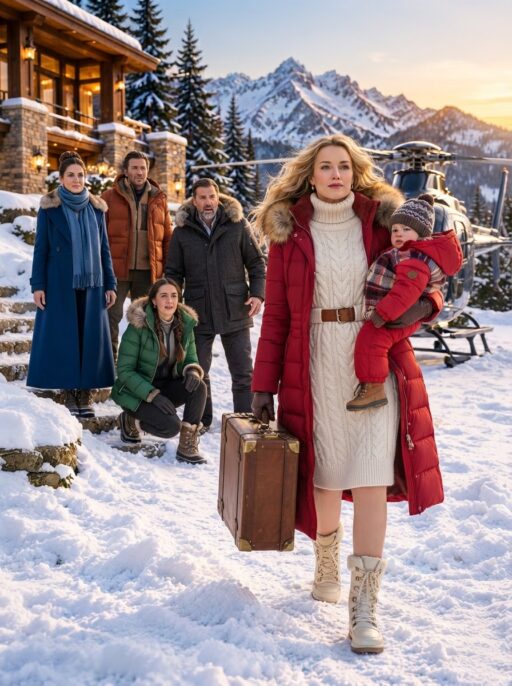
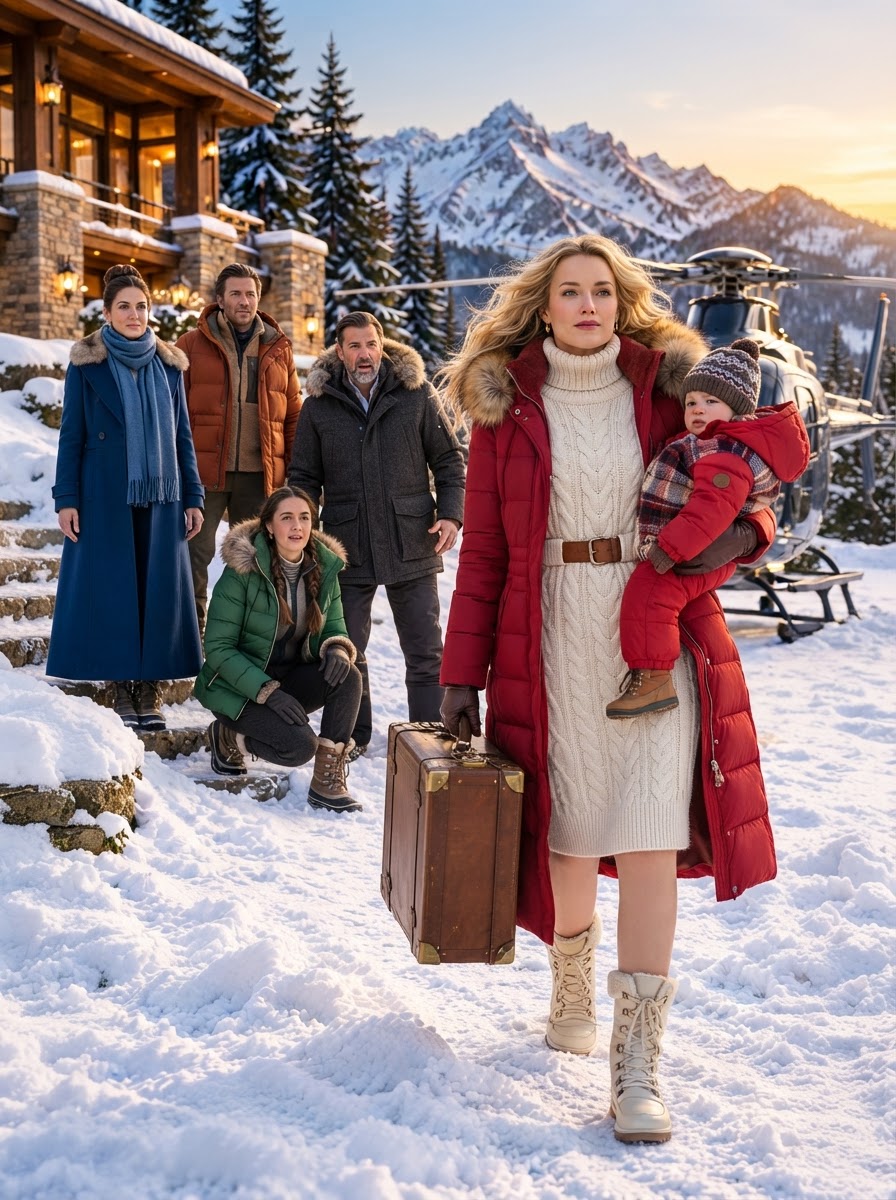

When the helicopter finally landed at a university hospital in Zurich, a pediatric intensive care team was waiting for us. They rushed Leo directly into treatment, leaving me alone in the corridor until a nurse eventually confirmed that his breathing had stabilized.
For the first time that night, I allowed myself to cry with relief.
Around two in the morning, my phone began ringing from an unfamiliar Italian number. I answered and immediately recognized Harper’s furious voice, accompanied by the sounds of traffic and heavy rain.
“Victoria! What have you done? Hotel security threw us out, and everyone watched!”
She explained that the Bulgari Hotel had refused to let them return to their suite after the gala. Their belongings had been brought downstairs, their room privileges had been canceled, and the wealthy aristocrat Harper hoped to impress had witnessed their humiliation.
Then she revealed that the auction house had reclaimed the Renaissance painting after receiving notification about the disputed payment. Instead of celebrating her entrance into European high society, Harper was standing outside a luxury hotel with her luggage, terrified that the authorities might investigate the transaction.
“You ruined everything!” she screamed. “They took my painting, and the Duke laughed at me!”
“You used my son’s emergency fund to buy it,” I replied. “I warned you that Leo needed that money to survive.”
My mother grabbed the phone and began demanding that I restore their credit cards and hotel reservation. She claimed they’d tried to find cheaper accommodations, but their payment methods were being declined, and the airline had informed them that their return tickets were no longer valid.
“Victoria, we’re stranded in Milan without any money! You cannot abandon your own mother!”
I listened to her complain about the cold rain and uncomfortable pavement, remembering how casually she’d dismissed Leo’s respiratory failure. She was frightened of spending one night without luxury, yet she’d expected me to accept the possibility of losing my child.
“Where was your concern for family when Leo was dying?” I asked. “You told me he was replaceable because he wasn’t related to us by blood.”
Beatrice immediately began making excuses, claiming that the auction had been a once-in-a-lifetime opportunity and that she’d never understood how serious Leo’s condition was. Harper interrupted repeatedly, demanding money for a hotel room and new flights to Chicago.
I told them that I would no longer finance their lives, including the expensive housing and vehicles they depended upon back home. Any future arrangements would be their responsibility, and I intended to resolve the disputed emergency funds through the proper financial and legal channels.
“But we’re your family!” Beatrice cried. “You can’t treat your own flesh and blood this way!”
“Family is about how you treat people, Mom,” I answered. “You made your choice when you decided a painting mattered more than my son.”
I ended the call and blocked their numbers, refusing to spend another moment arguing with them. Then I returned to Leo’s room, where the medical team had successfully removed his ventilator and replaced it with a simple oxygen mask.
His breathing was finally steady, and his small fingers curled around mine when I sat beside him. I stayed there until morning, grateful that the doctors had managed to save him.
Over the following days, Leo continued improving, and the hospital staff reassured me that he could recover with appropriate ongoing treatment. Meanwhile, my mother and sister were left to arrange their return from Italy without access to the money and privileges I’d always provided.
Six months later, I would learn just how far their downfall had gone, and how the money they stole had ultimately become the foundation of Leo’s future.
Six months after the nightmare in Switzerland, I sat on a bench in Chicago’s Millennium Park, watching Leo chase our newly adopted golden retriever across the grass. The autumn air was cool, and the trees were turning gold and crimson, but nothing mattered more to me than hearing my son laugh without struggling to breathe.
Leo had made a remarkable recovery after his emergency evacuation to Zurich. His doctors had developed a more effective asthma treatment plan, and he now carried a preventive inhaler wherever he went, allowing him to enjoy the ordinary childhood activities that had once seemed frighteningly uncertain.
While Leo recovered, I gradually learned what had happened to Beatrice and Harper after our final telephone conversation. Their humiliating departure from the Bulgari Hotel had been only the beginning of a financial collapse neither woman had ever imagined.
Without working credit cards or access to my money, they had spent two nights sleeping on benches at Milan’s central railway station. Their expensive clothing offered little protection from the cold, and several pieces of their designer luggage were reportedly stolen while they struggled to find somewhere safe to stay.
Eventually, they approached the American consulate and requested assistance returning to the United States. After signing agreements to repay emergency travel loans, they received basic economy tickets to Chicago, a considerable change from the first-class flights they’d always expected me to purchase.
By the time they landed at O’Hare International Airport, I’d already begun separating my finances and property from theirs. With legal assistance, I ended Harper’s occupancy of the luxury apartment I’d leased, arranged the sale of the condominium I owned where Beatrice had been living, and surrendered the expensive vehicles I’d been financing.
For years, they’d enjoyed the benefits of my career while treating my generosity as an obligation. Now they were responsible for finding their own housing, transportation, and employment, something neither had seriously considered necessary before.
Rather than accept those consequences, Beatrice and Harper hired an attorney and filed a civil lawsuit accusing me of financial abandonment, breach of contract, and emotional distress. They claimed that ending their financial support had caused unnecessary suffering and demanded compensation for the luxurious lifestyle they’d lost.
I responded by hiring an experienced litigation team and pursuing claims connected to the unauthorized use of the emergency fund. My attorneys presented the bank records, the disputed auction payment, and the medical documentation establishing exactly what was happening to Leo when the money disappeared.
The evidence also included the timeline of my desperate telephone call to Milan and the subsequent attempts to recover the funds. Faced with the possibility of further legal consequences, my mother and sister eventually agreed to negotiate a settlement rather than continue fighting in court.
Under the resulting agreement, they acknowledged their wrongdoing and accepted substantial financial repayment obligations. A portion of their future earnings would be directed toward reimbursing the missing emergency savings and compensating for the damage their actions had caused.
I arranged for the recovered money to be placed into an irrevocable trust for Leo, ensuring that it would support his medical care, education, and long-term security. The funds my mother and sister had treated as disposable spending money would now serve the purpose I’d intended from the beginning.
According to relatives who remained in contact with them, Beatrice and Harper eventually moved into a small apartment near the airport. Harper found work as a cashier at a discount clothing store, while my mother began working night shifts at an industrial bakery.
Their lives were difficult, but I no longer felt responsible for solving their problems. They had spent years depending on my income while refusing to respect the child who meant everything to me, and their choices had finally caught up with them.
As I watched Leo playing with our puppy, I opened my banking application and checked the balance of his trust fund. Regular repayments were gradually rebuilding the savings that had almost been lost to an extravagant painting.
Leo ran toward me with his cheeks flushed from the cold, proudly announcing that our puppy had finally learned to retrieve a tennis ball. I laughed, pulled him into my arms, and kissed the top of his head, grateful for the ordinary happiness we’d nearly lost.
“Mom, are you happy?” he asked.
I looked at his bright eyes and remembered the terrifying night when I thought I’d never hear his voice again.
“Very happy, sweetheart. Happier than I’ve been in a long time.”
He smiled and hurried back toward the puppy, leaving me to reflect on everything that had changed. I’d once believed that sharing someone’s blood created an obligation to endure cruelty, but Leo had taught me that genuine family was built through love, loyalty, and the willingness to protect one another.
Sending Harper that single dollar had marked the end of years of manipulation and financial dependence. It hadn’t merely ended my mother’s control over my life; it had allowed me to build a safer, more peaceful future for my son.
And as I watched Leo laughing beneath the autumn trees, I knew that choosing him over the family I’d been born into was the most important decision I would ever make.