
“I understand, Evelyn. But everyone suddenly seems interested in what I should do with my money.”
“Then don’t make any loans or financial promises while emotions are running high. And don’t sign anything without having it independently reviewed.”
I followed her advice and spent the following week meeting with my accountant, a tax specialist, and a financial adviser. I updated important documents, changed my banking passwords, and made certain nobody in my family could access my financial information.
I wasn’t opposed to helping people who genuinely needed assistance. But I refused to become an emergency fund for relatives who had barely shown interest in my happiness until they learned how much money I possessed.
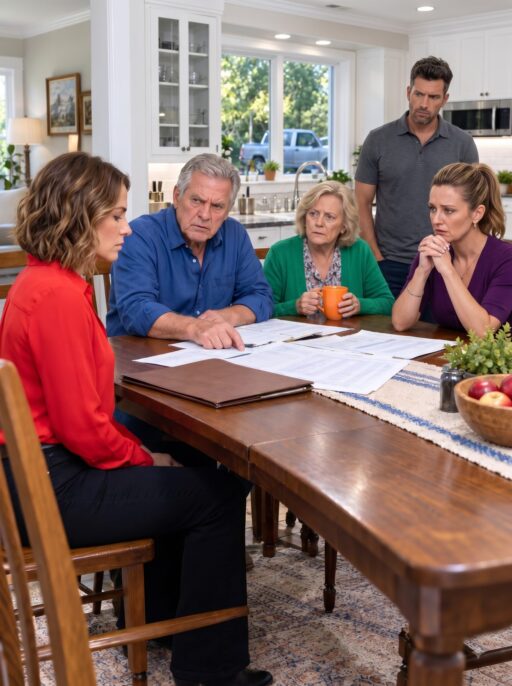
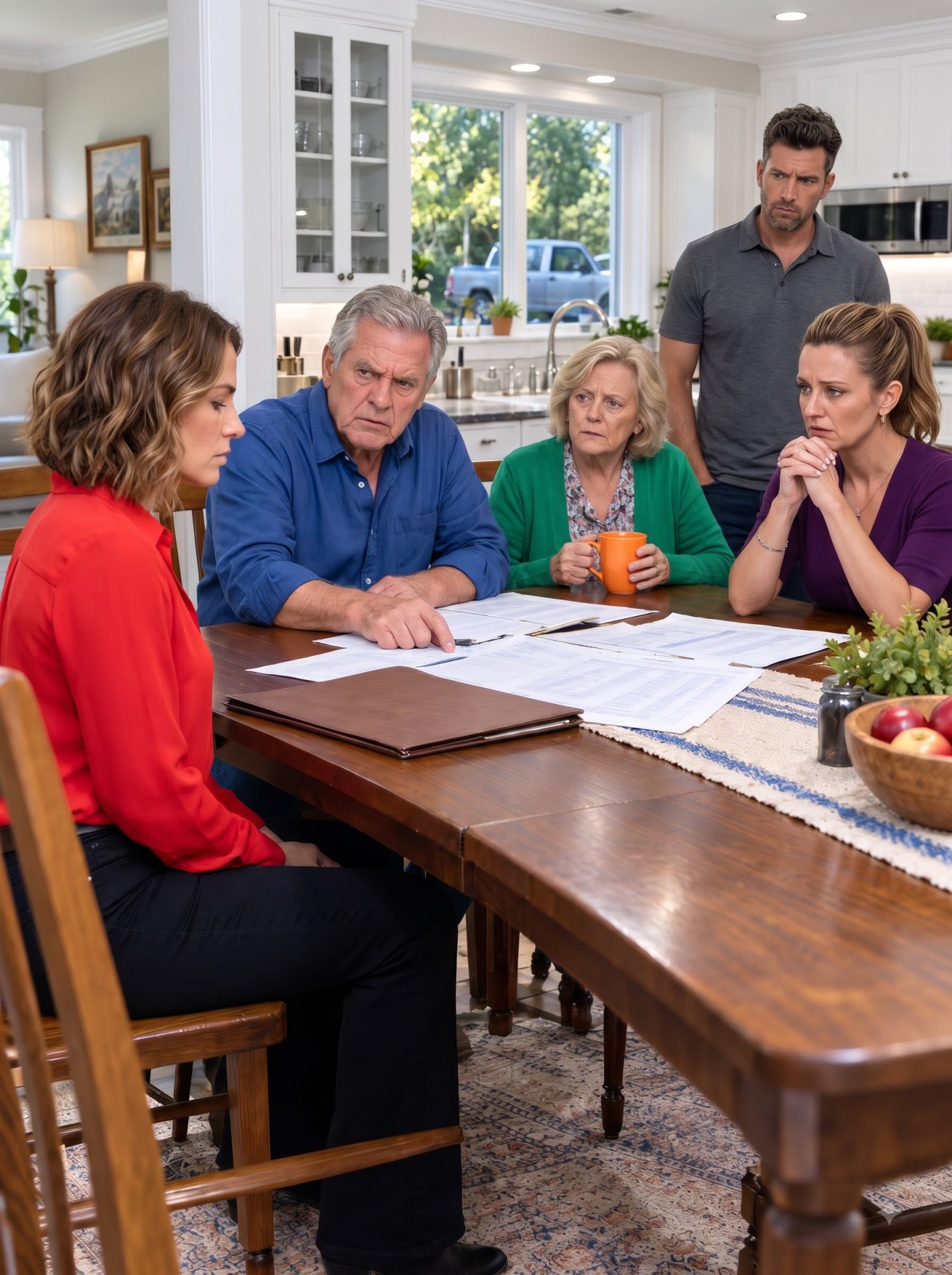
A week later, Dad invited me to visit, explaining that Ranata wouldn’t be there. When I entered the kitchen, Mom had already prepared coffee, and Dad was waiting beside a thick folder filled with documents.
He stood when he saw me and unexpectedly wrapped his arms around me. His shoulders trembled as he held me, and I realized he was crying.
“I’m sorry, Fay. I should have trusted you enough to ask about your life instead of believing what someone else told me.”
For years, I’d wanted my father to recognize that my old truck and worn-out clothes didn’t define my success. But standing there, I understood that what I’d really wanted was something simpler: for him to respect the person I was.
Dad admitted that he’d mistaken my practical lifestyle for evidence of financial hardship. He’d seen my muddy boots, long working hours, and aging pickup and assumed I was barely surviving.
“You shouldn’t have needed thirty-nine million dollars to prove you deserved our respect.”
Mom quietly began crying as Dad opened the folder. Inside were years of bank transfers and messages documenting the emergencies Ranata had invented to obtain money.
One message claimed my tractor required a replacement engine, prompting my parents to send Ranata $12,000. I remembered that particular month because I’d repaired the tractor myself for less than four hundred dollars.
Another request involved $18,000 for supposedly overdue property taxes, even though I’d already paid them. Then I discovered something that disturbed me even more: Ranata had claimed I’d been hospitalized and couldn’t afford medical treatment.
“I wasn’t even in the hospital.”
Dad looked devastated as he examined the message.
“She used our fear for your safety to convince us to send more money.”
My parents had hired an attorney to investigate the transfers and determine whether any of the money could be recovered. They’d also demanded a complete accounting from Ranata, making it clear that they would no longer accept vague explanations.
Mom reached across the table and took my hand.
“Fay, we’re not asking you to replace what we lost.”
I felt an enormous sense of relief, but Dad’s next words affected me even more.
“We’re asking whether you’ll give us a chance to rebuild our relationship with you.”
I looked at both of them, knowing that an apology couldn’t erase fifteen years of misunderstanding. Still, their willingness to acknowledge what they’d done gave me hope that our relationship might finally change.
“You can’t give me those years back. But you can stop treating me like the person Ranata invented.”
Dad nodded, and Mom asked whether I’d finally tell them about the farm. For the first time, they wanted to hear about my work rather than make assumptions about it.
I told them about purchasing the eighty acres, repairing fences in the rain, managing debt, and surviving difficult seasons. Then I explained the survey, the developer’s interest, the negotiations, and the extraordinary sale.
Dad listened without interrupting, and when I finished, he mentioned my grandfather, who had always understood my love for farming.
“Your grandfather would have been incredibly proud of what you built.”
My eyes filled with tears because Grandpa had been the one person who’d never questioned why I loved working the land. For the first time in years, I felt that my parents were finally beginning to understand me.
But while we were slowly rebuilding our relationship, Ranata’s situation was becoming increasingly serious. As the attorneys examined the financial records, the full extent of her eleven-year deception was finally coming to light…
Over the following months, my parents’ attorney uncovered exactly how Ranata had spent the money she’d obtained in my name. The records confirmed that nearly $700,000 had gone toward her struggling boutique, expensive renovations, private-school tuition, vacations, vehicles, and mounting household debts.
Eventually, Ranata admitted that the deception had begun when her business was experiencing financial difficulties. Rather than confess that she needed assistance, she’d told our parents that I was struggling to pay expenses on my farm, knowing they would be eager to help.
The first payment had seemed like an easy solution, so she’d invented another emergency when the money disappeared. Over eleven years, those lies had grown into a complicated scheme she couldn’t abandon without exposing what she’d done.
When confronted, she initially blamed Desmond, then her failing boutique, before finally admitting that she’d been terrified of disappointing our parents. Dad later told me what he’d said to her.
“Ranata, needing financial help wouldn’t have disappointed us. Using your sister’s name to deceive us is what broke our trust.”
His words stayed with me because the damage extended far beyond the missing money. Ranata had spent years convincing relatives that I was unsuccessful, turning my hard work into an embarrassing family story while presenting herself as the responsible daughter.
I decided not to spend my future arguing with everyone who’d believed her. Whenever relatives asked what happened, I calmly explained that I’d never received financial assistance through Ranata and that our parents were handling the matter through their attorney.
By autumn, I’d moved out of the farmhouse because the sale agreement required me to leave by October. Instead of purchasing an extravagant mansion, I chose a comfortable four-bedroom home overlooking a peaceful lake, complete with a workshop, garden, and spacious porch.
I kept my old pickup because it still ran perfectly. When Dad visited and noticed it parked beside my new house, he laughed.
“You’re really not going to replace that truck?”
“Why would I? There’s nothing wrong with it.”
He smiled, and for once, his reaction contained no criticism. Mom helped me unpack the kitchen, and we spent an afternoon making soup together while talking about ordinary things.
In November, Ranata finally sent me a message acknowledging her deception. She admitted that she’d been jealous of my independence and frightened that her own life wasn’t nearly as successful as she’d pretended.
She asked whether we could meet, but I wasn’t ready to forgive her. I told her I appreciated her admission, although she needed to continue addressing the financial damage with our parents before I would consider rebuilding our relationship.
That Christmas, Mom and Dad hosted a small family dinner without Ranata and Desmond. We gathered around the same kitchen table where the truth had emerged months earlier, but this time nobody mocked my truck or questioned whether I could afford my bills.
During dinner, Dad raised his glass.
“To Fay. Not because she sold her farm for thirty-nine million dollars, but because she spent fifteen years building something through determination and hard work. We should have recognized that long before anyone put a price on her land.”
Tears filled my eyes as I thanked him. Later, when my cousin Mason asked whether I planned to start another farm, I admitted that I might eventually buy something smaller.
After dinner, Dad accompanied me to my truck and asked why I’d kept the sale secret. I looked toward the house before answering.
“Because I wanted to know whether you could be proud of me before you knew I was rich.”
He lowered his eyes, and we stood quietly for several moments. Then he touched my shoulder.
“Fay, I’m proud of everything you accomplished during those fifteen years, not just the money you received at the end.”
I hugged him, realizing that his words meant more than he could possibly understand.
When I returned home, moonlight was reflecting across the lake. I made a cup of tea and sat on my porch, thinking about how much my life had changed.
For fifteen years, my family had mistaken my modest lifestyle for failure, while my sister had exploited their assumptions to finance her own. The $39 million sale had transformed my finances, but discovering the truth had finally given my family a chance to rebuild our relationships honestly.
I glanced at my faded pickup parked beside the workshop and smiled. Tomorrow, I’d probably drive it into town, buy groceries, and perhaps visit my parents for coffee.
I no longer cared whether strangers thought I could afford something better. I’d learned that genuine wealth wasn’t about impressing people with expensive possessions, but about independence, dignity, honest relationships, and the freedom to live on my own terms.
I was still Fay, the same woman who loved old trucks, work boots, and quiet mornings. And after everything that had happened, that peaceful, ordinary life was the greatest fortune I could ever ask for.